



English Cast Iron Fireplace
An English cast iron fireplace centres the room, bringing the weight of Georgian, Victorian and Edwardian hearths into a modern interior.
English Cast Iron Fireplace
When you search for an English cast iron fireplace, you encounter a variety of forms designed to warm a room and manage solid fuel. The selection spans distinct eras, from the symmetry of the Georgian period to the ornate detail of Victorian designs, alongside Edwardian and later interpretations.
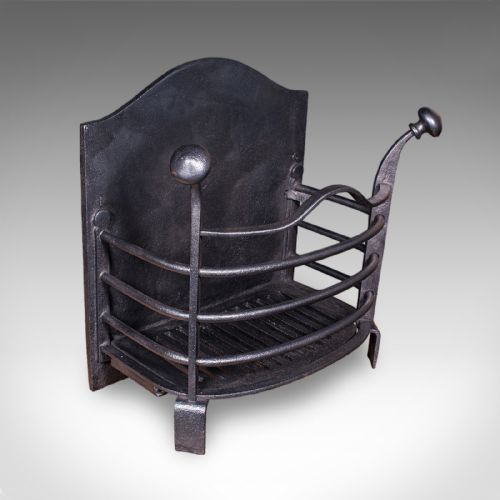
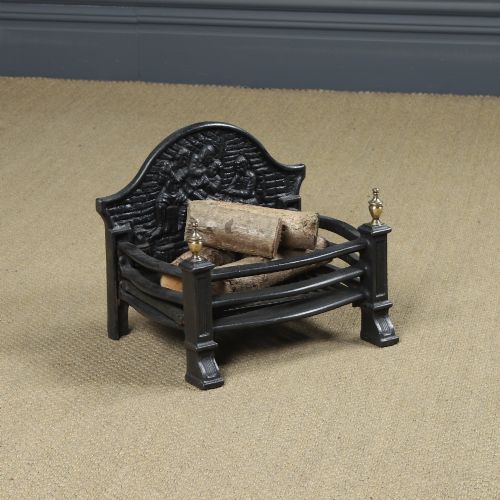
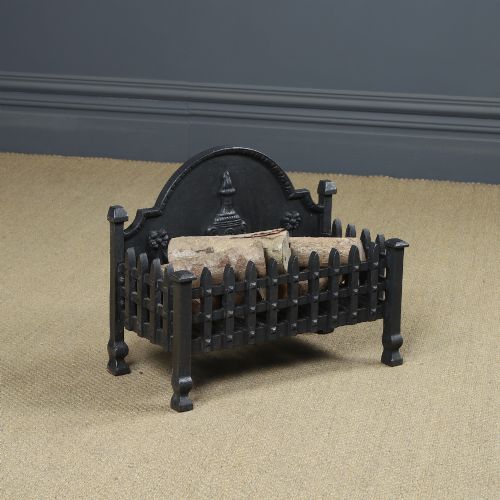
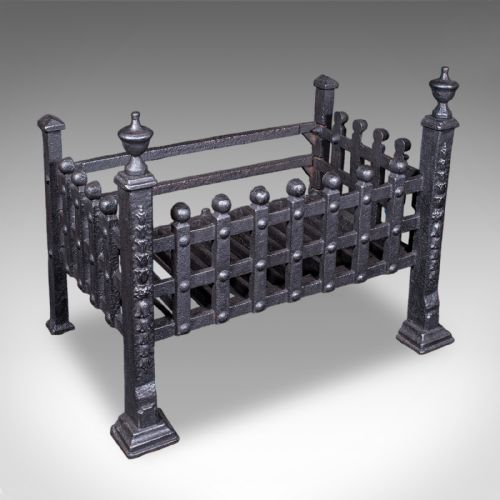
The objects take many shapes, including fire grates, fire baskets, and heavy firebacks that reflect heat into the chamber. You also find companion pieces such as andirons, tool sets, and hearth stands that complete the grouping.
Victorian examples dominate the listings, often featuring relief decoration, Gothic motifs, or heraldic elements. Pieces from the 1920s frequently adopt earlier 18th-century styles, combining historical appearance with later manufacturing dates.
How They Were Made
Foundries utilised cast iron as the primary medium for grates, firebacks, and fire dogs, pouring molten metal into sand moulds to create crisp relief patterns and durable structural frames. Wrought iron and steel also appear in supporting elements like fire baskets and polished fire dogs, offering distinct textures alongside the main casting.
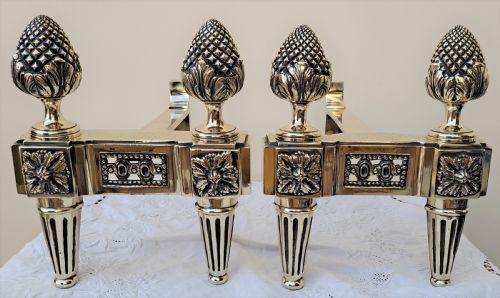
Makers incorporated auxiliary materials such as brass for andirons, tool handles, and companion sets, adding bright metallic accents to the dark iron. Firebrick linings were integrated to withstand intense heat and protect the surrounding metal structure from thermal shock.
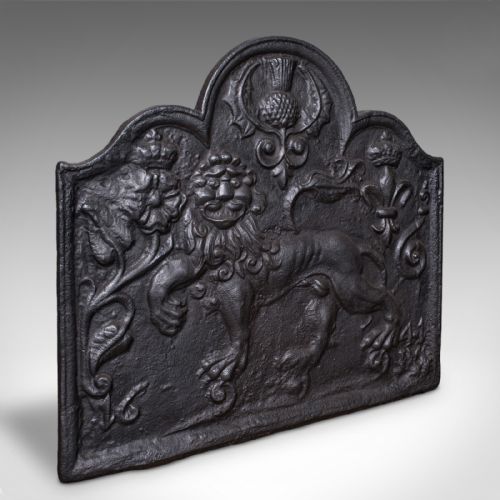
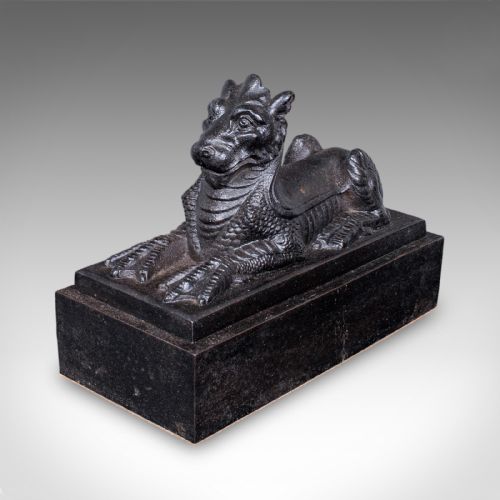
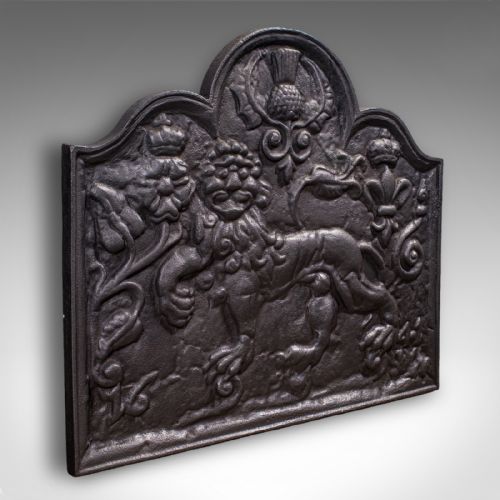
A steadfast iron lion stands ready to guard the doorway, keeping watch over the hearth with quiet mythological authority.
What Varies in Quality
The depth and clarity of the casting define the visual standard of a piece, with high-tier examples displaying sharp relief and clean moulding lines. Heavier castings indicate a more substantial use of metal, which translates to greater durability and presence in the hearth.
Surface finish and material combination also differentiate the range. Pieces that pair polished iron or brass detailing with robust cast iron bodies demonstrate greater attention to decorative finish.
John Linwood
The English Cast Iron Fireplace Glossary
- Fireback
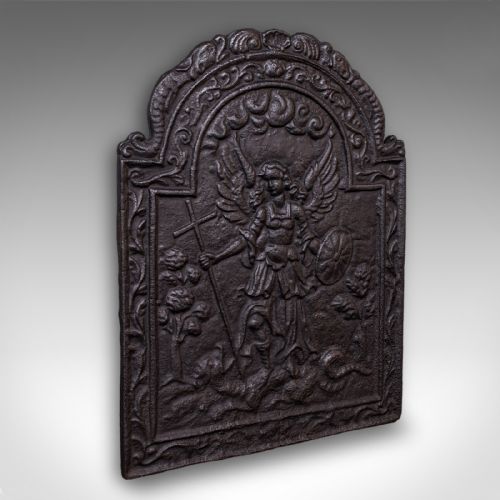
- A heavy metal plate placed at the back of an open hearth to protect the wall and reflect heat into the room. These often feature relief decoration such as coats of arms or mythological scenes.
- Andiron
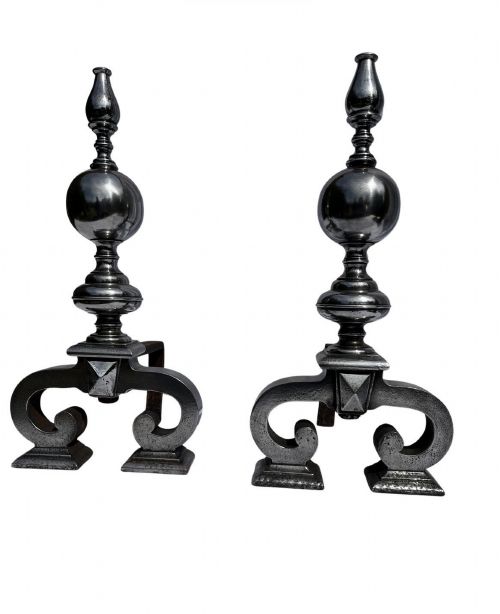
- A horizontal metal support raised on legs, used in pairs to hold logs above the hearth floor for better airflow. They frequently feature decorative brass or iron terminals.
- Fire Basket
- An open metal grate designed to hold coal or wood within the fireplace opening. They range from small portable grates to large inglenook variations.
- Spit Jack
- A mechanical device used to turn meat over an open fire for roasting. The John Linwood example listed shows the brass bottle mechanism common to these tools.
- Reflector
- An alternate term for a fireback, highlighting its function in bouncing radiant heat back into the living space.
English Cast Iron Fireplace: Frequently Asked Questions
How do I choose the right fire basket?
Measure the width and depth of your hearth opening before selecting a basket. Ensure the proportions leave adequate clearance on all sides for safe operation.
Consider whether you intend to burn wood or coal, as different grates suit different fuel types depending on bar spacing.
What is the purpose of a fireback?
A fireback sits against the rear wall of the fireplace to absorb and radiate heat outward into the room. It also shields the masonry from direct exposure to flames.
Heavier iron firebacks retain warmth long after the fire dies down, continuing to heat the space.
How do I date a cast iron fireplace?
Examine the stylistic markers, such as Gothic revival arches or Neoclassical symmetry, which point to specific nineteenth-century movements. Victorian pieces often carry distinct relief motifs and maker details.
Later reproductions from the 1920s frequently emulate Georgian or eighteenth-century styles while retaining the manufacturing characteristics of the early twentieth century.
Can I use antique fire dogs with any grate?
Fire dogs and andirons are generally freestanding items positioned in front of or alongside a fire basket. Check the height and length of the dogs to ensure they complement the scale of your grate.
Matching sets often share brass or iron finishes that coordinate with companion tool rests and fire irons.