


English Burr Walnut Furniture
English burr walnut furniture gathers rich swirling grains across centuries of master cabinet work, from early chest forms to sleek modernist designs.
English Burr Walnut Furniture
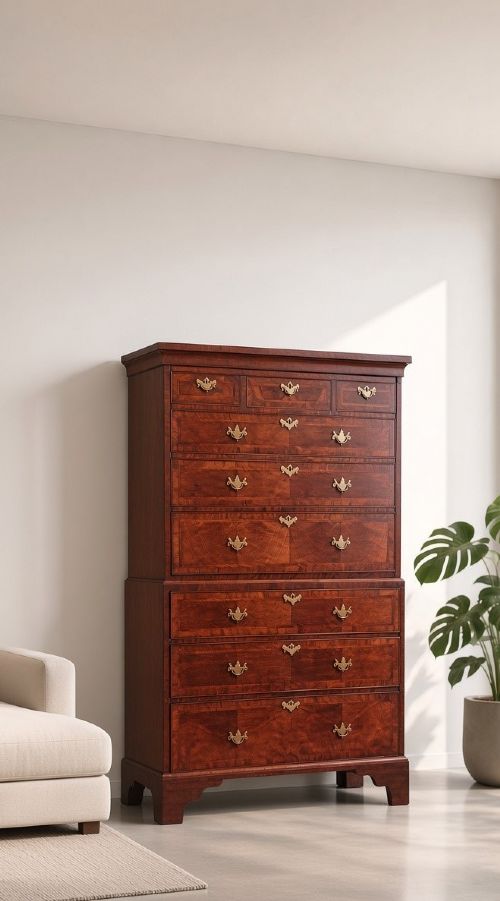
English burr walnut furniture spans utilitarian storage pieces and formal reception items, bringing distinct figured surfaces into domestic spaces. Collectors encounter high chest forms, writing desks, and small tables alongside later Art Deco suites.
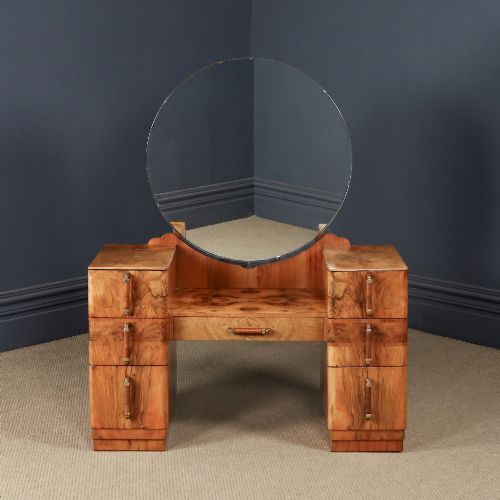
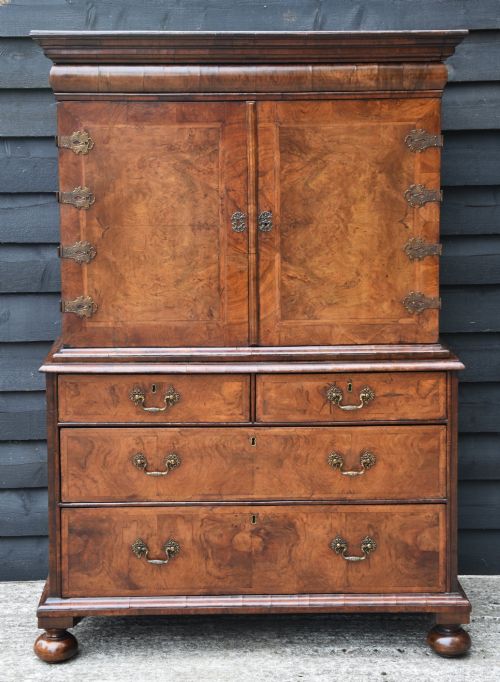
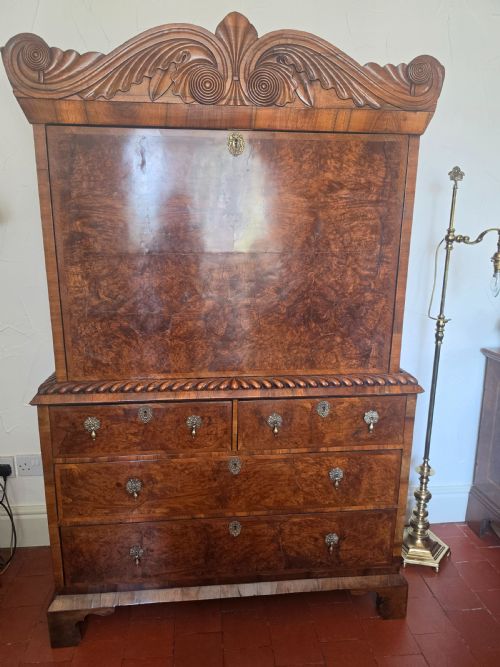
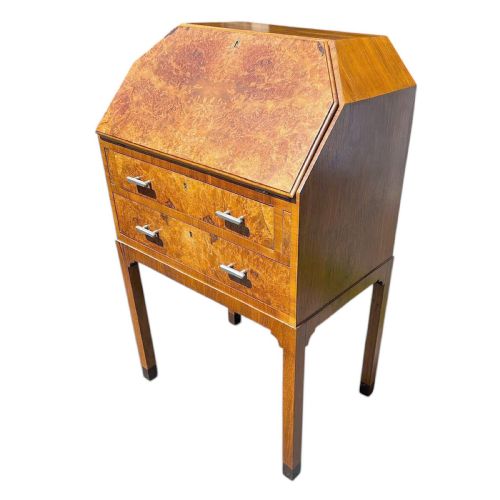
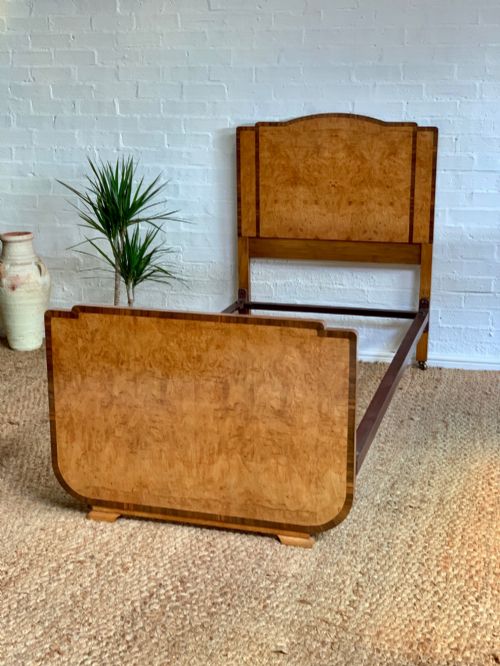
The material appears across multiple historical periods, including the late seventeenth century, the reign of Queen Anne, and the modernist interwar decades. Chests of drawers and cabinets on stands dominate the earlier eras, while coffee tables and cocktail bars define the 1930s output.
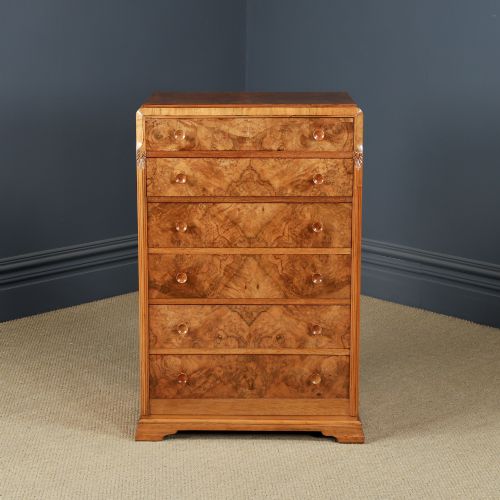
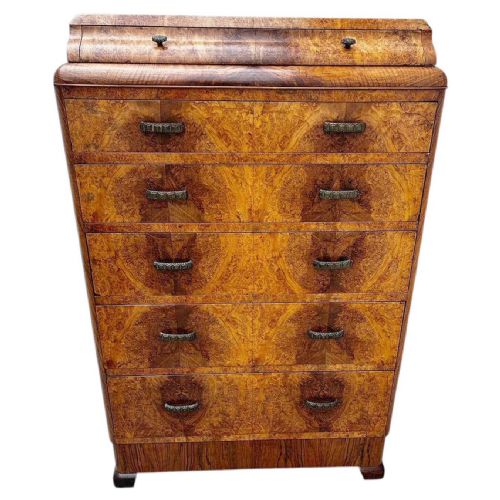
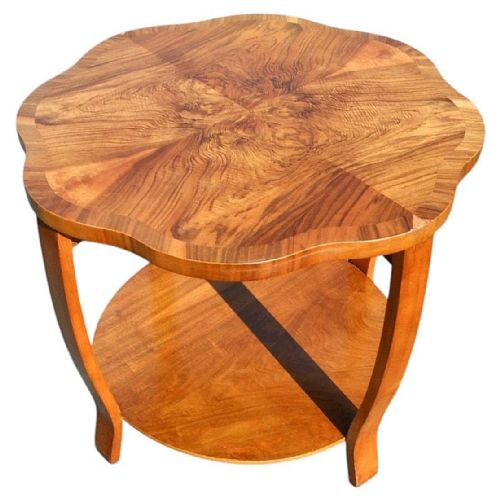
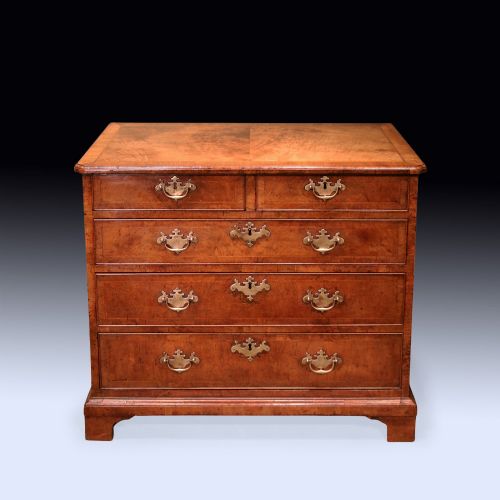
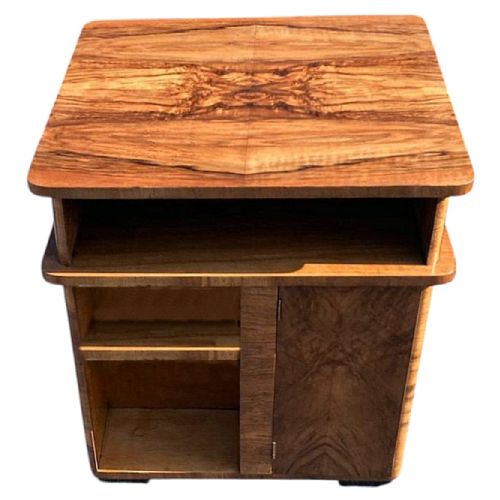
Craftsmen utilised the intricate growth knots of the walnut tree to create decorative patterns on drawer fronts and table tops. These surfaces define the visual identity of the category, whether shaped in a rigorous William and Mary marquetry design or smoothed into a streamlined Art Deco curve.
What varies in quality
The depth and symmetry of the burl figure determine visual success, separating lively grain patterns from flat or poorly matched veneer work. Master cabinetmakers aligned the swirling knots to create harmonious reflections across multiple drawers or tabletop halves.
Structural integrity depends on the stability of the underlying carcase and the original condition of the surface finish. Pieces retaining rich patination and careful edge banding command greater attention from discerning collectors.
Materials span solid walnut, oak foundations, brass handles, and contrasting chrome details.
Johnstone and Jeanes·Waring and Gillow·Hille·Druce and Co·M P Davis Furniture
The English Burr Walnut Furniture Glossary
- Burr walnut
- A wood harvested from the wart-like growths on walnut trees, yielding highly figured, swirling grain patterns prized for decorative veneer.
- Marquetry
- The art of applying pieces of veneer to a structure to form decorative patterns, prominent on late seventeenth-century cabinet work.
- Escritoire
- A writing cabinet featuring a fall-front desk flap concealing pigeonholes and small drawers.
- Canterbury
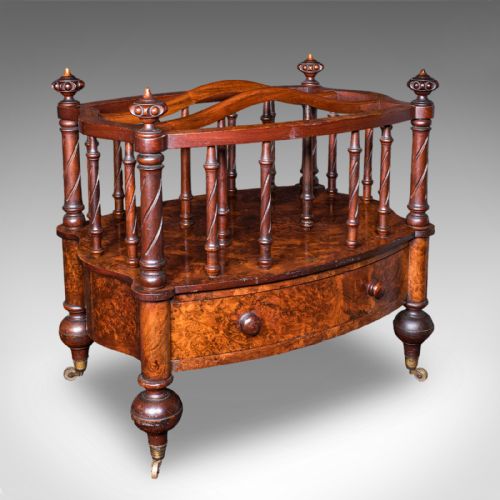
- A low stand fitted with divisions to hold sheet music, newspapers, or magazines, often mounted on small castors.
- Ormolu
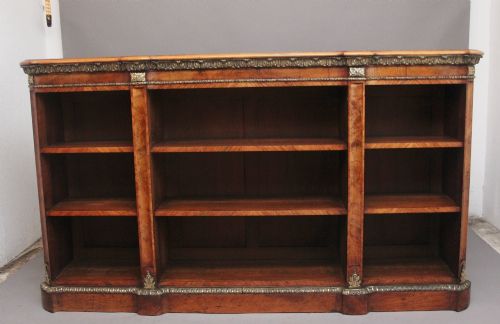
- Gilded bronze ornamentation applied to furniture mounts, popular in nineteenth-century pieces.
English Burr Walnut Furniture: Frequently Asked Questions
What is burr walnut?
Burr walnut comes from an excrescence on the tree where the grain has grown in a deformed, swirling manner. This produces complex, highly decorative patterns when sliced into thin veneers.
Cabinetmakers utilised these unique sheets to ornament the primary surfaces of fine desks, chests, and tables throughout the centuries.
How do I date a walnut chest?
Dating relies on construction methods, hardware types, and overall silhouette rather than the wood alone. Early pieces from the seventeenth and eighteenth centuries often feature dovetailed solid oak drawer linings and bun feet.
Later Victorian and Art Deco examples adopt different proportions, plinth bases, and internal framing techniques while continuing the tradition of figured veneer.
Were these pieces used for dining?
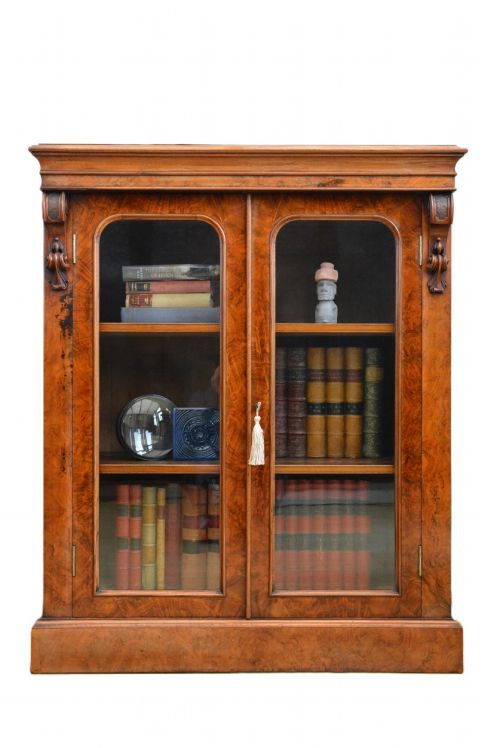
The category leans towards living, working, and sleeping quarters rather than dining rooms. Surviving forms include writing desks, dressing tables, cocktail bars, and display cabinets.
Smaller occasional pieces like coffee tables and side stands also appear frequently across the periods represented.
How should I care for the wood?
Polished walnut veneer requires protection from direct sunlight and extreme humidity fluctuations to prevent the timber from drying or warping. Regular dusting with a soft, dry cloth preserves the historical finish.
Avoid placing items near direct heat sources which can stress the historic adhesives beneath the veneer surface.