


English Brass Candleholders
English brass candleholders combine utility and warmth, bringing period weight and polished metal to a room.
English Brass Candleholders
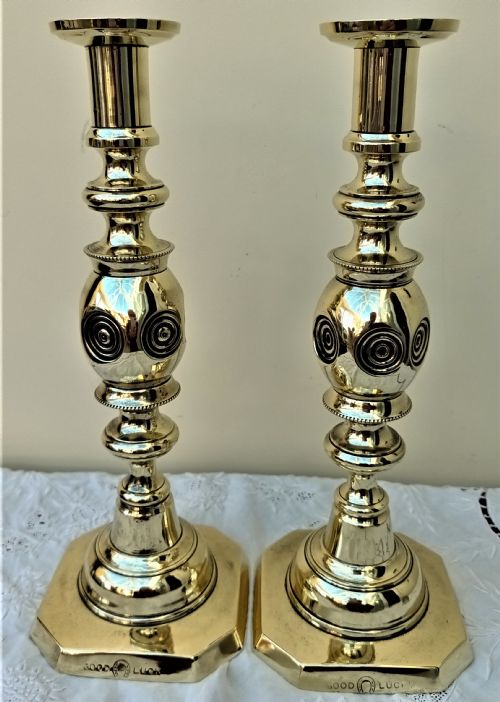
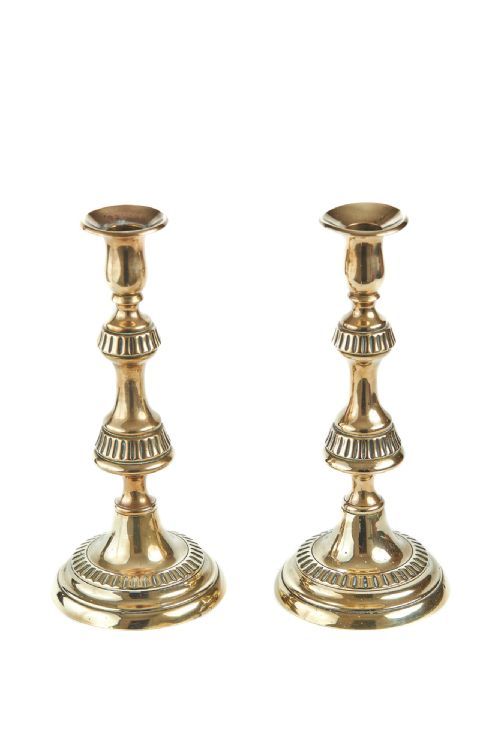
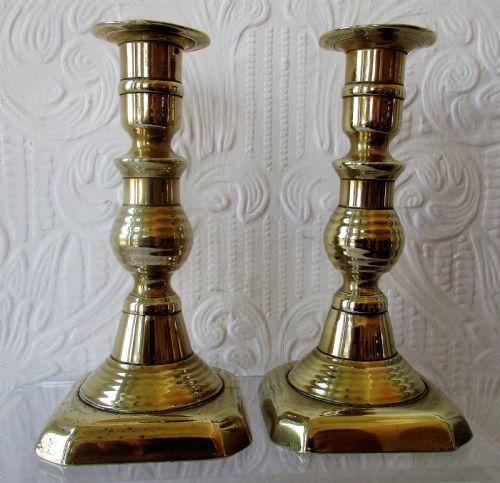
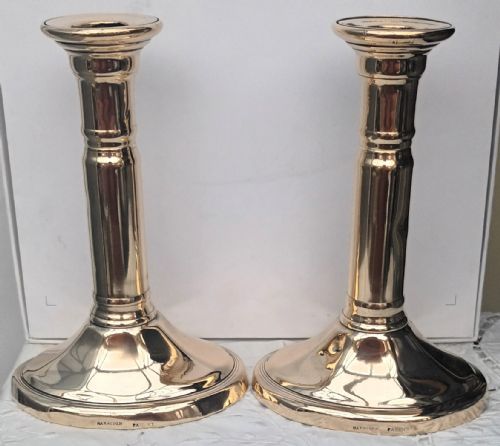
English brass candleholders encompass practical lighting from the 18th and 19th centuries, appearing frequently as matched pairs designed for mantelpieces or tables. When you explore english brass candleholders, you encounter forms ranging from simple Georgian shafts to ornate Victorian variations.
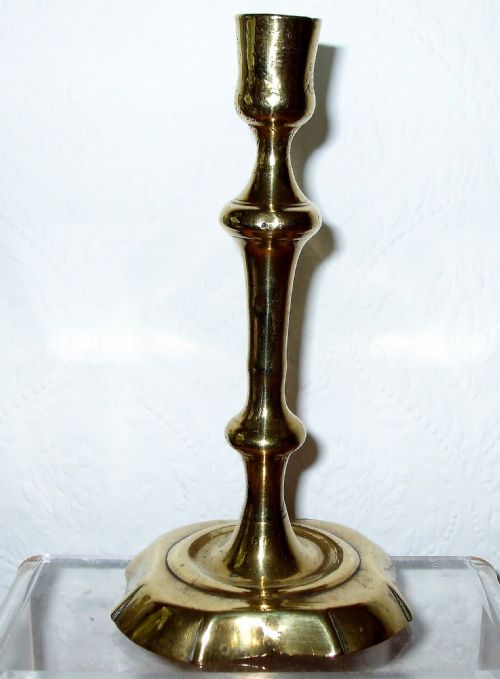
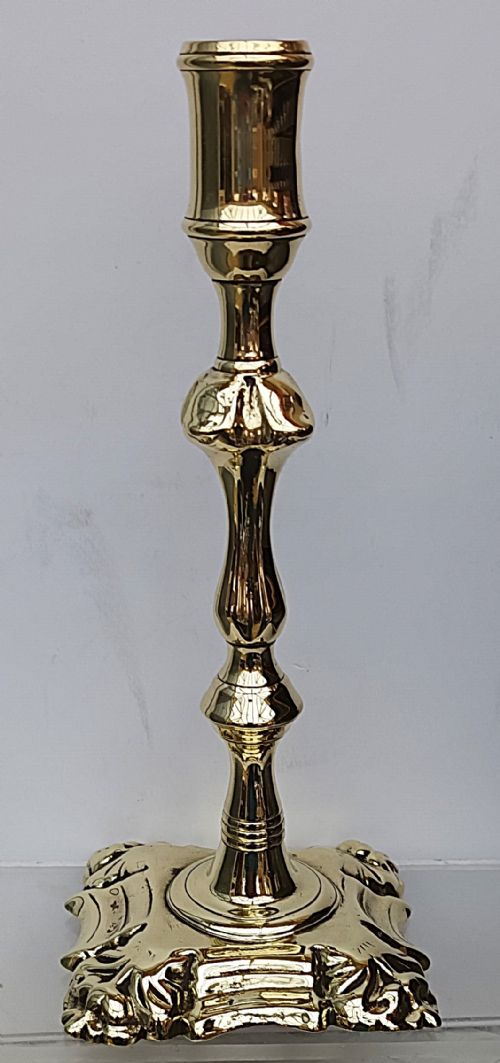
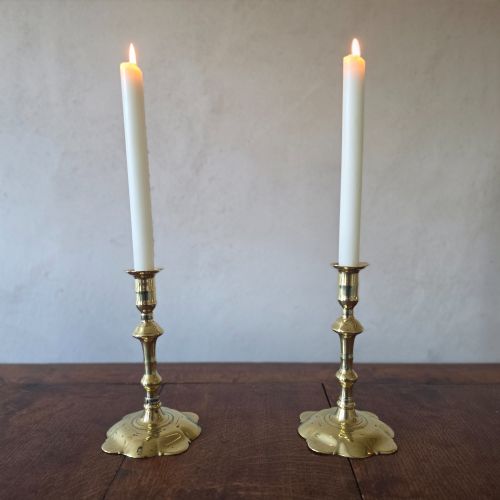
Earlier examples display strict hexagonal or octagonal bases with petal outlines, while later Victorian items lean towards elaborate ornamentation and cast details.
Materials and construction methods
Makers utilised cast brass for the primary bodies, often turning components on a lathe to achieve smooth profiles and precise socket fittings. Molten metal poured into sand moulds created the heavier structural parts seen in Georgian and Victorian examples.
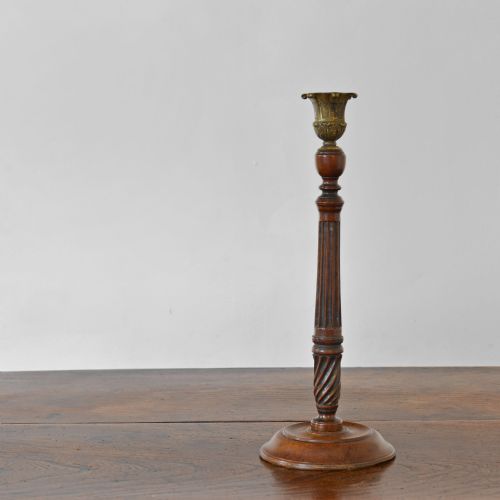
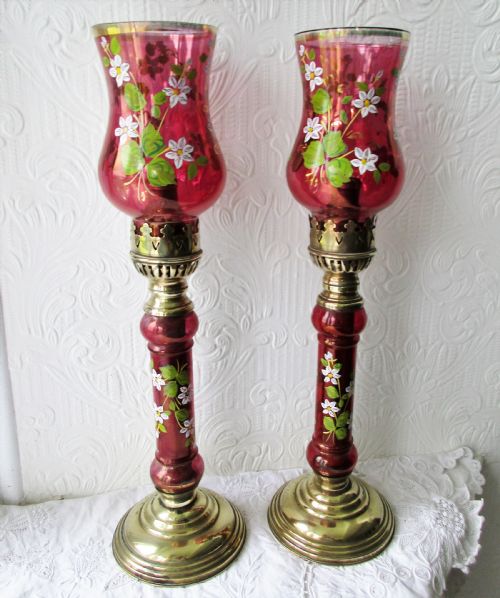
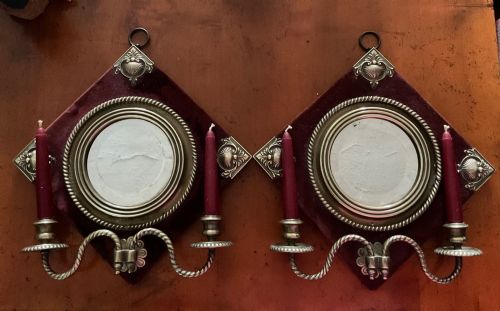
Secondary materials supplement the metalwork, including turned mahogany and oak supports, inset glass panels, and velvet cushioning on bases. Telescopic mechanisms relied on accurately fitted sliding brass tubes to adjust height for reading or dining.
Current listings demonstrate a broad span from 1700 Queen Anne forms through Georgian neoclassical designs to Victorian altar candelabra and oak-turned stems.
Distinctions in craftsmanship
Superior quality shows in the crispness of cast details and the substantial heft of the metal. Heavier castings indicate a higher copper content and thicker walls, whereas lesser examples feel thin and light in the hand.
Fine finishing distinguishes workshop output, evidenced by smooth filing of seams and tight joints in multi-component assemblies. Telescopic models demonstrate quality through the smooth, secure action of their sliding mechanisms.
J. Miller
The English Brass Candleholders Glossary
- Ejector candlestick
- A domestic holder containing an internal sliding platform operated by a thumbpiece to push out the candle stub. This mechanism made clearing burnt wax straightforward.
- Chamberstick
- A low-profile candleholder fitted with a broad pan to catch melting wax and a loop handle for carrying from room to room. They provided nighttime illumination in hallways and bedchambers.
- Telescopic candlestick
- An adjustable lighting piece featuring a sliding stem that raises or lowers the flame height. Harrison Patent examples represent a specific documented mechanism of this type.
- Girandole
- A decorative wall sconce incorporating a mirror backplate to reflect and amplify candle flame. These pieces combine brass frames with glass and reflective surfaces.
- Petal base
- A distinctive foot shape featuring shaped lobes resembling flower petals, common on 18th-century pieces. This design provided a wider footprint for stability.
English Brass Candleholders: Frequently Asked Questions
How do I date an English brass candlestick?
Dating relies on base shapes, column profiles, and manufacturing marks. Early 18th-century examples typically feature solid cast bases with octagonal or hexagonal footprints, while Georgian styles introduce petal bases and baluster stems.
Victorian pieces often display heavier ornamentation or incorporate alternative materials like glass and oak. Examining the construction of the socket and the weight of the casting helps confirm the period.
What is an ejector candlestick?
An ejector candlestick incorporates a hidden internal rod and an exterior thumbpiece designed to lift the candle remnant out of the socket. This clever device prevented the wax stub from becoming wedged inside.
Invented to make cleaning easier, these pieces are particularly associated with the 18th and 19th centuries. They remain sought after by collectors for their mechanical ingenuity.
How were chambersticks used historically?
Chambersticks served as portable bedroom lighting before the arrival of gas and electric illumination. The wide saucer caught dripping wax while the user carried the light through dark corridors.
They usually included a small metal snuffer resting in the pan to extinguish the flame safely. Their compact size made them essential household items for evening routines.
What are telescopic brass candlesticks?
Telescopic brass candlesticks feature a sliding mechanism that allows the user to raise or lower the candle height. Harrison Patent versions represent a specific documented form of this adjustable design.
They were practical desk or reading accessories where varied illumination levels were required. The precision of the sliding tubes indicates the quality of the workshop.