


English Bone China Teacup
An english bone china teacup brings cabinet elegance and handpainted artistry to the table, spanning georgian, regency and twentieth-century eras.
English Bone China Teacup
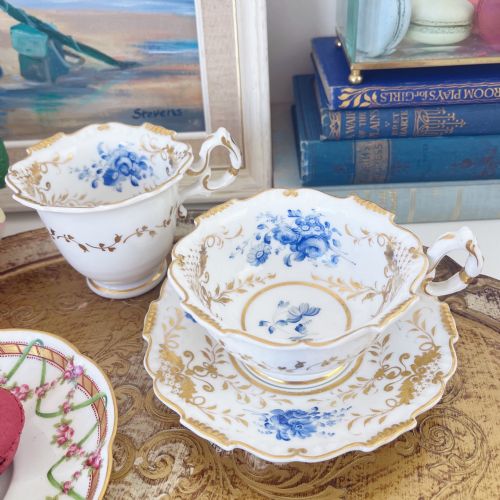
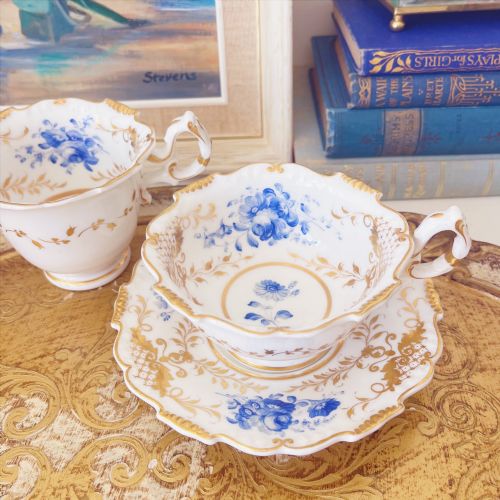
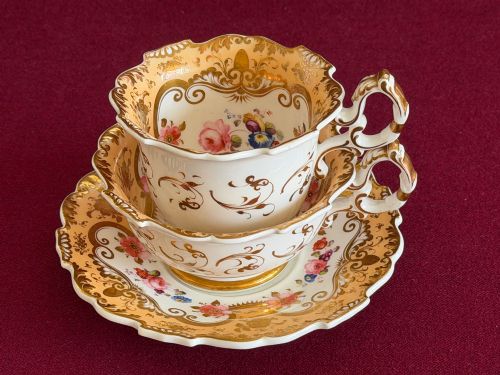
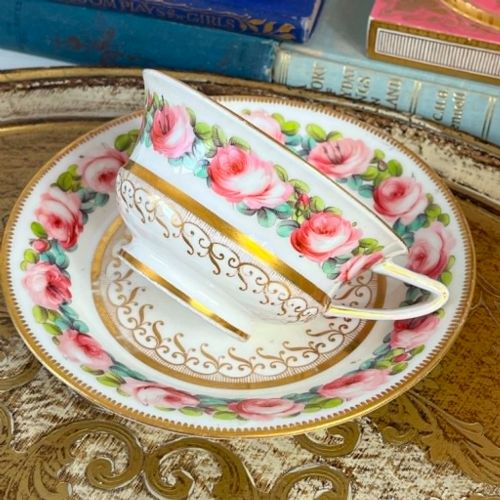
When you search for an english bone china teacup, you encounter delicate drinking vessels and matching saucers spanning the georgian, regency, victorian and mid-century periods. These range from single cabinet cups and trios to full afternoon tea services and cased sets.
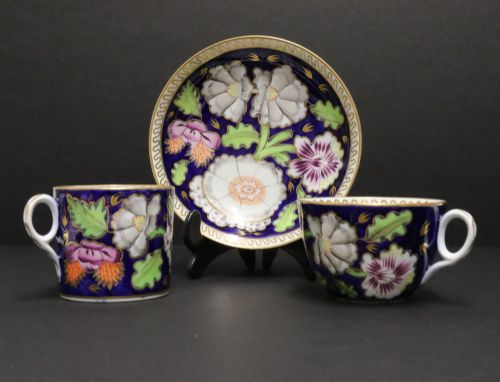
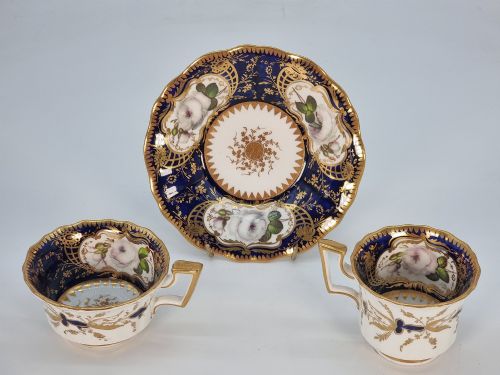
The pieces on this page originate from notable factories and periods, including early nineteenth-century Worcester, Coalport and Davenport, alongside later twentieth-century productions from makers like Royal Worcester and Shelley.
Materials and Techniques
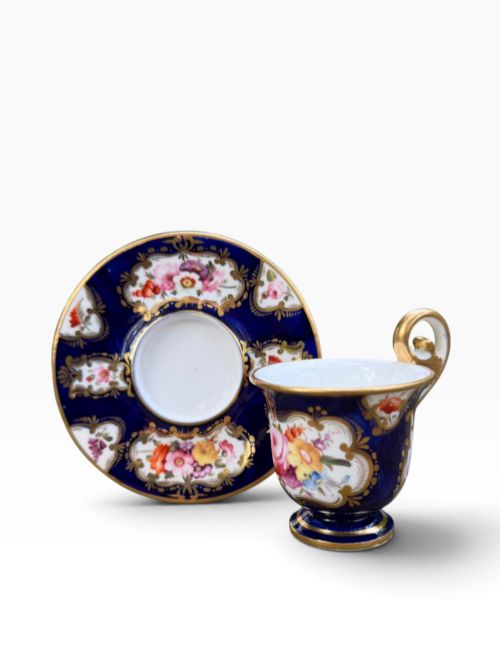
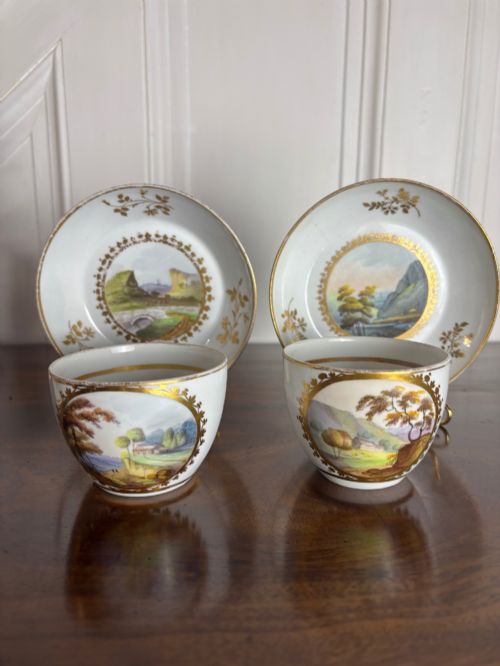
The physical objects combine fine porcelain and bone china bodies shaped into cups, saucers and associated tea service components. Potters utilised handpainted enamels to create botanical motifs, landscapes and patterns.
Gilding, gold leaf and gold gilt provide rich metallic borders and highlights across many pieces, often applied over intricate handpainted designs and distinct porcelain bodies.
Object forms range from single cabinet cups and trios to multi-piece tea services and cased coffee sets.
Standards of Quality
Quality rests in the precision of the handpainted decoration and the crispness of the porcelain moulding. Early cabinet pieces often exhibit superior artistic detail in landscapes and floral studies compared to later production wares.
The application of gilding and the weight of the porcelain body also distinguish finer items. Hand-decorated pieces from established periods command attention through their individual brushwork and pattern complexity.
H and R Daniel·Davenport·Newhall·Coalport·Minton·Hicks Meigh and Johnson·Flight Barr and Barr·Shelley·Royal Worcester·Royal Albert Crown China·Doric China Longton Stafford·Yates·Spode·Sutherland·Royal Crown Derby·Gladstone Potteries
The English Bone China Teacup Glossary
- Trio
- A matched set consisting of a teacup, saucer and matching tea plate. This combination forms the standard unit for traditional afternoon tea settings.
- Cabinet Cup
- A decorative cup intended primarily for display rather than everyday use. These pieces often feature elaborate handpainted scenes and extensive gilding.
- Demitasse
- A small cup used for serving strong black coffee or espresso. They frequently appear in cased sets alongside matching saucers.
- Solitaire Set
- A miniature tea service designed for one person. It typically comprises a single cup, saucer and small pot on a matching tray.
English Bone China Teacup: Frequently Asked Questions
How do I date an early teacup?
Dating relies on stylistic markers, porcelain body composition and factory marks where present. Early nineteenth-century pieces often display distinct handle shapes and handpainted palette characteristics.
Comparing pattern numbers and decorative styles helps place pieces within specific regency or georgian manufacturing periods.
Can I use these cups for tea?
Many of these pieces were designed for functional use, though older cabinet cups are often reserved for display. Careful hand washing preserves the delicate gold leaf and handpainted enamels.
Avoiding sudden temperature changes protects fragile historical porcelain from thermal shock during use.
What is the difference between a duo and a trio?
A duo consists of a teacup and a matching saucer. A trio adds a third matching item, typically a small tea plate for accompaniments.
Both configurations appear frequently in nineteenth-century and twentieth-century tea services.
How should I display a cabinet cup?
Cabinet cups and saucers look best in enclosed display shelving where they remain safe from accidental knocks. Proper support stands keep the cup visible alongside its saucer.
Good lighting enhances the handpainted details and gilded highlights without exposing the porcelain to direct sunlight.