

English Pedestal Table
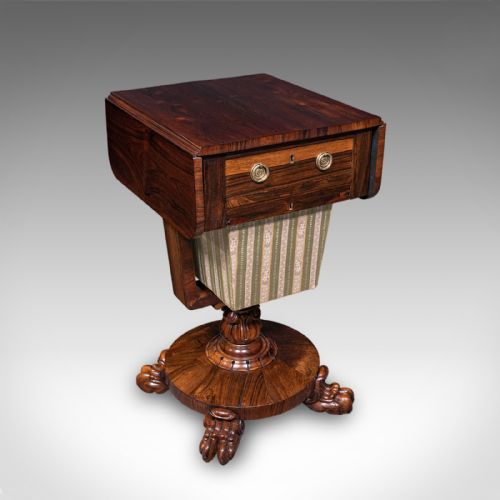
An english antique pedestal table provides a stable central column supporting a timber top, combining practicality with classical proportion for the home.
English Pedestal Table
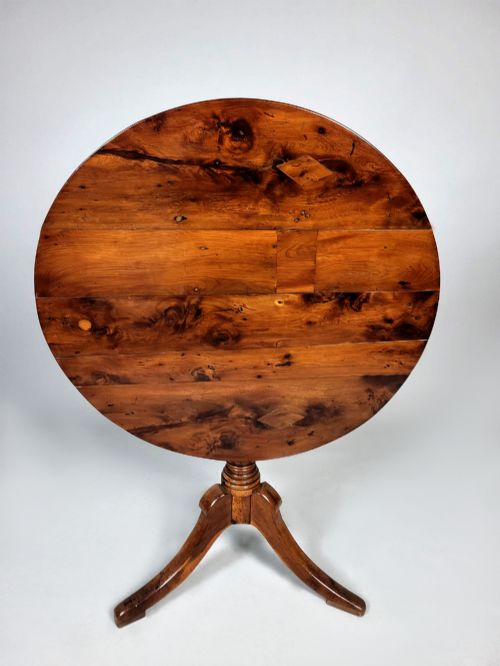
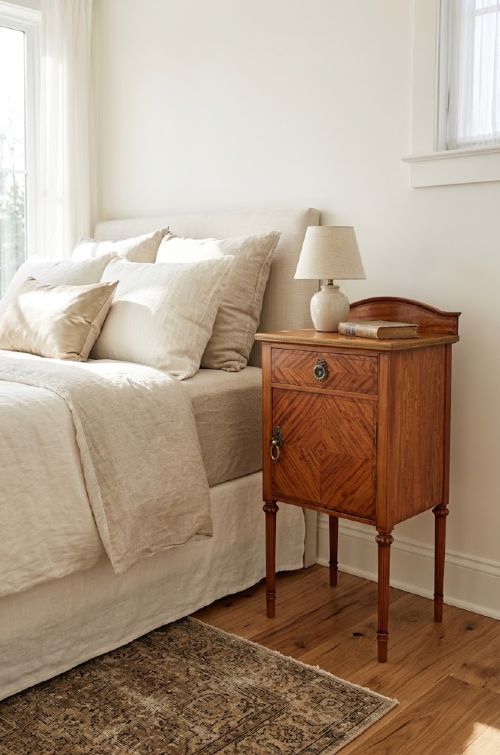
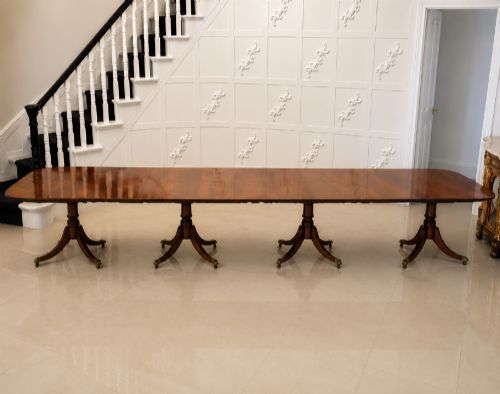
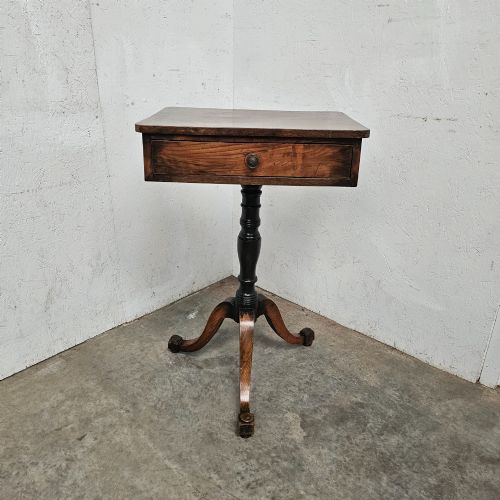
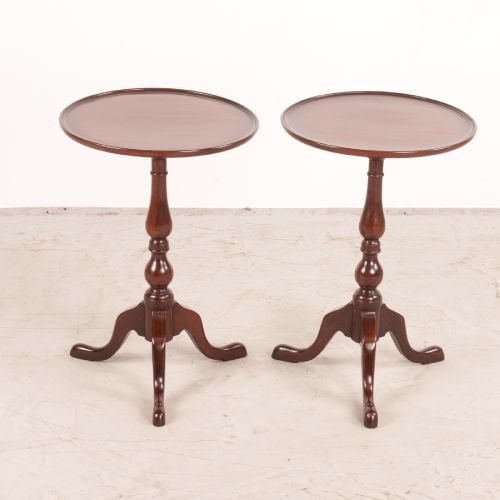
An english antique pedestal table appears in various domestic forms, ranging from small tripod wine tables and occasional pieces to large dining tables supported by multiple pillars.
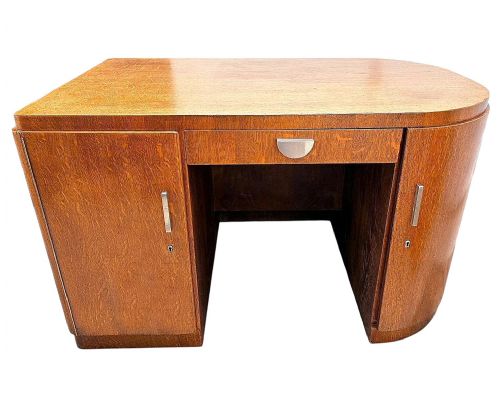
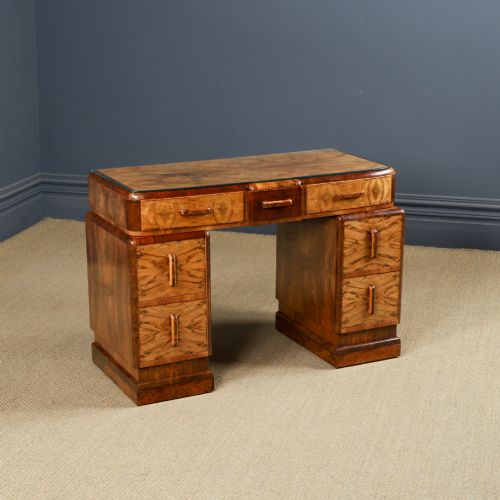
Makers constructed these pieces during the Georgian, Regency, and Victorian periods, alongside later twentieth-century iterations influenced by Art Deco design.
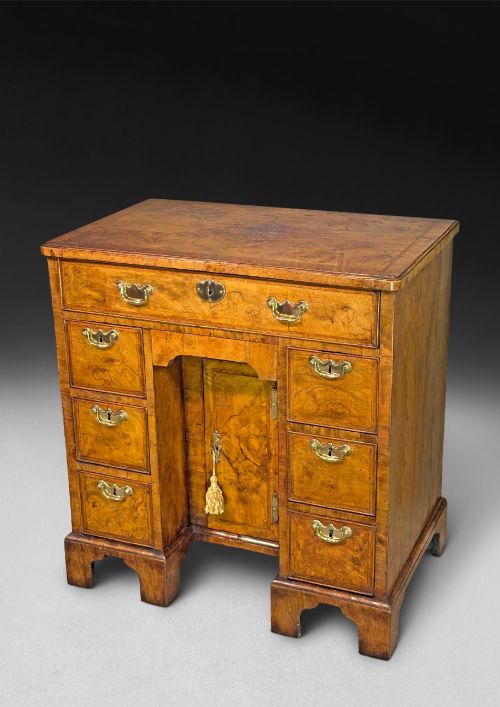
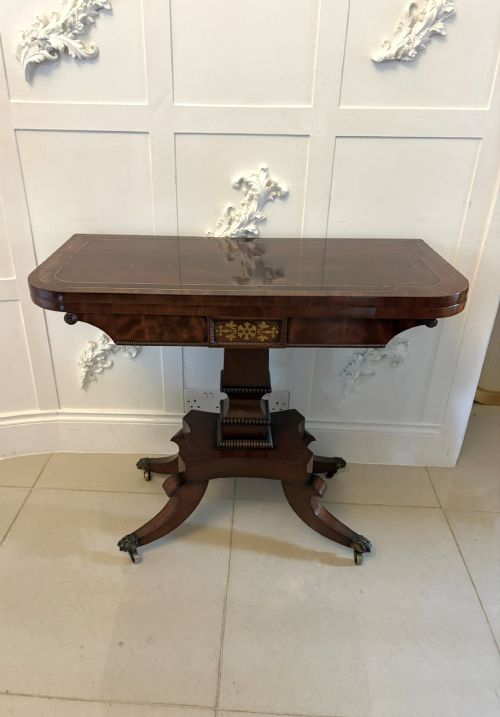
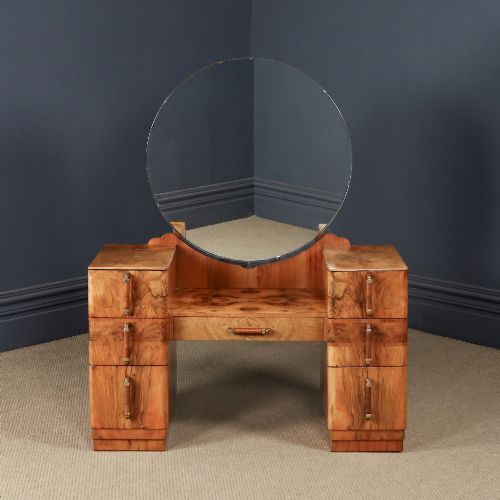
The selection includes specific functional types such as card tables, vanity desks, and breakfast tables centred on a robust single or twin pedestal base.
Materials and Technique
Cabinet makers utilised dense hardwoods such as mahogany, walnut, and rosewood, frequently incorporating figured veneers, satinwood, and brass inlay for decorative contrast.
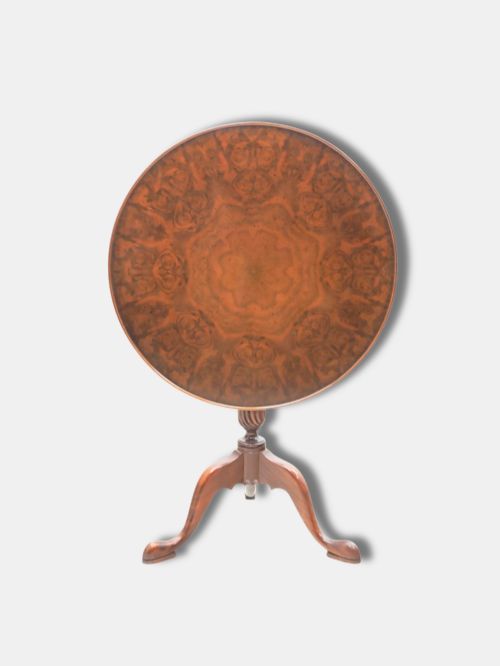
Construction methods involved stable tripod bases or heavy central columns secured to circular or multi-sided timber tops, sometimes featuring tilt-top mechanisms.
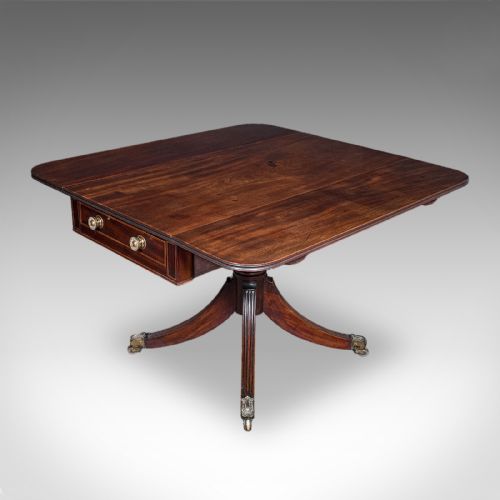
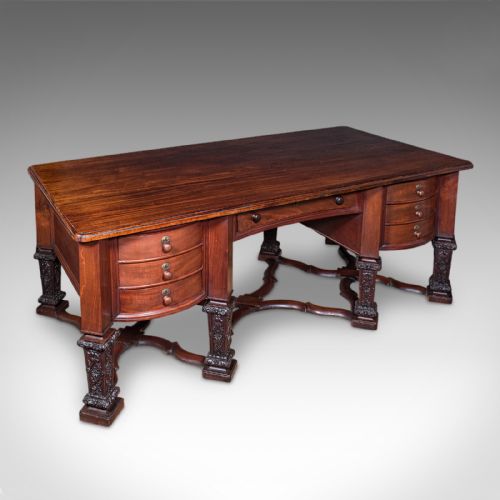
The inventory contains both single-pillar occasional tables and multi-pedestal banquet dining tables spanning several feet.
Distinction in Craftsmanship
Superior examples display deeply figured timber grains, balanced proportions across the pedestal base, and precise joinery in the column attachments and tabletop framing.
Lower tiers often show simpler secondary timbers, plainer surface veneers, and less refined turning on the central pillar or legs.
Gillows·Epstein·Shoolbred
The English Pedestal Table Glossary
- Pedestal
- A structural central support column holding up a tabletop. This single-pillar design allows for greater legroom around the perimeter compared to four-legged tables.
- Tripod Table
- A small occasional table supported by three splayed legs beneath a central pillar. These pieces gained popularity during the Georgian period for tea and wine service.
- Tilt Top
- A tabletop hinged to the upper column so it can pivot into a vertical position. This mechanism enabled servants to store the table flat against a wall when not in use.
- Veneer
- A thin layer of finely figured wood applied over a secondary timber base. Cabinet makers used walnut, mahogany, and satinwood veneers to create decorative surface patterns.
English Pedestal Table: Frequently Asked Questions
What is a pedestal dining table?
A pedestal dining table relies on one or more central columns rather than corner legs to support the top. This construction method offers increased seating flexibility around the perimeter.
Such tables span the Georgian, Regency, and Victorian eras, appearing in single-pillar formats for smaller rooms and multi-pillar formats for banquet-sized spaces.
What woods were used for English pedestal tables?
Craftsmen predominantly worked with dense hardwoods including mahogany, walnut, and rosewood. They frequently selected figured timber veneers for the tops to showcase dramatic grain patterns.
Secondary woods such as oak and pine appear in the interior framing, drawer linings, and underneath structural components.
Where should I place a wine table?
A wine table functions effectively beside an armchair or sofa as a compact surface for drinks and lighting. Their modest footprint makes them adaptable for tight corners.
These small tripod pieces originated in the Georgian period and move easily between reception rooms, bedrooms, and studies.