




English Air Twist Glass
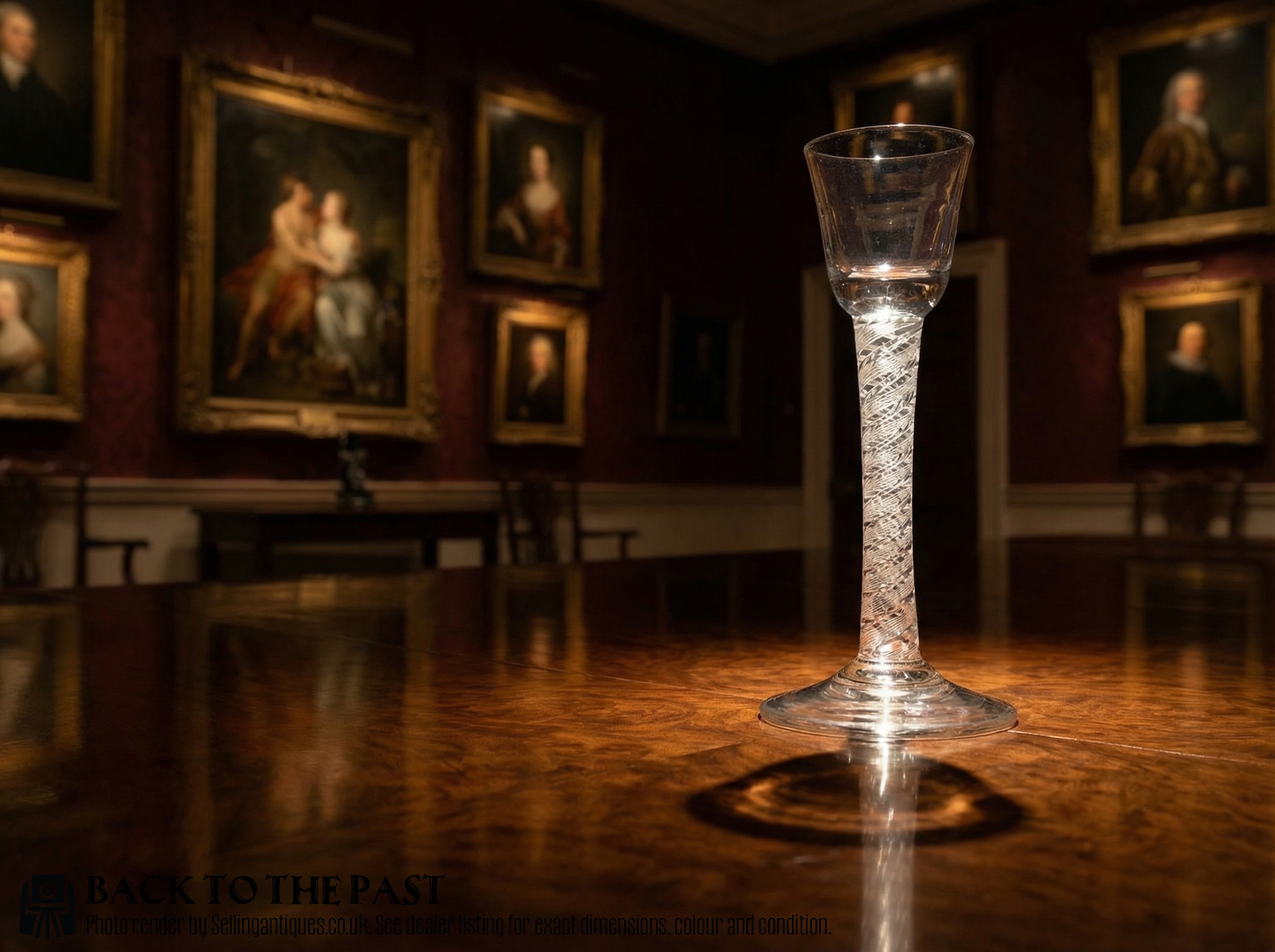
When you handle an english air twist glass, you hold a piece of eighteenth-century drinking culture shaped by trapped bubbles drawn into delicate stems.
English Air Twist Glass
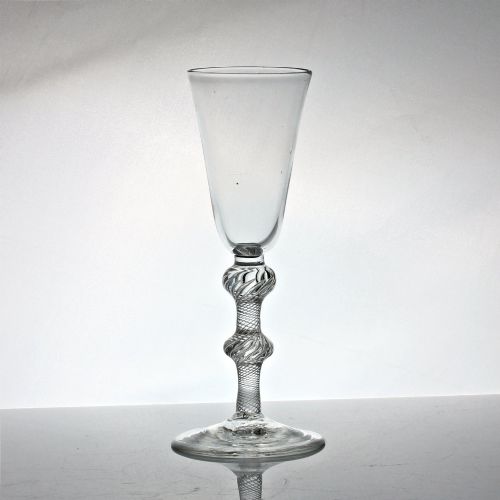
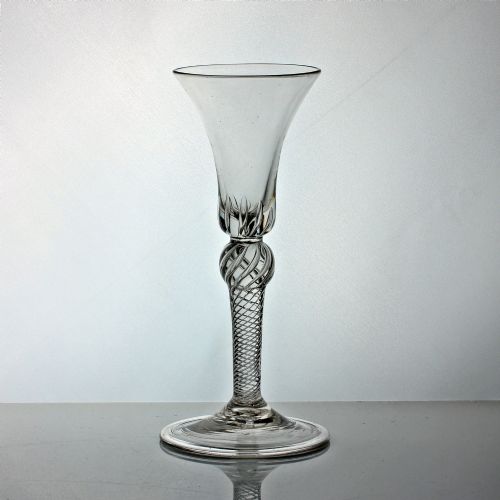
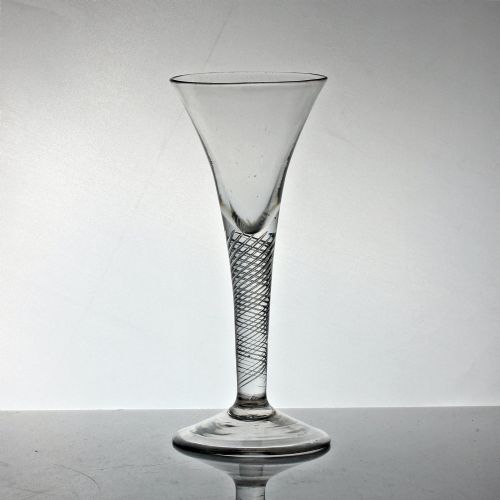
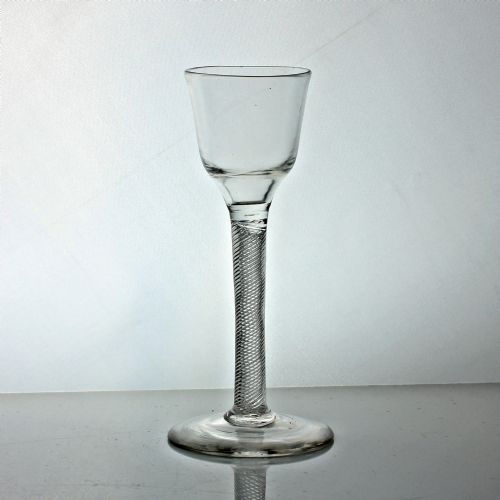
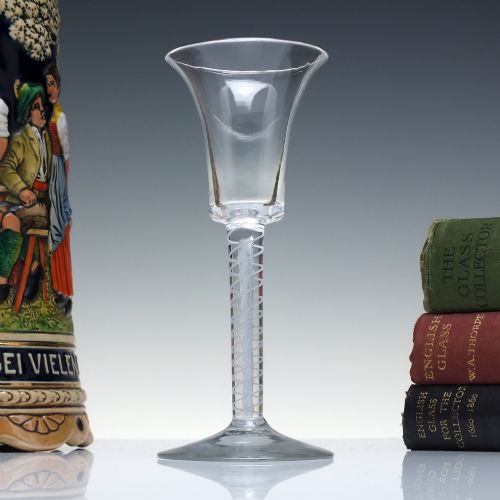
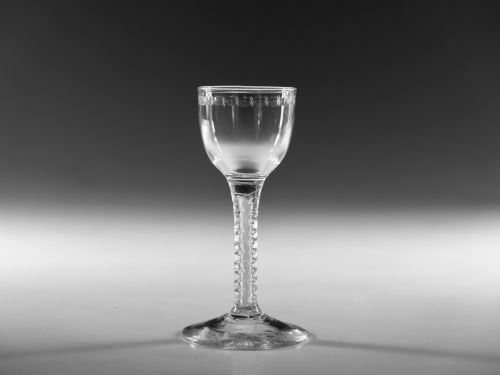
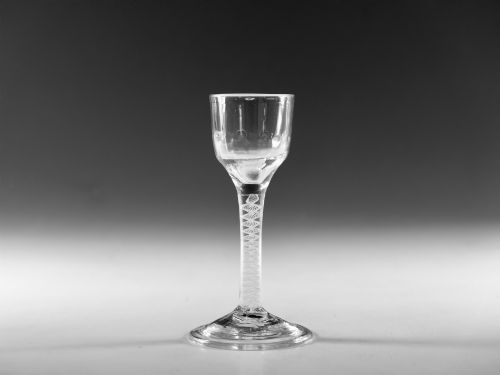
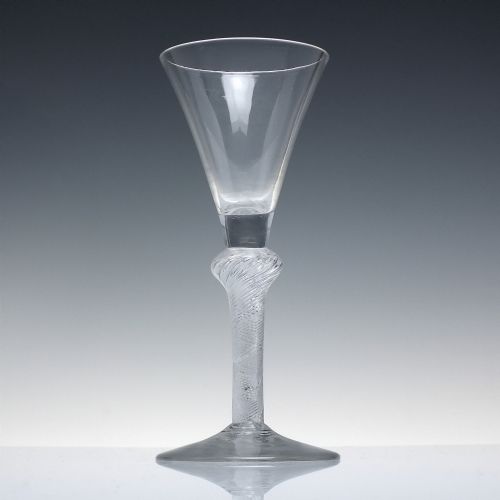
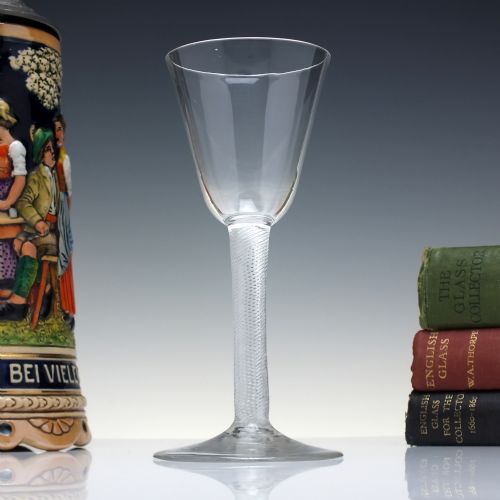
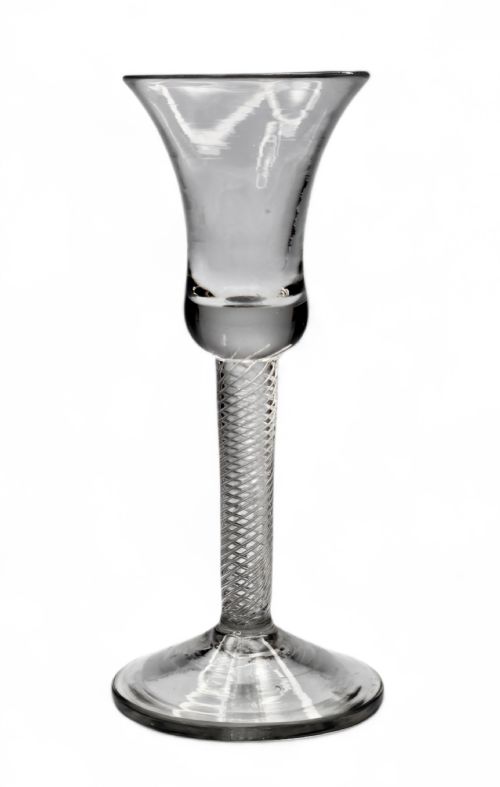
An english air twist glass is a drinking vessel, most commonly a wine glass, ale glass, or cordial glass, defined by elongated spiral threads of air trapped inside the stem. The pieces available here span from the Georgian period in the eighteenth century through to later Georgian Revival interpretations.
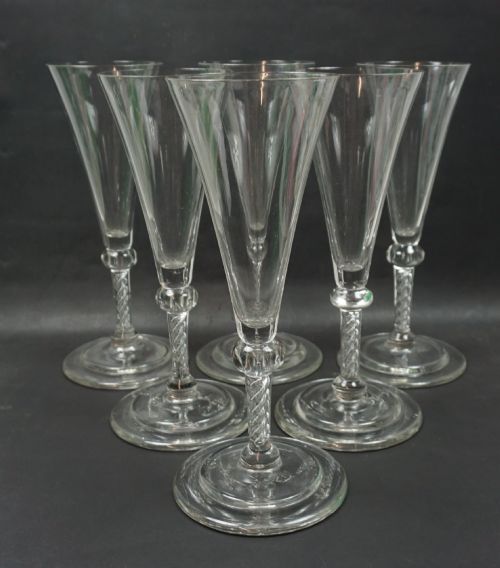
Most examples take the form of wine glasses with bowls like the ogee, trumpet, or pan top shapes, supported by stems featuring single or multiple spirals. You will also encounter taller champagne flutes, ale glasses, and cordials alongside the occasional twentieth-century wine flute.
Originating predominantly from English manufacture in the seventeen-fifties and sixties, these stems represent a major technical shift away from heavy baluster forms towards lighter, more refined drinking vessels.
How they were made
These items were hand-blown using lead glass or flint glass, materials that gave the vessels exceptional clarity and weight. Glassmakers formed the twist by inserting a rod into hot metal to create internal air bubbles, which were then elongated and twisted as the stem was drawn out.
Makers combined these air threads with other techniques, such as adding white enamel twists for opaque variations, or incorporating knops, collars, and folded feet for structural definition and balance.
Listings feature lead glass and clear glass alongside enamel materials across the eighteenth century and nineteen-thirty periods.
What varies in quality
Quality rests upon the clarity of the metal and the precision of the internal spiral thread. A clean, uniform multi-spiral air twist requires immense skill from the glassblower to maintain symmetry without distortion.
The sophistication of the bowl shape and the inclusion of additional elements like shoulder knops, vermicular collars, or engraved decoration elevate certain examples above standard production pieces.
The English Air Twist Glass Glossary
- Air twist
- A stem containing spiral threads of trapped air formed during the drawing process. It creates a shimmering optical effect inside the glass.
- Ogee bowl
- A bell-shaped bowl with an S-profile curving out at the rim. This form was widely utilised on eighteenth-century drinking vessels.
- Knop
- A knob or swelling on the stem of a glass. It provides a tactile grip and structural variation between bowl and foot.
- Folded foot
- A base whose outer edge has been folded underneath to create a thickened rim. This technique added stability and strength to delicate stemware.
- Opaque twist
- A stem containing threads of white enamel rather than air. These threads are often twisted in single or double series configurations.
English Air Twist Glass: Frequently Asked Questions
What is an air twist glass?
An air twist glass is an eighteenth-century drinking vessel featuring tiny, elongated bubbles drawn into spiral patterns inside the stem.
These threads catch the light and give the stem a delicate, shimmering appearance that distinguishes it from heavier baluster styles.
How do you date an air twist glass?
Dating relies on combining the form of the bowl, the composition of the metal, and the configuration of the stem.
Most genuine examples date from the middle decades of the eighteenth century, showing distinctive hand-blown characteristics and soft metal surfaces.
What were air twist glasses used for?
They served as dining table stemware for consuming wine, ale, cordials, and champagne during the Georgian period.
Their refined forms and optical stems reflected the status of the host and the evolving sophistication of eighteenth-century social gatherings.
Are all air twist stems hollow?
The internal threads are formed from tiny air bubbles drawn out during manufacture, but the stem itself is solid glass.
Only the microscopic elongation of these sealed cavities creates the visual effect of a spiral twist.