




End Support Library Table
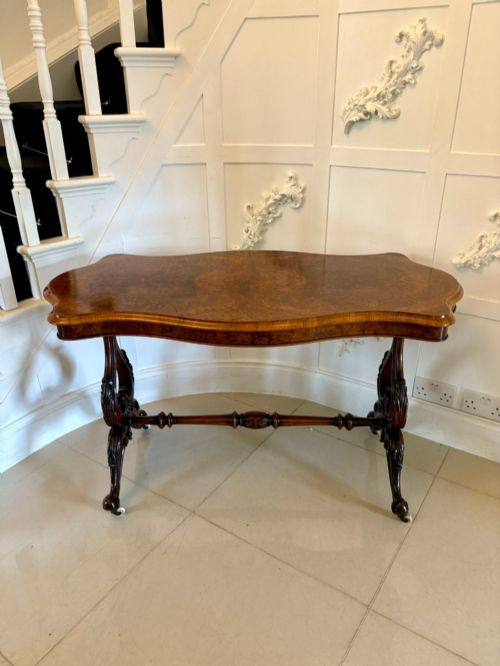
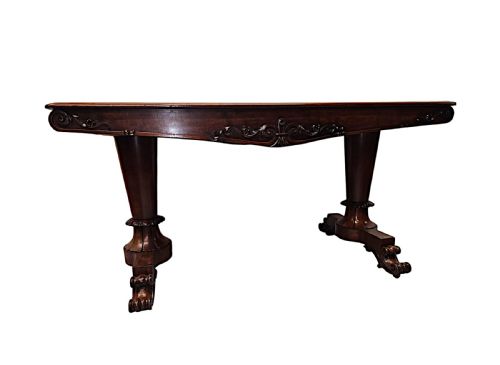
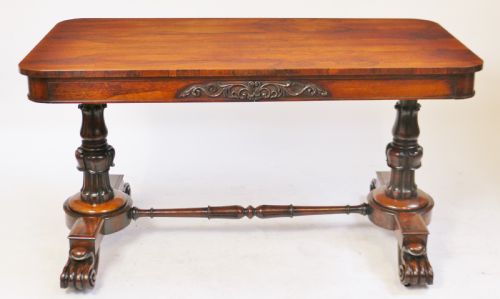
An end support library table offers a sturdy workspace with characteristic trestle ends, combining functional utility with distinguished period cabinet-making.
End Support Library Table
An end support library table is a substantial piece of furniture designed for reading, writing, and central placement within a room. These tables feature robust end supports or trestles, frequently joined by a stretcher or platform base, providing a stable foundation for a spacious top.
The versions most commonly met on this page date from the nineteenth century, encompassing Regency, William IV, and Victorian periods. They appear in forms ranging from writing desks with drawers to larger centre tables used for displaying books and objects.
Makers of these pieces utilised timber figure and classical architectural proportions to create authority. Whether formed as a compact writing table or a grand centre table, the design prioritises stability and accessible surface area.
Materials and construction
Cabinet-makers constructed these tables primarily in dense hardwoods such as mahogany, rosewood, and figured walnut, often applying burr veneers to the top surfaces for visual depth. Secondary timbers provided internal framing for drawers and structural support beneath the polished exterior.
Trestle ends and pillars were shaped using solid timber blocks, frequently incorporating turned columns, carved lyres, or scrolled supports. Brass castors were commonly fitted beneath the feet to allow movement across carpets in a library or drawing room.
Joinery techniques relied on sturdy mortise and tenon joints to secure the legs to the stretchers and top rails. Drawers were constructed with hand-cut dovetails and fitted with small turned wooden knobs or brass pulls.
Some nineteenth-century writers were known to hide spare nibs inside the secret joints of their library table drawers.
Factors that separate the fine from the ordinary
Quality rests significantly on the selection of timber and the quality of the veneers used across the top. Grain matching and the use of carefully chosen burr oak or burr walnut indicate a higher grade of manufacture.
The crispness of the carving on the end supports and lyres distinguishes superior workshop production from simpler commercial output. Well-defined mouldings and balanced proportions demonstrate the hand of a skilled cabinet-maker.
Williams and Gibton·Gillows
The End Support Library Table Glossary
- End support
- A structural configuration where the weight of the table rests on two distinct upright ends or trestles rather than four corner legs. This layout allows for kneehole space and often incorporates a connecting stretcher.
- Centre table
- A freestanding piece designed to be viewed from all sides rather than pushed against a wall. These tables occupy the middle of a room and often feature finished backs to drawers.
- Library table
- A large, sturdy table intended for holding books, papers, and writing materials. They frequently include drawers built into the frieze for storage.
- Lyre end
- A form of trestle support shaped like an ancient Greek lyre instrument. It was a favoured decorative motif during the Regency period.
- Burr walnut
- A figured wood veneer harvested from the excrescences of walnut trees. It yields complex, swirling grain patterns highly prized for decorative furniture tops.
End Support Library Table: Frequently Asked Questions
What is an end support library table?
An end support library table is a nineteenth-century freestanding desk or table supported by two solid upright ends rather than four corner legs. These pieces provided a stable surface for reading and writing in large rooms.
They often include frieze drawers for storing papers and writing equipment. The design allows chairs to be pulled up comfortably beneath the top.
How do I date a library table?
Dating relies on observing timber choices, construction methods, and prevailing decorative styles. Regency pieces often feature rosewood, mahogany, and lyre-shaped supports, while later Victorian examples frequently utilise burr walnut.
Hardware styles, such as drawer pull design and the presence of brass castors, also provide clues to the decade of manufacture. Comparing the secondary timbers inside the drawers helps confirm the period.
Where should I place a centre table?
A centre table is designed to sit in the middle of a room as a focal point. Because these pieces are finished on all sides, they do not need to touch a wall.
They work well in spacious hallways, libraries, or drawing rooms where they can be approached from any direction. Placing a lamp or collection of books on top enhances their traditional function.
How do I care for a polished wood table?
Care involves keeping the timber away from direct sunlight and maintaining steady room humidity to prevent the wood from splitting. Dusting with a soft, dry cloth preserves the finish.
Applying a traditional beeswax polish occasionally helps nourish the polished surface. Avoid placing hot or wet items directly on the timber to protect the polish.