
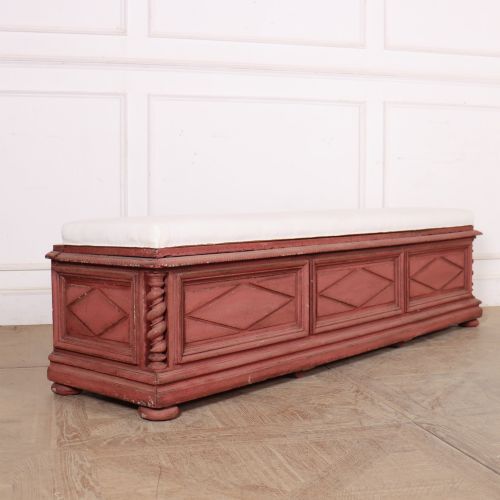
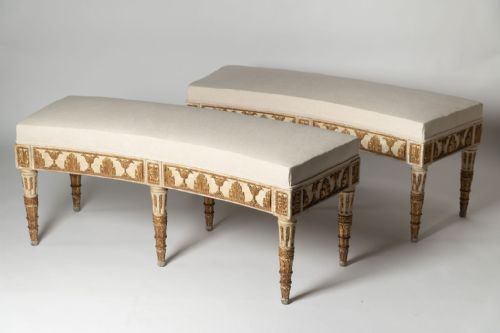


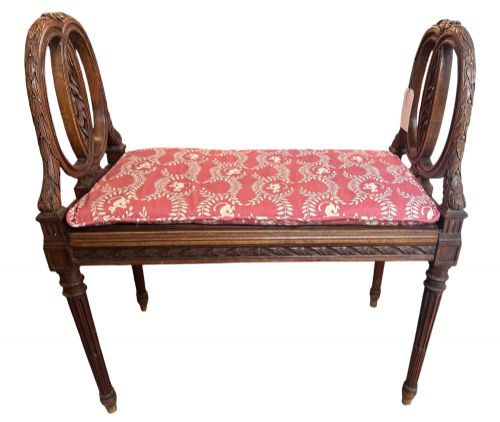


End of Bed Seat
An end of bed seat brings practical comfort and period form to the foot of a sleeping chamber, drawing on centuries of upholstery and cabinet-making.
End of Bed Seat
An end of bed seat serves as a functional perch or long stool placed at the foot of a bed, bridging the gap between seating and bedroom storage furniture. These pieces draw heavily on forms originally designed as window seats, long stools, and small settees.
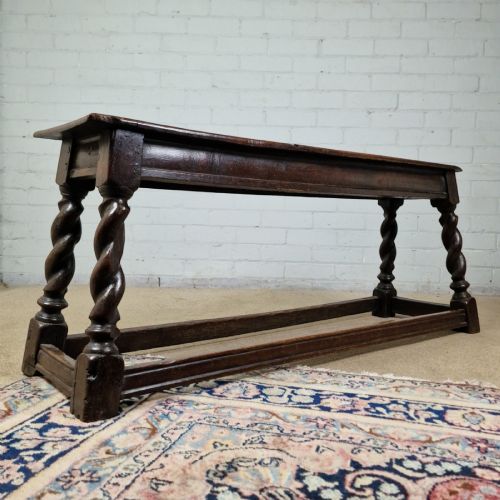
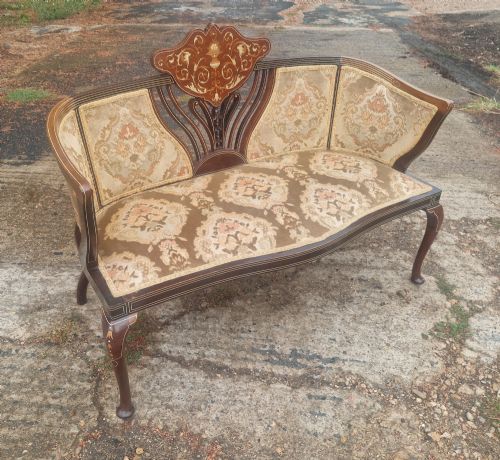
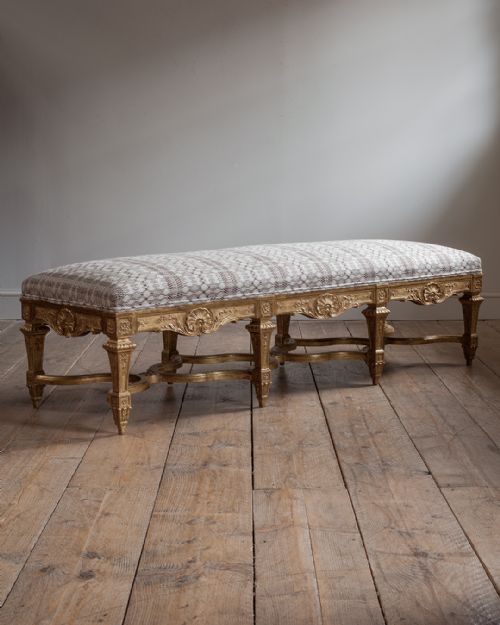
The selections available here span from the eighteenth century through the Edwardian era and the early twentieth century. Common physical forms include walnut or mahogany window seats, inlaid Edwardian sofas, and carved French or Italian benches.
Makers and period workshops produced these using woods such as walnut, mahogany, oak, and birch, often pairing carved frames with traditional textiles. Buyers encounter everything from simple footboard stools to deeply buttoned ottomans.
Materials and construction
Cabinet-makers constructed the wooden frames of an end of bed seat using solid hardwoods such as walnut, mahogany, and oak, occasionally turning to birch or painted wood for specific regional styles. Joinery methods relied on traditional mortise and tenon joints to support weight along extended lengths.
Upholstery techniques combined sturdy webbing and springs with textile coverings including velvet, linen, silk, and printed cottons from notable textile houses. Decorative details frequently involved intricate hand-carving, bone and satinwood inlay, or brass accents.
Some Edwardian makers helpfully slimmed down chair backs so tired buyers would not bump their shins on stray woodwork in the dark.
Assessing quality in period pieces
Quality rests primarily on the integrity of the timber frame and the precision of any applied carving or inlay. Pieces displaying crisp hand-carving in solid walnut or mahogany demonstrate superior workshop standards compared to simpler turned construction.
Upholstery standard and textile choice also divide ordinary examples from exceptional ones. The use of period-appropriate luxury fabrics and meticulous buttoning indicate the caliber of past restoration or original craftsmanship.
The End of Bed Seat Glossary
- Window Seat
- A long narrow bench originally designed to sit in a recessed bay window, frequently adapted as an end of bed seat. These often feature scrolled arms or low backs.
- Ottoman
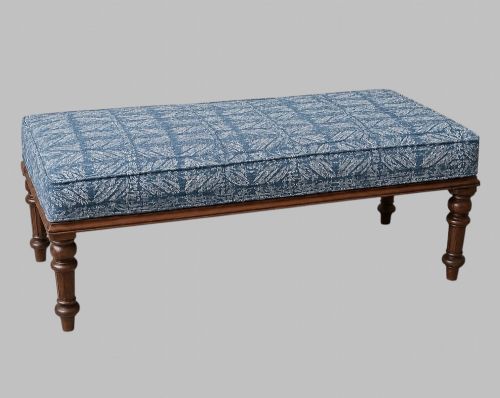
- A low, fully upholstered seat or footstool lacking a back or arms, often built with a deep buttoned top. They provide substantial surface area at the foot of a bed.
- Inlay
- A decorative technique where contrasting materials like satinwood and bone are inserted into depressions within the primary wood surface. This creates geometric or floral patterns on Edwardian frames.
- Cabriole Leg
- A furniture leg that curves outward and then tapers inward, typically ending in a pad or claw foot. This design appears frequently on eighteenth and nineteenth-century seating.
- Giltwood
- Wood that has been coated with a thin layer of gold leaf or gilt paint. It is common on elaborate French and Italian revival pieces.
End of Bed Seat: Frequently Asked Questions
What is an end of bed seat?
An end of bed seat is a long stool, bench, or small settee designed to occupy the floor space directly at the foot of a bed. They provide a convenient place to sit while dressing or to lay garments.
Historically, many pieces sold for this purpose were originally built as window seats, piano stools, or hallway benches before finding a second life in the bedroom.
How do I choose the right size?
Measure the width of your bed frame to ensure the seat aligns proportionally without obstructing walkways in the bedroom. Standard mattress widths help guide whether a compact stool or a larger two-seater sofa fits best.
Consider the height of your mattress as well, ensuring the seat sits at a comfortable level relative to the top of the bed.
Can I mix different periods?
Mixing periods works successfully when wood tones or fabric colours share a common thread within the room's overall palette. An Edwardian inlaid sofa can sit comfortably near earlier walnut furniture if the proportions balance.
Period pieces bring individual character that modern mass-produced furniture often lacks, making eclectic placement a traditional decorating choice.
How do I care for antique upholstery?
Vacuum textile surfaces gently using a soft brush attachment to remove dust without stressing fragile historic fibres or trimmings. Professional cleaning is recommended for delicate silks and velvets.
Keep wooden frames polished with appropriate beeswax and protect the piece from direct sunlight to prevent fading on antique fabrics.