


Three Chair Back Sofa
A three chair back sofa brings together multiple conjoined chair frames into a single grand seating piece, offering a striking silhouette for formal reception spaces.
Three Chair Back Sofa
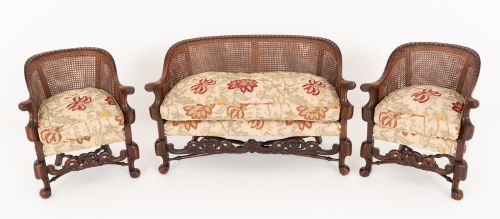
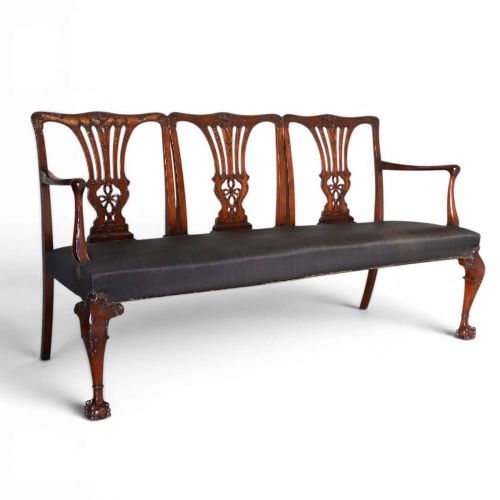
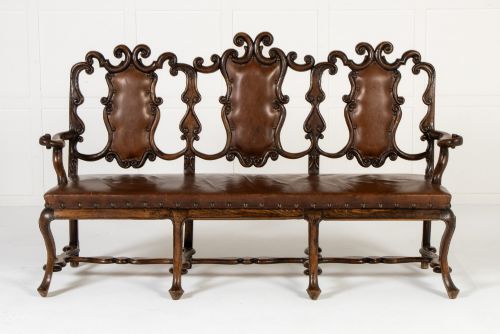
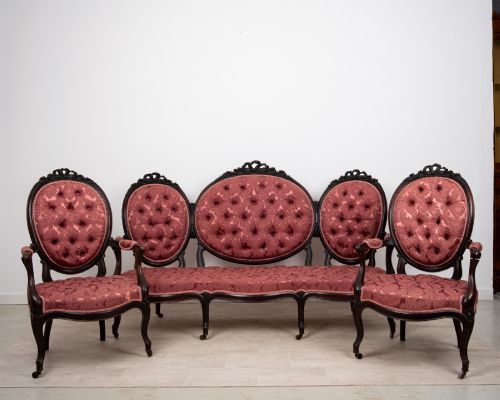
A three chair back sofa presents a continuous timber top rail supported by three distinct vertical splats, mimicking the appearance of three dining chairs joined side by side. These pieces emerge across the nineteenth and early twentieth centuries in forms ranging from nineteenth century walnut and mahogany to Edwardian and Art Deco revivals. Buyers encounter them as standalone settees or as part of larger salon and lounge suites alongside matching chairs.
Makers drew on historical design vocabularies, producing pieces styled after Hepplewhite shield backs, Carolean carvings, and Chippendale aesthetics. Simpler maple Biedermeier examples and buttonbacked upholstered variations also appear within this seating category. The overarching form remains consistent through its partitioned backrest, distinguishing it from standard upholstered settees and plain wooden benches.
Materials and construction
Cabinetmakers utilised dense hardwoods such as mahogany and walnut, occasionally selecting burr walnut or maple for distinctive grain patterns. These timbers provided the structural strength required to shape intricate splats, pierced backs, and curved arm supports.
Upholstery methods varied from drop-in woven cane seats to deep buttoned fabric coverings secured with brass detailing. Frames were joined using traditional woodworking joints, while revival pieces incorporated elaborate hand-carved motifs along the crest rails and legs.
Materials recorded across the inventory include mahogany, walnut, burr walnut, maple, brass, leather, woven cane, and damask fabric.
Distinguishing quality in construction and design
Quality rests in the crispness of the timber carving and the architectural proportion of the three conjoined back units. Superior examples display fluid lines in the splats and tight, seamless joinery where the chair frames meet.
The choice of primary wood and the integrity of secondary elements like woven cane or upholstered damask determine the overall calibre. Finer pieces maintain original timber patination and robust frame construction without structural compromise.
Epstein
The Three Chair Back Sofa Glossary
- Splat
- The vertical central strip of wood in the back of a chair or sofa. It often bears carved or pierced ornamentation defining the style.
- Crest rail
- The top horizontal member of a chair or sofa back. It receives the primary visual focus and stylistic carving.
- Bergere
- An enclosed upholstered armchair or settee with wooden frames and cane panelling. This French-inspired form appears in late nineteenth-century suites.
- Biedermeier
- A Central European style from the early nineteenth century prioritising utilitarian comfort and clean lines over excessive ornamentation. Maple versions exemplify this restrained approach.
- Shield back
- A chair or settee back shaped in the contour of an antique shield, popularised by George Hepplewhite. It forms a distinct subset within mahogany seating.
Three Chair Back Sofa: Frequently Asked Questions
What is a three chair back sofa?
A three chair back sofa is a seating form where the backrest is constructed as three distinct chair frames joined laterally into one continuous settee.
Cabinetmakers utilised this design across the nineteenth and twentieth centuries to echo the aesthetic of dining chairs within a salon seating format.
Where were these sofas placed?
These settees served primarily in formal rooms, parlours, and drawing rooms as part of larger salon or lounge suites.
They provided structured seating that combined the visual lightness of individual chairs with the capacity of a small sofa.
How do I date a chair back sofa?
Dating relies on identifying the underlying revival style, such as Carolean, Chippendale, or Art Deco, combined with timber selection like mahogany or maple.
Nineteenth-century examples often feature dense hand-carved mahogany, while early twentieth-century pieces lean towards Edwardian refinement or streamlined cloud forms.
Are these sofas comfortable for daily use?
Comfort depends entirely on the specific upholstery style, ranging from firm wooden splats with drop-in seats to deep buttoned squabs.
Many period examples prioritise formal posture and architectural presence over deep lounging comfort.