






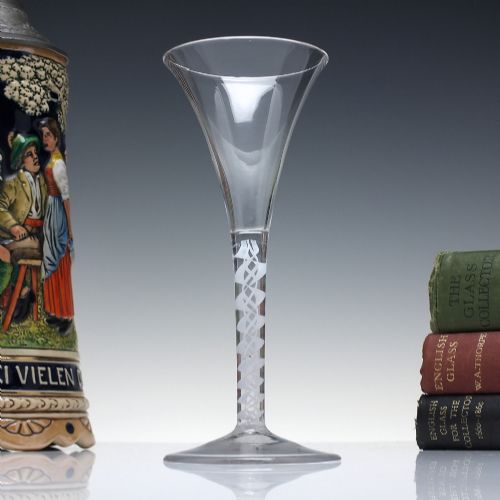




Enamelled Glass Stemware
Enamelled glass stemware brings together vibrant surface decoration and historic forms, offering drinkers a tangible link to Georgian, Victorian and early twentieth-century dining tables.
Enamelled Glass Stemware
When you search for enamelled glass stemware, you encounter drinking vessels ranging from eighteenth-century English tavern and toast glasses to colourful continental hock glasses and champagne coupes from the early twentieth century. These pieces appear as wine glasses, cordial glasses, hock glasses and champagne coupes, serving both functional dining and display roles.
The objects span several distinct eras, notably the Georgian period and the years around 1900 and 1910, reflecting shifts from simple opaque twists to elaborate floral and patterned enamel work. Most pieces you meet on this page lean towards either eighteenth-century British drinking traditions or continental European revival and secessionist styles.
Forms vary according to their intended contents, from tall hock glasses designed for white wine to small cordial glasses and deep champagne coupes. Bowls take rounded funnel, ogee, ovoid and trumpet shapes, often supported by stems that display either internal glass twists or clean crystal lines beneath the enamelled decoration.
Materials and construction
Makers shaped these drinking vessels using blown glass techniques, forming lead glass, lead crystal and clear glass into specific bowl and stem configurations. Molten metal was gathered, blown and manipulated by hand, resulting in slight individual variations across sets and single pieces.
Decoration relied on the application of enamel, sometimes accompanied by gold leaf. Painters applied white enamel or coloured pigments directly onto the glass surface, often fixing the design through a low-temperature firing process that bonded the pigments to the vessel.
Enamelled Glass Stemware Retail Price Guide 2026
Typical asking prices for enamelled glass stemware among the pieces listed under this phrase on Sellingantiques today, from the lower quarter to the upper quarter. They describe what is for sale here now, not the wider market.
Some nineteenth-century drinkers apparently enjoyed their champagne from coupes so heavily enamelled the bubbles had to guess where to escape.
Judging quality and execution
Quality in these drinking vessels rests upon the precision of the glassblowing and the crispness of the enamel work. Superior pieces display thin, even walls and well-balanced stems, whereas lesser examples show heavy rims or distorted bowl profiles.
The fineness of the painted enamel decoration further separates standard items from exceptional ones. Controlled brushwork and securely adhered pigments indicate careful workshop production, while thick, clumsy enamel application diminishes the visual impact of the glass.
Theresienthal·Fritz Heckert
The Enamelled Glass Stemware Glossary
- Enamel
- Opaque glass-based pigment applied to the surface of a vessel and fired to fuse with the body. It provides the colourful patterns and floral motifs seen on continental hock glasses and cordials.
- Hock glass
- A tall stemmed drinking vessel traditionally used for German white wine, often featuring a coloured bowl or extensive surface decoration. The elongated form allows ample space for enamelled floral and geometric designs.
- Ogee bowl
- A bell-shaped drinking vessel profile that curves inward at the rim and outward near the base. This shape appears frequently on eighteenth-century wine glasses and ale glasses.
- Lead crystal
- High-clarity glass containing metal oxide that increases weight, brilliance and resonance. It forms the clear base material for many nineteenth and twentieth-century decorative stemware pieces.
- Champagne coupe
- A broad, shallow-bowled stemmed glass designed for sparkling wine. Enamelled versions provide a wide canvas for decorative borders and coloured motifs.
Enamelled Glass Stemware: Frequently Asked Questions
Can I use these glasses for daily dining?
While these pieces were originally made for dining and entertaining, their age and delicate enamel decoration mean they require careful handling today. Many owners reserve them for special occasions or display purposes rather than regular daily use.
If you do use them for drinks, hand them round personally and avoid stacking them in cupboards where the rims might chip.
What is an opaque twist stem?
An opaque twist stem contains fine white or coloured glass threads enclosed within a clear lead glass stem. Makers produced these internal patterns using complex glass-pulling techniques during the eighteenth century.
They appear frequently on Georgian wine glasses, creating a bright contrast beneath plain or moulded bowls.
How do I tell Georgian glass from later periods?
Georgian glassware typically exhibits characteristic pontil marks on the base, slightly heavier metal weight from lead content, and simpler, hand-formed proportions. Eighteenth-century pieces often rely on optical effects like air twists or opaque twists rather than surface painting.
Later Victorian and Edwardian pieces, by contrast, frequently feature colourful enamelling, gilt highlights, and crisper, more uniform machine-assisted forms.