




Enameled Glass Vase
An enameled glass vase brings together coloured glass and pigment, offering painted scenes and gilded patterns across various periods.
Enameled Glass Vase
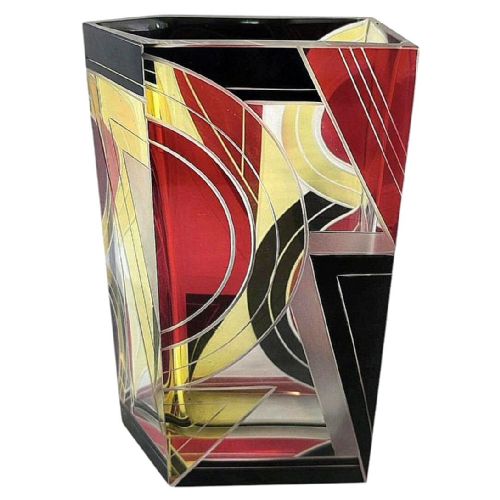
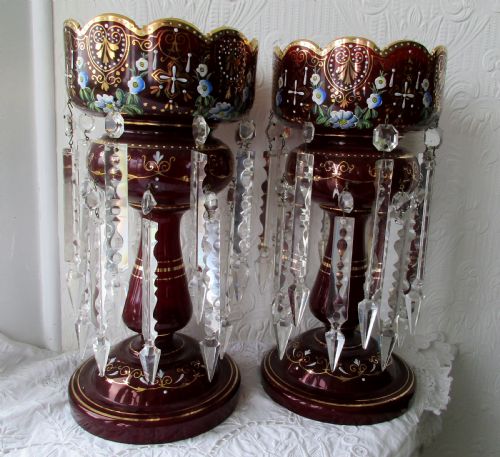
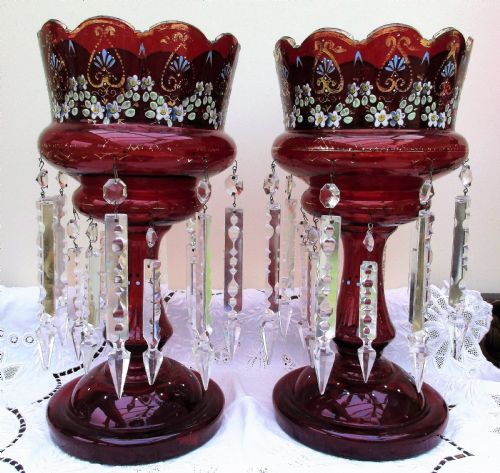
When searching for an enameled glass vase, buyers encounter items ranging from nineteenth-century Victorian cranberry and ruby glass to twentieth-century Art Deco geometric designs. These pieces span mantel lustres, garniture sets, and decorative glassware, originating from English, French, and Bohemian makers.
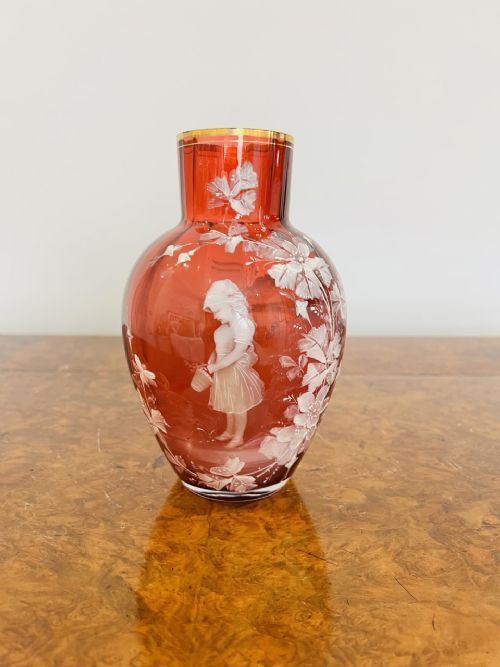
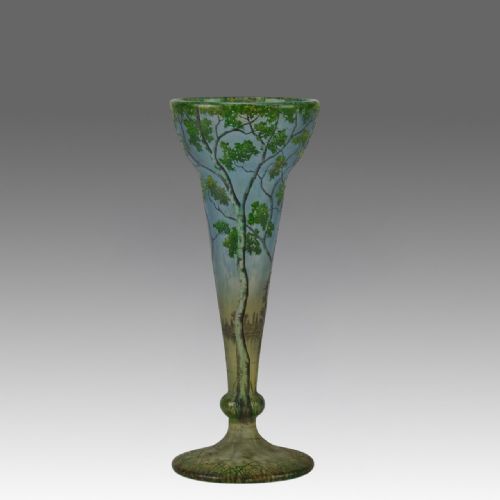
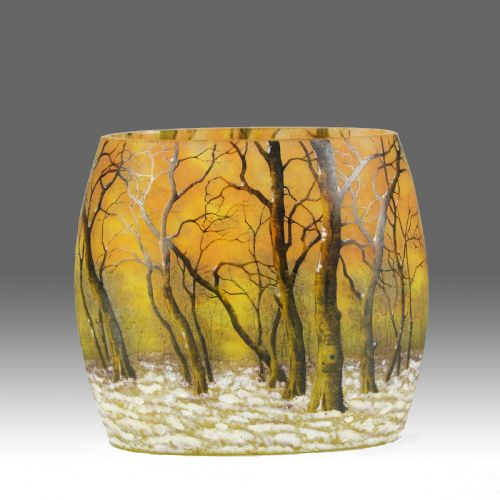
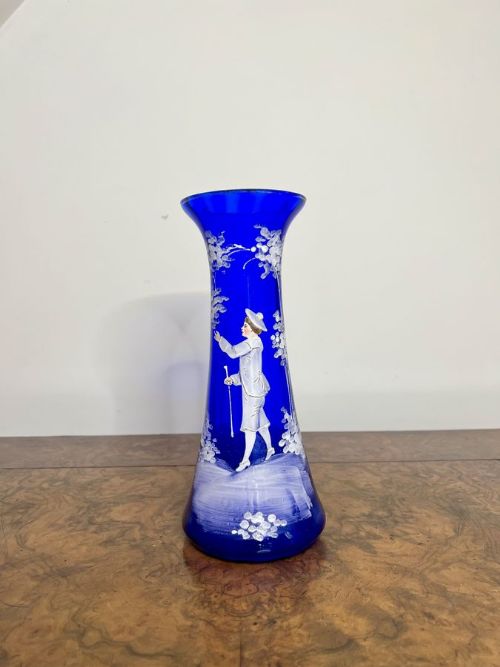
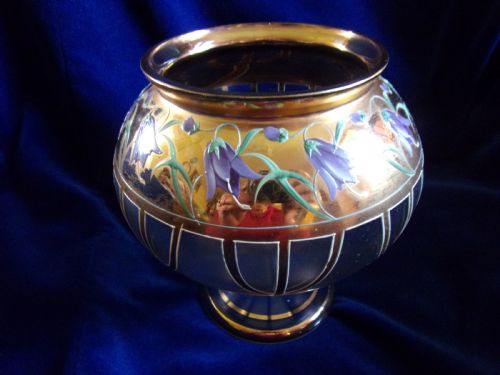
The nineteenth-century examples often feature painted white figures in the style associated with Mary Gregory, or floral motifs on ruby, blue, and green glass. Later twentieth-century items shift toward the linear patterns of Art Deco and the natural landscapes rendered by French glassworks.
Materials and construction
Glassmakers utilised techniques such as hand blowing, cameo carving, and overlay methods to create the vessel body from materials including lead crystal, opal glass, and coloured glass. Cranberry and ruby hues derive from gold or copper compounds added to the molten batch.
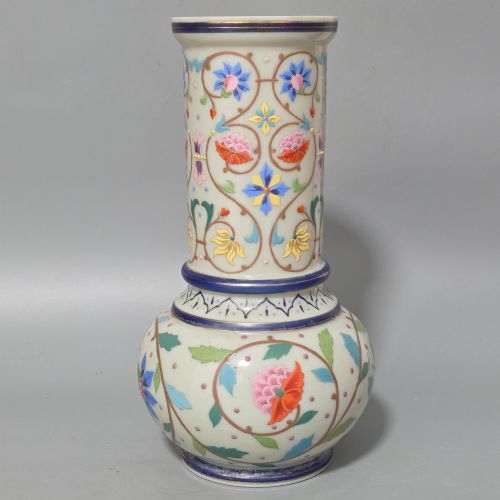
Decoration relied on applied enamel paints, sometimes heightened with gold leaf or etching. Artisans fired the pigments onto the glass surface to fuse the colours permanently before final cooling and polishing.
A green Bohemian glass vase records an enthusiastic fox hunting scene painted directly onto the blown surface.
Judging quality in enameled glass
Quality rests upon the precision of the glass forming and the execution of the enamel work. Finer pieces display crisp brushwork, well-defined gilding, and clean etchings that integrate harmoniously with the underlying glass body.
Heavier lead crystal foundations and balanced proportions separate standard production items from masterworks produced by prominent European glasshouses.
Daum Frères·Thomas Webb·Kralik Glass·Karl Palda·St Louis glassworks
The Enameled Glass Vase Glossary
- Cranberry glass
- A transparent pinkish-red glass created by adding gold chloride to the molten batch. It appears frequently in Victorian decorative pieces and mantel lustres.
- Cameo glass
- A vessel made with two or more layers of contrasting glass fused together, where the outer layer is carved away to leave a raised design. This technique defines several Art Nouveau examples.
- Mantel lustre
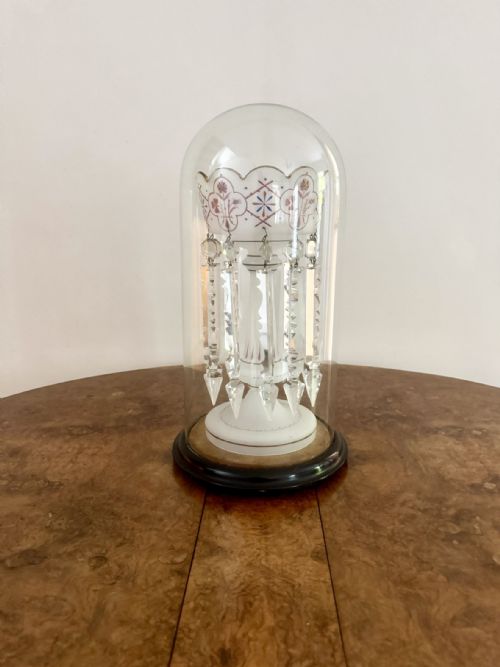
- A decorative glass vase fitted with hanging glass prisms around the rim. They were designed to sit on fireplace mantelpieces and reflect candlelight.
- Enamel
- Opaque or translucent glass-based paint applied to the surface of a vessel. It requires kiln firing to adhere permanently to the glass substrate.
- Opaline glass
- An opaque or translucent pale glass developed during the nineteenth century. It provides a solid background for contrasting hand-painted floral and pictorial enamel decoration.
Enameled Glass Vase: Frequently Asked Questions
How do I clean an enameled glass vase?
Wash the glass gently in lukewarm water using mild soap, avoiding harsh abrasives or soaking that could damage the enamel or gilding.
Dry the piece immediately with a soft, lint-free cloth to protect the surface finish.
Were these vases meant for flowers?
Many vessels served as decorative garniture items or mantel ornaments rather than utilitarian flower holders.
Some bulb vases and larger forms were indeed used for displaying cut stems, while others remained purely ornamental.
How can I distinguish Victorian pieces from Art Nouveau ones?
Victorian examples often favour rich ruby or cranberry glass with white Mary Gregory figures or formal floral motifs.
Art Nouveau pieces typically display organic plant forms, landscapes, and cameo glass techniques developed toward the turn of the twentieth century.
What are mantel lustres used for?
Mantel lustres function as decorative fireplace ornaments featuring hanging crystal prisms that catch and refract ambient light.
They usually appear in pairs alongside matching vases or garniture sets.