



Painted Art Glass Vessel
These painted art glass vessel pieces bring colour and texture into a room, spanning Victorian and twentieth-century makers.
Painted Art Glass Vessel
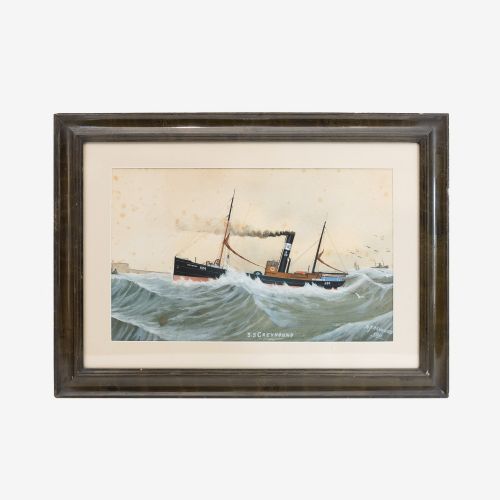
A painted art glass vessel brings together decorative glass and applied pigment, taking the form of vases created across the Victorian and twentieth-century periods. These items show the tastes of makers from the eighteen-sixties through to the nineteen-thirties, reflecting diverse influences from maritime folk art to continental design.
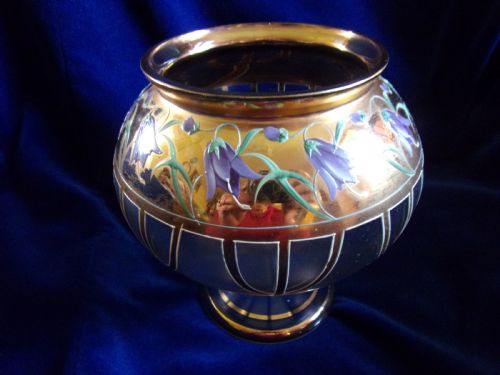
The objects seen here most frequently take the shape of vases, decorated with enamels or landscapes. Collectors encounter pieces spanning Victorian production to Art Nouveau styles, each showing distinct methods of surface decoration applied to glass bodies.
Materials and construction methods
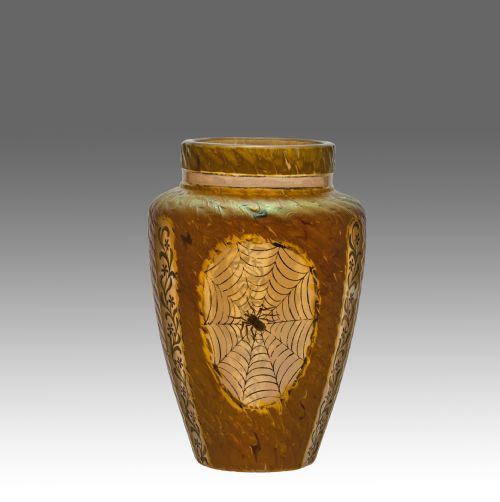
Makers utilised glass as the primary substrate, applying enamel, paint, and gilding directly to the surface to create pictorial scenes and decorative patterns. Iridescent finishes were also developed to catch the light, adding depth to the glass body.
Production techniques involved shaping the molten material into vases, followed by careful hand-painting of landscapes, portraits, or abstract motifs. The integration of enamel with glass required precise firing temperatures to ensure permanent bonding.
The listings here span the Victorian period through the nineteen-thirties, featuring glass, enamel, and paint.
Assessing quality in execution
Quality rests upon the precision of the hand-painted details and the control shown in the enamelling and gilding. Finer examples display deliberate brushwork and well-balanced composition, whereas simpler pieces rely on more repetitive decorative schemes.
The sophistication of the glass itself, whether cased, iridescent, or polychromatic, sets apart superior items. The integration between the underlying vessel and the painted surface dictates the overall visual success of the piece.
Alexander Harwood·Kralik Glass·Mary Gregory·Legras·Daum
The Painted Art Glass Vessel Glossary
- Enamel
- A fused glassy substance applied to metal or glass for ornamentation. It provides durable colour that withstands light and handling.
- Iridescent Glass
- Glass treated with metallic oxides to produce a rainbow-like sheen. This technique was favoured by makers seeking shimmering optical effects.
- Cased Glass
- Glass made of two or more distinct layers of different colours. The outer layer is often cut away to reveal the contrasting colour beneath.
- Polychromatic
- Featuring a variety of different colours. This approach allows for detailed pictorial scenes and rich decorative patterns.
Painted Art Glass Vessel: Frequently Asked Questions
What is a painted art glass vessel?
A painted art glass vessel is a decorative glass object enhanced with hand-applied enamel, paint, or gilding. These pieces range from Victorian examples to twentieth-century works.
They reflect the changing aesthetic movements of their respective periods, combining glassblowing with surface artistry.
How do I date these pieces?
Dating relies on stylistic clues, including the form of the vessel and the nature of the painted decoration. Art Nouveau motifs point towards the turn of the century.
Victorian pieces often feature heavier enamelling and specific colour palettes associated with nineteenth-century production.
Are these items signed?
Some pieces bear maker marks or signatures etched into the glass or painted on the base. Others rely on distinct stylistic traits for attribution.
Unsigned pieces remain common, particularly among nineteenth-century examples where attribution rests on technique and form.
How should I clean them?
Cleaning requires gentle dusting with a soft, dry cloth to protect delicate surface painting and gilding. Water and chemical cleaners should be avoided.
Careful handling ensures the enamel and paint remain intact without suffering abrasion over time.