




Enamel Glass Vase
An enamel glass vase brings together vibrant painted decoration and translucent vessels across Victorian, Art Nouveau and Art Deco periods.
Enamel Glass Vase
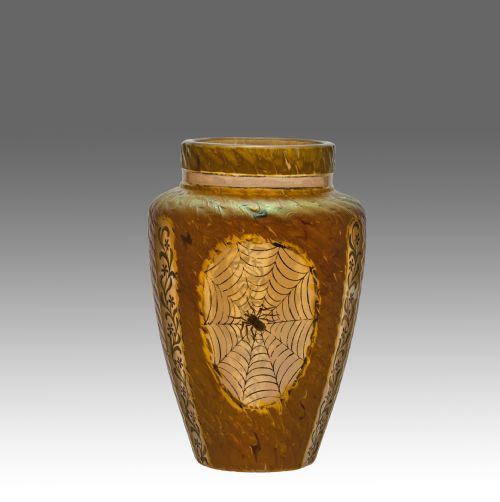
When browsing an enamel glass vase, buyers encounter items ranging from mid-nineteenth-century Victorian opaline pieces to geometric Art Deco creations from the nineteen-thirties. The selection spans domestic English productions, Bohemian works, and French studio pieces.
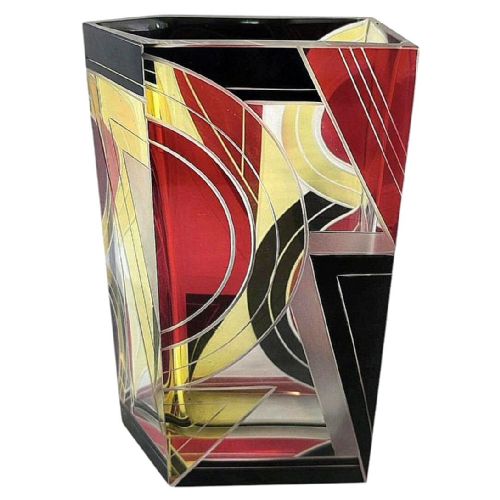
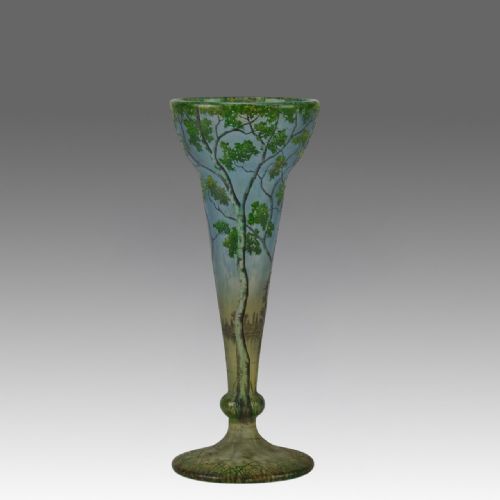
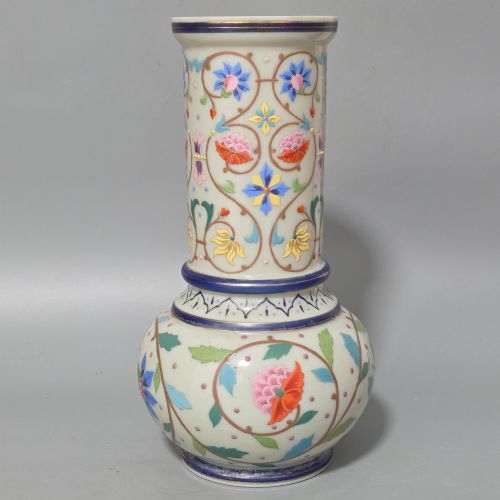
Victorian examples frequently display opaque white or coloured bodies painted with floral motifs or figural scenes, while later Art Nouveau and Art Deco outputs favour stylised botanical designs or stark geometric lines.
Materials and Construction
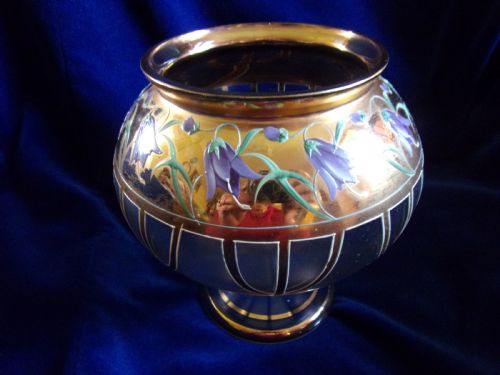
Makers utilised various glass bodies including cranberry glass, ruby glass, opal glass, and lead crystal, often applying layers of cameo glass or gold leaf for added depth. Artisans then hand-painted coloured enamel pigments directly onto the surface before firing.
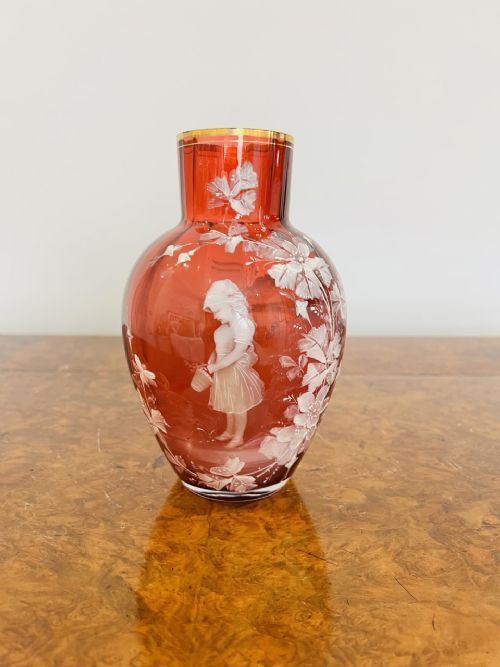
Techniques evolved from the detailed brushwork seen on nineteenth-century lustres and Mary Gregory style vessels to the acid-etching and thick enamel applications found on later twentieth-century Czech and French works.
Listings span nineteenth-century Victorian production through to nineteen-thirties Art Deco designs, incorporating French, English, and Bohemian origins.
Assessing Quality and Execution
Superior pieces exhibit crisp, precise brushwork in the enamelling and careful control of the underlying glass colour, whether in transparent amethyst or solid black. The integration between the applied enamel and the glass body indicates the skill of the decorator.
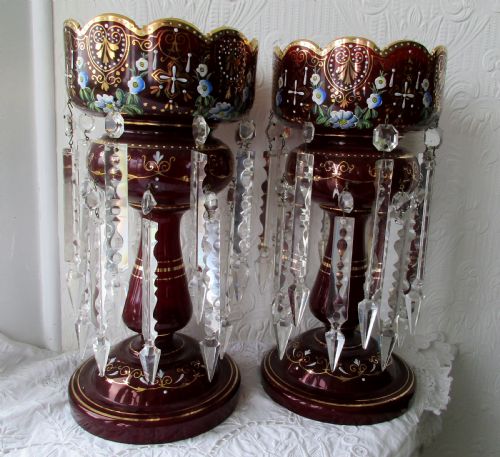
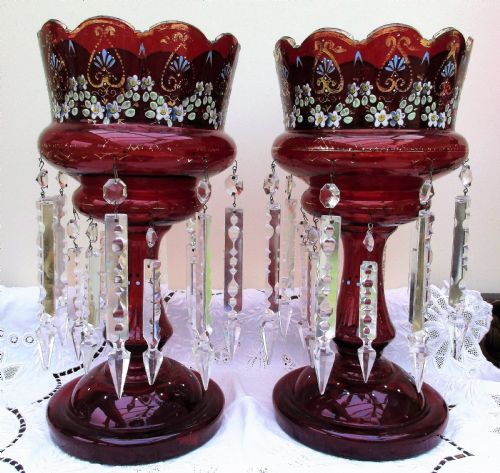
Larger scale items, such as multi-layered cameo glass vases or matched pairs of mantel lustres with intact drops, generally represent more ambitious workshop production than smaller utilitarian vessels.
Daum Frères·Karl Palda·Thomas Webb·Legras·Moser·Harrach·Kralik Glass·Philippe-Joseph Brocard
The Enamel Glass Vase Glossary
- Cameo glass
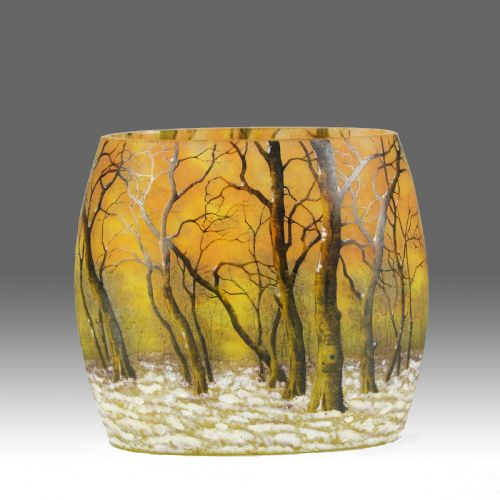
- Glass formed with multiple layers of different colours, where sections of the outer layer are carved or acid-etched away to reveal a contrasting background. This technique creates a raised, two-tone design popular in Art Nouveau pieces.
- Mary Gregory glass
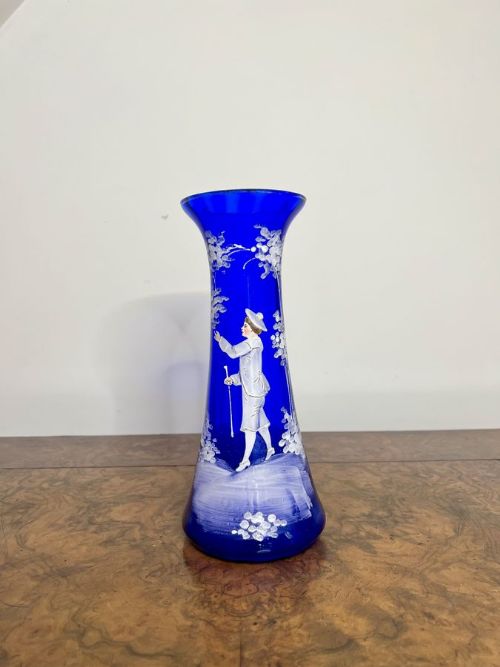
- Victorian glassware decorated with white or tinted enamel silhouettes depicting children in natural settings. These figures are typically painted against cranberry, blue or green glass grounds.
- Mantel lustre
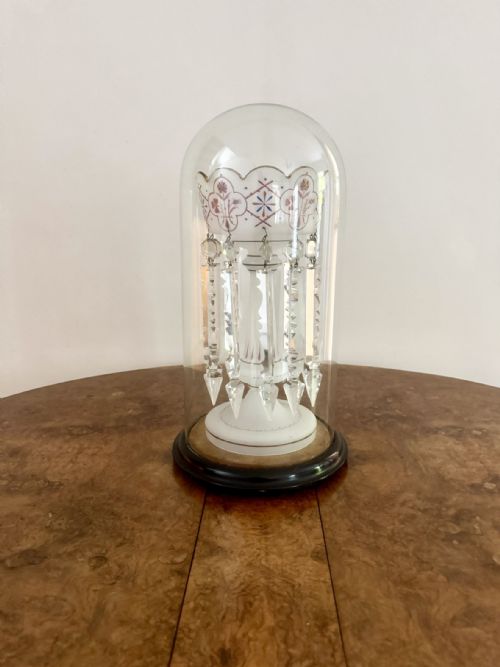
- A decorative Victorian vase fitted with a rim hung with cut glass prisms or pendants. They frequently feature hand-painted enamel floral decoration on coloured glass.
- Opaline glass
- An opaque or translucent pale glass developed during the nineteenth century. It provides a smooth, solid background well suited for hand-painted enamel flowers and scenes.
- Historismus
- A nineteenth-century decorative style drawing inspiration from historical periods and medieval or Renaissance motifs. It appears on heavy Bohemian and European glass vessels.
Enamel Glass Vase: Frequently Asked Questions
Were these vases used for holding water?
Many nineteenth-century and early twentieth-century examples served purely as decorative mantel ornaments or garniture set components rather than functional flower holders. Delicate enamel work and applied gold leaf can suffer damage from moisture.
Checking the interior for water staining helps determine whether a specific piece saw active use.
How can I tell Victorian pieces from Art Deco ones?
Victorian examples rely on organic floral motifs, silhouettes of children, and rich colours like cranberry and ruby. They often include applied lustres and hand-painted pastoral scenes.
Art Deco items from the nineteen-thirties feature stark geometric patterns, stylized botanical forms, and contrasting black or green glass bodies produced in regions such as the Czech Republic.
What is the difference between cameo glass and standard enamel?
Cameo glass involves carving or acid-etching away layers of solid coloured glass to create raised relief designs. Enamel work consists of painting vitreous pigments directly onto the smooth glass surface and firing them.
Some advanced pieces combine both techniques by applying coloured enamels on top of carved cameo glass backgrounds.