

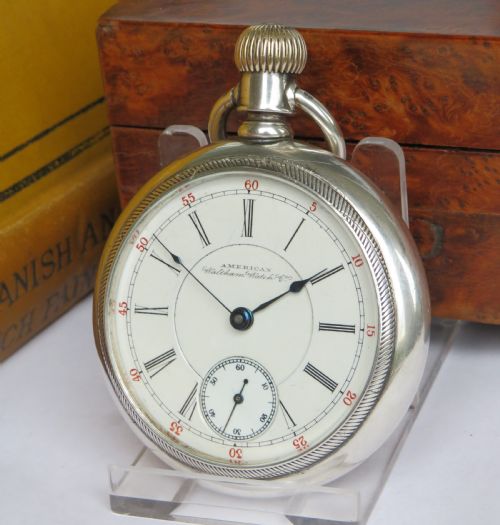
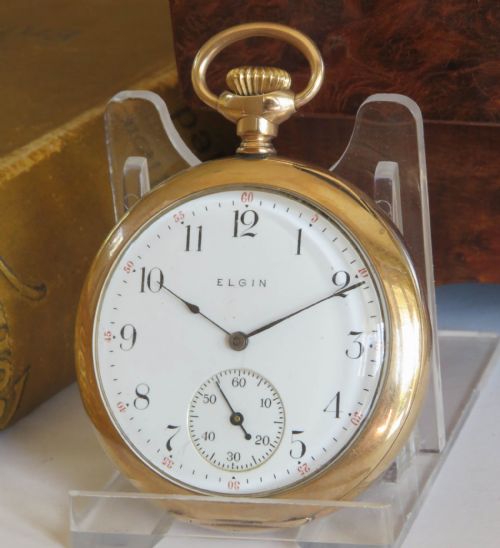
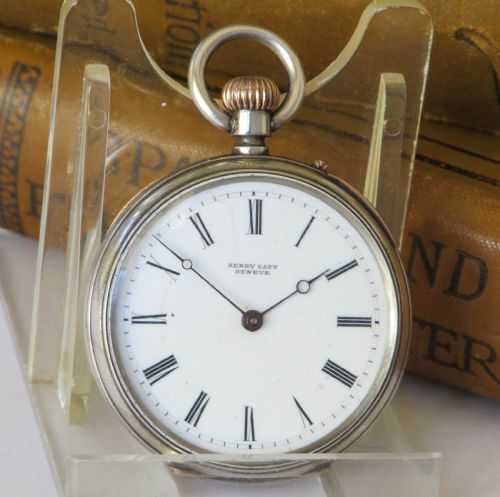
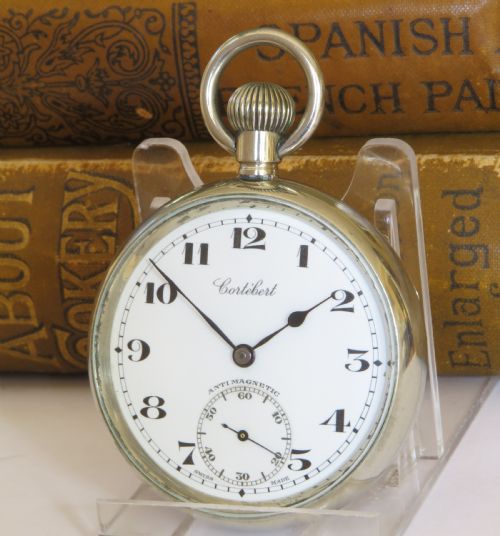
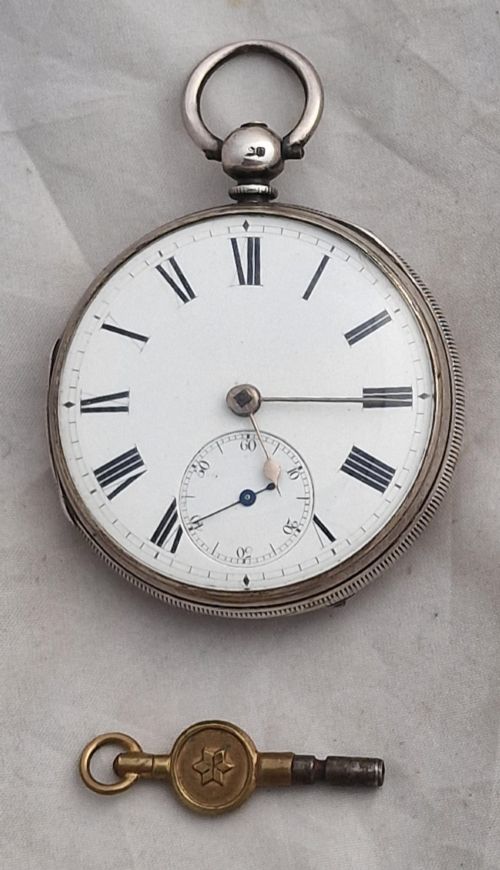
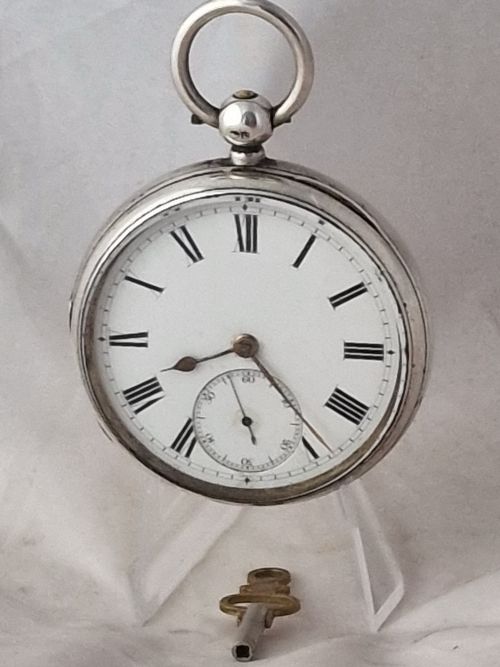
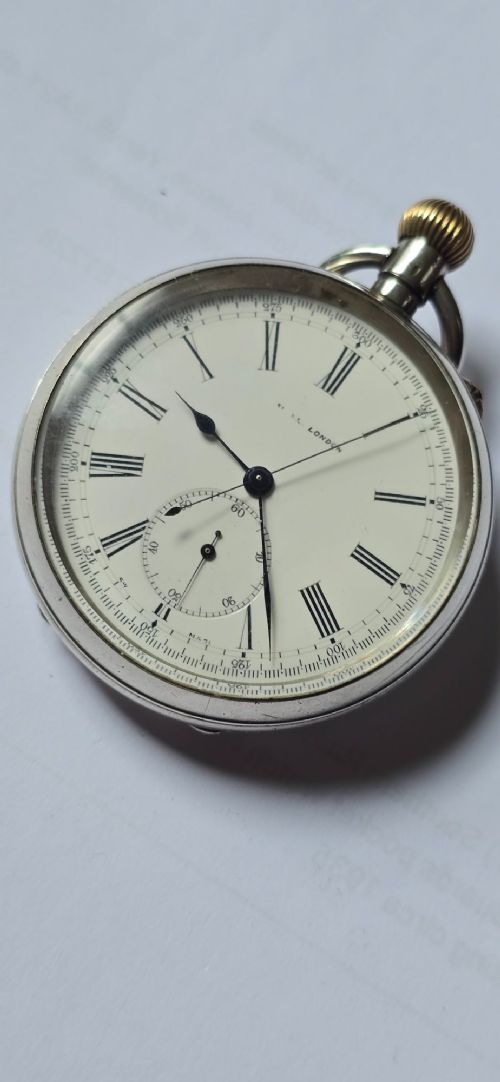
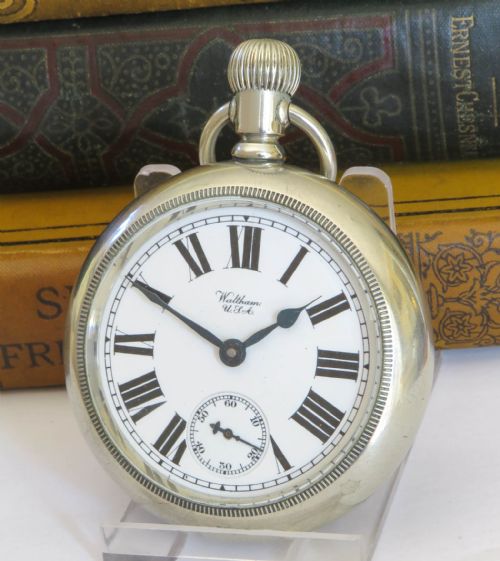
Enamel Face Pocket Watch
An enamel face pocket watch combines precise mechanical timekeeping with a crisp, legible white dial that endures without tarnishing.
Enamel Face Pocket Watch
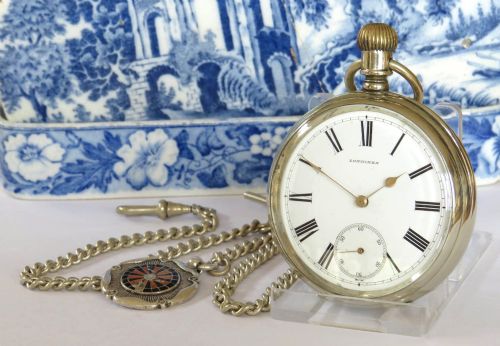
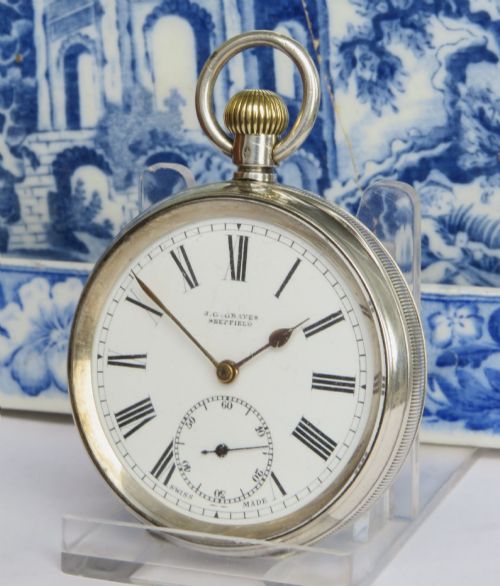
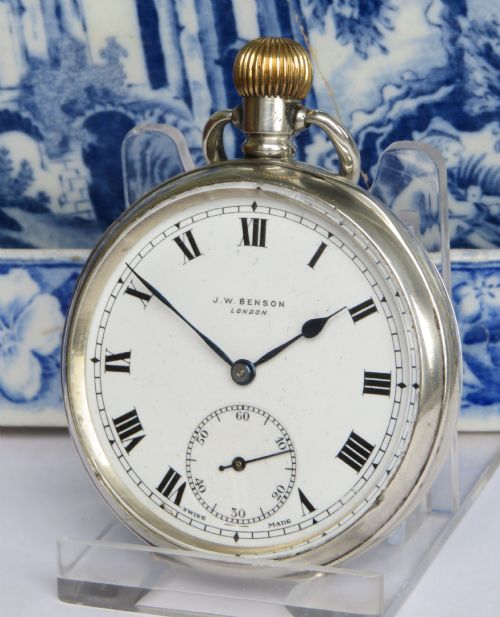
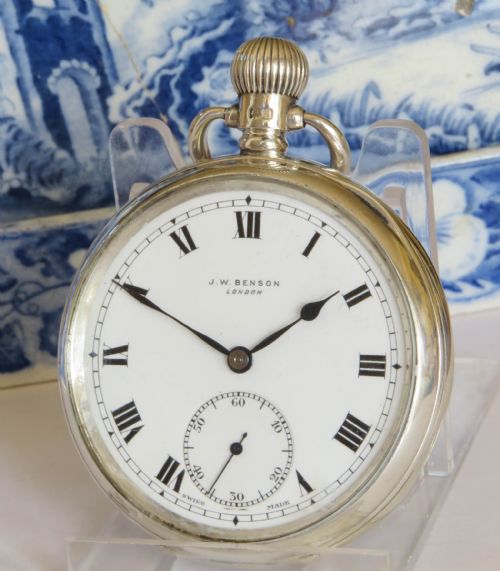
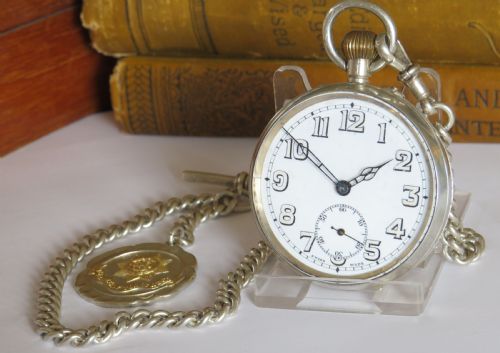
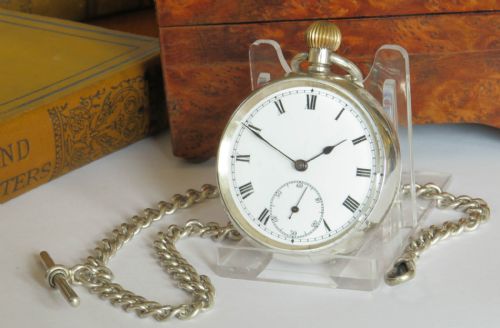
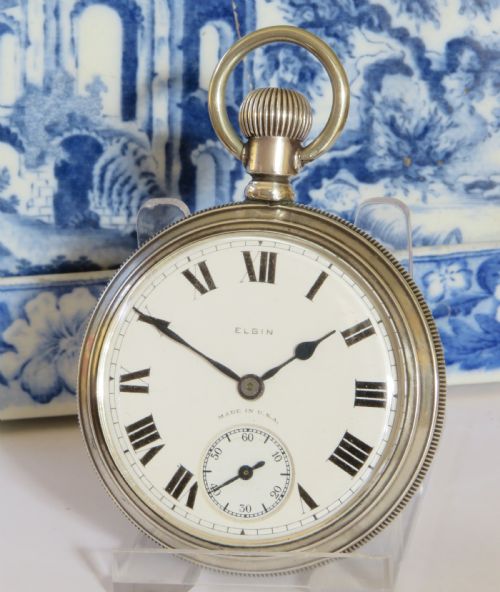
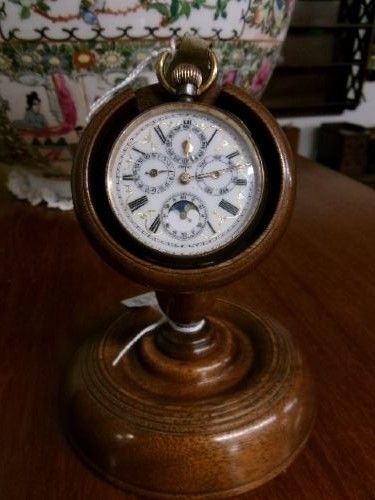
An enamel face pocket watch is a portable timepiece featuring a vitreous dial, often paired with Roman or Arabic numerals and subsidiary seconds. Buyers seeking this phrase encounter pieces dating from the Victorian era through to the mid-twentieth century, spanning Edwardian, Art Deco, and military styles.
The most common examples on this page are silver pocket watches from makers such as Waltham, Elgin, and J W Benson, produced around the turn of the twentieth century and the interwar decades. Alongside standard pocket watches, the selection includes specialised pieces such as chronographs, railway watches, stopwatches, and large goliath watches.
Housed in cases of silver, steel, brass, or gold plate, these watches reflect both civilian utility and specific industrial roles like locomotive operation. The overarching appeal lies in the combination of traditional mechanical movements and the smooth, glossy finish of a fired enamel dial.
How they were made
The dials of these watches are formed by fusing powdered glass to a copper or metal base at high temperatures, creating a hard, vitreous surface that accepts painted numerals and railway tracks. Metal cases - predominantly sterling silver, nickel, or gunmetal - were stamped, cast, or turned on lathes to house the internal brass and steel gear trains.
Movements rely on mechanical ingenuity, utilising mainsprings, balance wheels, and sometimes fusee chains or chronograph complications to regulate time. Components were hand-finished and assembled by skilled watchmakers in workshops across Britain, Switzerland, and America before being fitted into protective outer cases with glass crystals.
Enamel Face Pocket Watch Retail Price Guide 2026
Typical asking prices for enamel face pocket watch among the pieces listed under this phrase on Sellingantiques today, from the lower quarter to the upper quarter. They describe what is for sale here now, not the wider market.
Listings feature Victorian, Edwardian, and mid-century periods, utilising materials such as sterling silver, brass, glass, and enamel.
What varies in quality
The integrity of the enamel dial sets the baseline for quality, as hairline cracks, chips, or restoration around the winding holes detract from visual appeal and historical preservation. Finer pieces feature crisp, perfectly legible enamel work fired without discolouration, paired with delicate blued steel hands.
Mechanical complexity and finishing distinguish standard utility pieces from high-grade examples. Jewelled movements, adjusted for temperature and position, along with sophisticated additions like split-seconds chronographs or eight-day reserves, represent the upper tier of watchmaking skill.
J W Benson·Elgin·Henry Capt·Waltham·Cortebert·Kendal & Dent·Allion of Versailles·Tavannes·New York Standard·Octava·Lange & Sohne·Minerva·Richardson·Syren·Stauffer·Omega·Octo·Vertex·Revue·Hamilton
The Enamel Face Pocket Watch Glossary
- Enamel dial
- A watch face made from fused powdered glass on metal. It provides a bright white background that resists fading over time.
- Fusee
- A conical pulley used in older pocket watches to maintain even tension on the gear train as the mainspring unwinds. This mechanism improves timekeeping consistency.
- Chronograph
- A watch with a function for measuring elapsed time, often featuring a central sweep seconds hand. Some examples include split-seconds dials for timing multiple events.
- Goliath watch
- An extra-large pocket watch, frequently measuring over sixty millimetres in diameter. These pieces were often housed in leather travel cases or desk stands.
- Subsidiary seconds
- A small secondary dial, usually positioned above the six o'clock marker, that tracks the seconds independently of the main hour and minute hands.
Enamel Face Pocket Watch: Frequently Asked Questions
Can I carry a pocket watch every day?
Yes, many people wear these watches using a suitable chain secured to a waistcoat or belt loop. Keeping the watch in a dedicated pocket protects the glass and case from knocks.
Because these are antique mechanical items, avoid exposing them to strong magnetic fields, moisture, or heavy impacts during daily wear.
How do I tell the period of a pocket watch?
The style of the case, the typography on the enamel dial, and hallmarks stamped inside the silver or gold covers provide reliable dating clues. Victorian pieces often feature ornate floral engraving, while 1930s examples lean towards clean, minimalist numbering.
Serial numbers engraved on the inner movement plates can also be cross-referenced with manufacturer records to find the exact year of production.
What is a railway pocket watch?
Railway watches were high-precision timepieces issued to or required by train crews to maintain strict schedules. They feature bold, clear enamel dials with large Arabic numerals for instant legibility in low light.
These movements were built to strict standards, often incorporating micro-regulation and robust levers to prevent accidental time-setting.