


Enamel Decorated Glass
These enamel decorated glass pieces span centuries of craft, bringing colour and pattern to any room through durable mineral pigments fused directly into the surface.
Enamel Decorated Glass
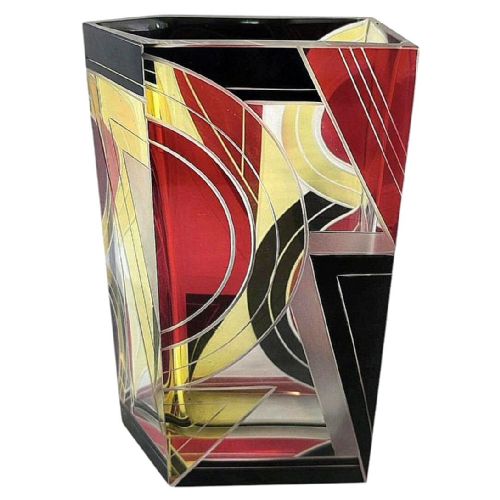
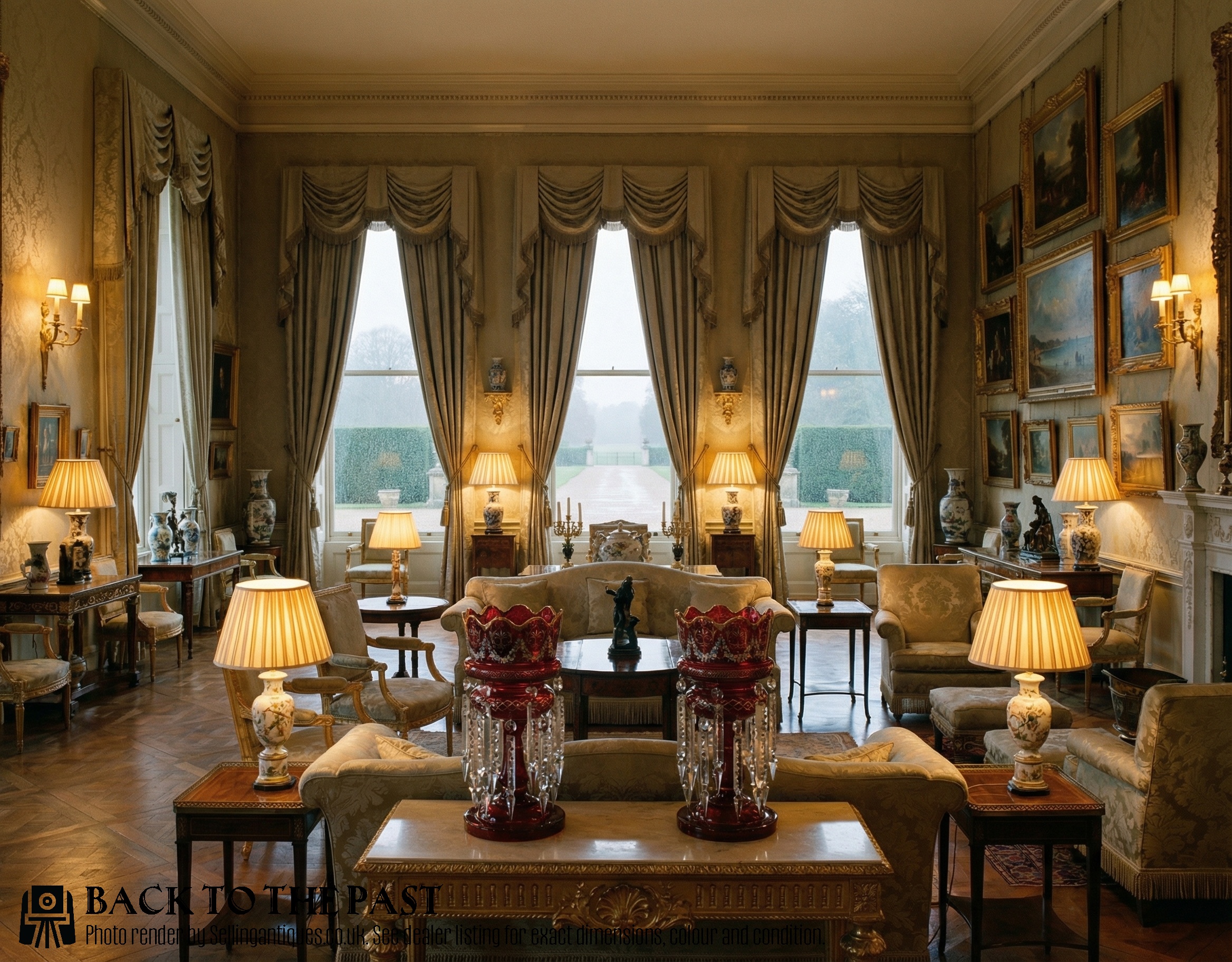
Enamel decorated glass comprises vessels ranging from Victorian mantel lustres and oil lamps to Art Deco geometric vases and eighteenth-century German bottles. Buyers seeking enamel decorated glass will encounter functional household items and decorative glassware created across multiple periods including the Victorian era, the Edwardian years, and the nineteen-thirties.
The objects take diverse forms such as biscuit barrels, teacups and saucers, decanters, and large oviform vases. Green glass, ruby glass, clear glass, and opaque glass provide the groundwork for these painted and gilded designs.
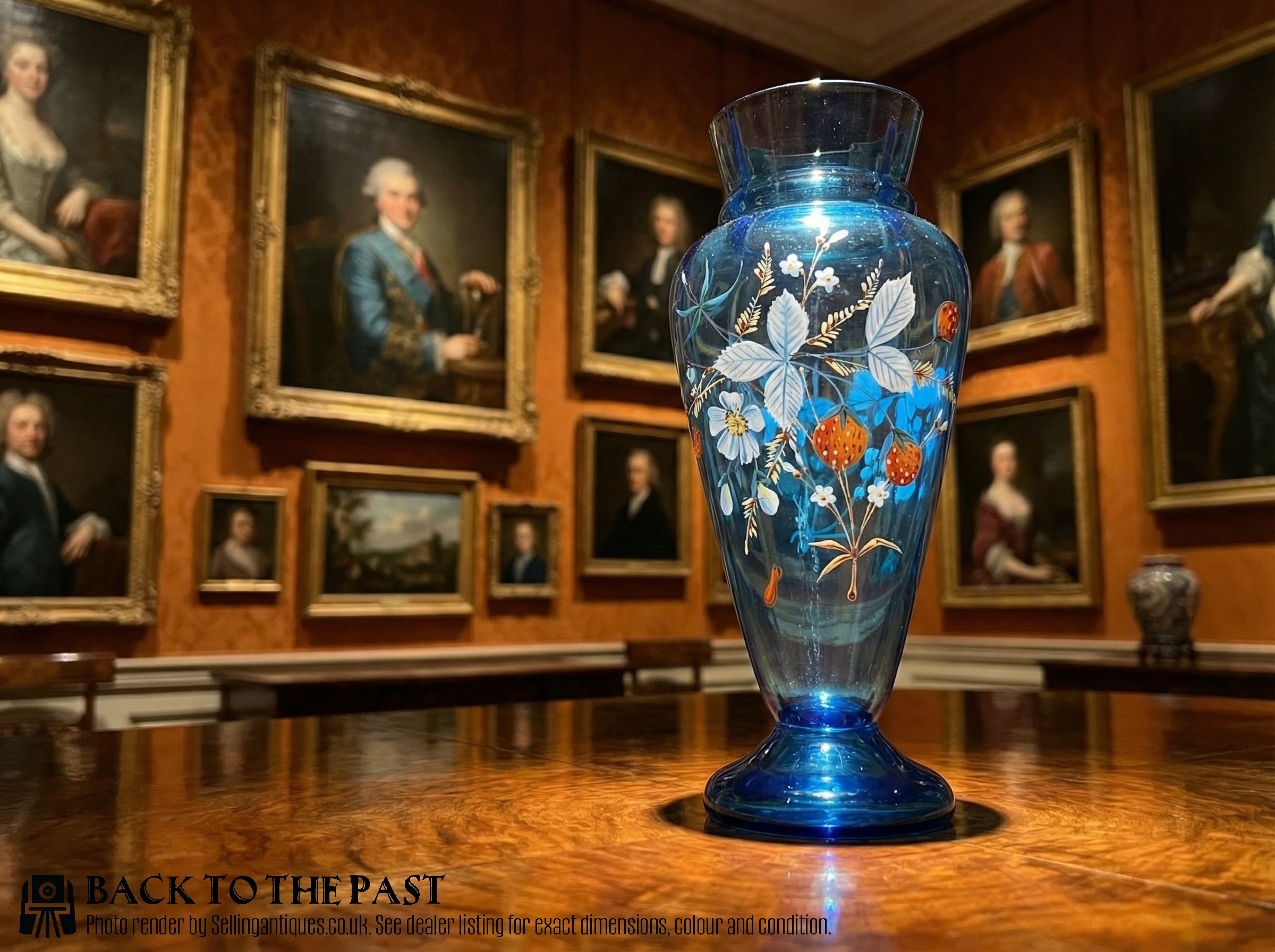
Bohemian, German folk art, Art Nouveau, and Art Deco styles appear frequently among the listings. Pieces often feature natural motifs, hunting scenes, winter landscapes, and geometric patterns executed with varying degrees of complexity.
Materials and methods
Makers utilised glass as the primary substrate, shaping vessels through hand blowing, cutting, or moulding. Clear, ruby, green, and opaque glass bodies provided contrasting backdrops for subsequent decoration.
Workers applied powdered glass mixed with mineral oxides and binding agents to the surface before firing the objects in a kiln. This thermal process fused the enamel permanently to the glass body, while additional touches of gold leaf or gilt were frequently added to enhance the design.
Foxes pursued by hounds across nineteenth-century Bohemian glass prove that wildlife artists rarely worried about a hound's sense of perspective.
Distinctions in craftsmanship
Quality rests in the precision of the brushwork and the complexity of the fused enamels. Finer examples display crisp, deliberate botanical or figurative scenes rather than hasty application.
The integration of gilt and gold leaf alongside the enamel work separates standard production pieces from master outputs. Weight, clarity of the underlying glass vessel, and the stability of the fused pigments further define the upper tier.
Emmy Seyfried·Legras·Daum·Baccarat
The Enamel Decorated Glass Glossary
- Enamel
- A vitreous composition fused to the surface of glass through heat. It provides durable colour and opaque or translucent decoration.
- Mantel lustre
- A decorative glass vase hung with glass prisms designed to catch the light. These were popular on Victorian mantelpieces.
- Guilloche
- An intricate decorative engine-turned pattern engraved beneath a transparent enamel layer. It appears frequently on small personal items.
- Oviform
- Egg-shaped in profile. This curvature appears often on nineteenth and twentieth-century vases.
- Gilt
- A thin application of gold or gold leaf used to embellish glass surfaces. It often accents raised enamel details.
Enamel Decorated Glass: Frequently Asked Questions
Are these pieces safe for holding food or drink?
Many older vessels served decorative functions or held dry goods like biscuits rather than beverages, so care is needed.
Enamels fired in earlier centuries can contain heavy metals or degrade with acidic liquids, making display the safer choice.
How can I tell an Art Deco piece from a Victorian one?
Victorian examples tend to feature naturalistic floral motifs, heavy gilding, or ornate moulded glass bodies like mantel lustres.
Art Deco items from the nineteen-thirties showcase clean geometric lines, stylised patterns, and simplified vessel shapes.
What is a mantel lustre?
A mantel lustre is a large glass vase fitted with a rim that holds dangling crystal prisms or pendants.
These were designed to reflect candlelight and gaslight in nineteenth-century parlours.