


Empire Vanity Table
An empire vanity table brings neoclassical grandeur to a bedroom, combining rich mahogany and striking metal mounts for a dramatic focal point.
Empire Vanity Table
An empire vanity table is a piece of bedroom furniture designed for personal grooming, primarily encountered in nineteenth-century forms ranging from French dressing tables to Swedish birch mirrors.
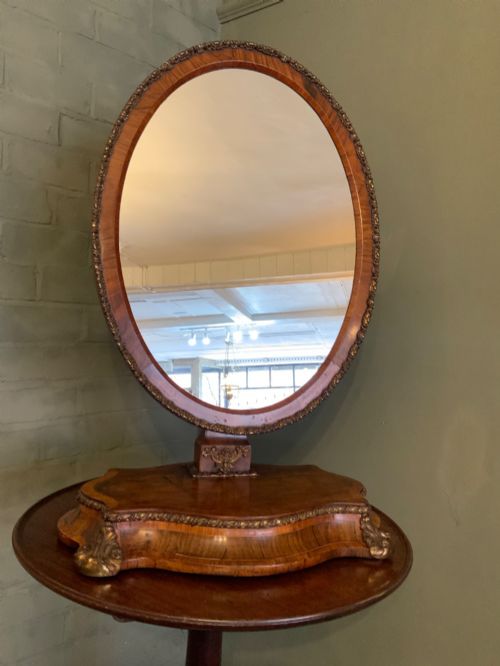
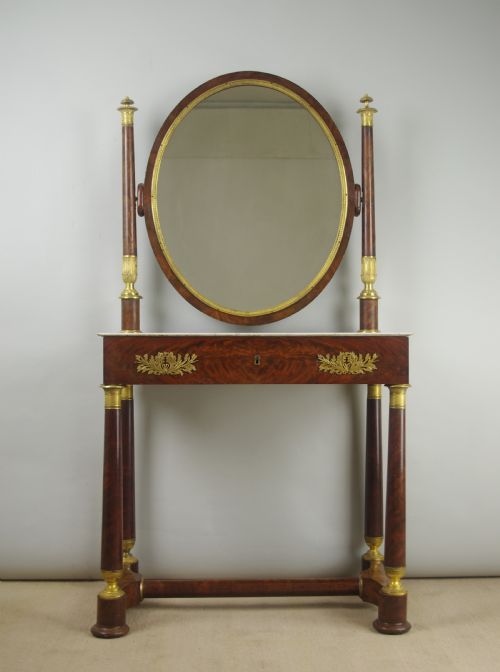
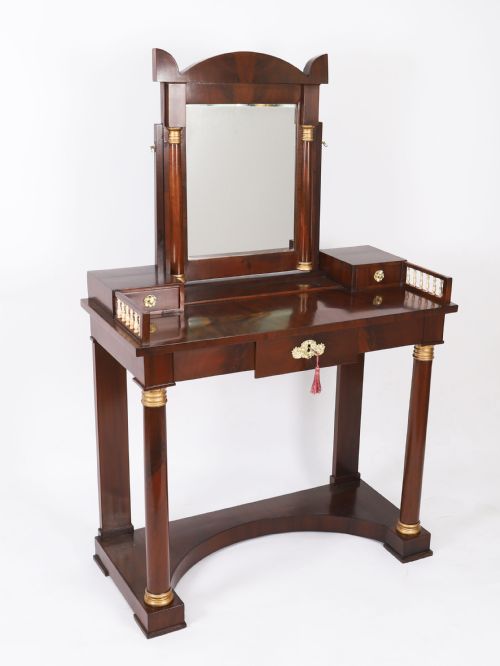
Buyers seeking an empire vanity table will frequently find mahogany dressing tables accompanied by ormolu mounts, pivoting toilet mirrors, and occasionally matching stools or bedroom suites.
The selection encompasses diverse regional interpretations, uniting French Empire and Swedish Empire styles within the broader nineteenth-century aesthetic.
How they were made
Cabinetmakers utilised dense timbers such as mahogany, rosewood, walnut, and birch as the structural foundation for these dressing pieces.
Gilded bronze, ormolu, brass, and silver gilt mounts were applied to highlight architectural lines and provide sharp contrast against the dark wood.
Marble tops and pivoting glass mirrors completed the construction, combining heavy stone surfaces with adjustable reflective glass.
Listings demonstrate that nineteenth-century empire vanity tables frequently pair mahogany with ormolu, while Swedish examples favour pale birch.
What varies in quality
The refinement of the cast metal mounts dictates much of the visual success, distinguishing crisp, detailed ormolu from simpler brass work.
Cabinetmaking execution appears in the choice of timber veneers, the precision of joinery, and the integration of marble surfaces.
Completeness alters the character of a piece, separating single dressing tables from surviving pairs, matching stools, or larger bedroom suites.
The Empire Vanity Table Glossary
- Ormolu
- Gilded bronze applied as a decorative mount on furniture and decorative objects. It provides a bright golden contrast against dark timbers like mahogany.
- Toilet mirror
- A smaller tabletop mirror designed to sit on top of a dressing chest or table. These often feature adjustable pivoting frames.
- Ebonised wood
- Timber treated with a dark finish to imitate expensive ebony. This technique was frequently utilised on nineteenth-century pieces for stark visual contrast.
- Console table
- A wall-mounted or freestanding table with a flat top supported by scroll or column legs. They frequently accompany larger mirror arrangements in period rooms.
- Birch
- A pale hardwood utilised extensively in Scandinavian furniture production. Swedish Empire pieces often showcase the striking grain of this timber.
Empire Vanity Table: Frequently Asked Questions
What is an empire vanity table?
An empire vanity table is a nineteenth-century dressing piece characterised by neoclassical proportions, rich mahogany or birch timbers, and gilded metal mounts.
These tables often incorporate pivoting mirrors and marble tops, reflecting the formal design vocabulary of the period.
How do I date an empire vanity table?
Dating relies on examining the timber species, construction methods, and stylistic markers such as French Empire or revival details.
Nineteenth-century examples frequently combine hand-cut veneers with heavy cast bronze or ormolu mounts.
Where were these dressing tables made?
Most surviving examples originate from France, Sweden, and central Europe during the nineteenth century.
French pieces lean towards dark mahogany with elaborate ormolu, while Swedish variants often highlight lighter birch timbers.
How do I care for mahogany and ormolu?
Maintain mahogany surfaces with appropriate natural waxes applied sparingly to preserve the depth of the timber grain.
Keep ormolu mounts unpolished to protect the original gilding, using only a soft dry cloth for dusting.