
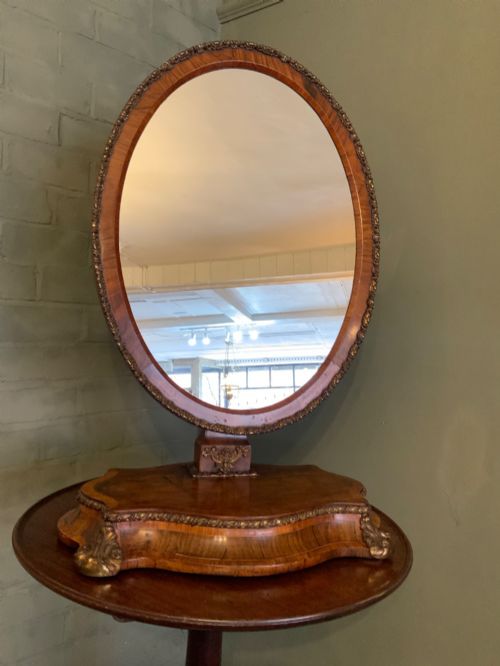
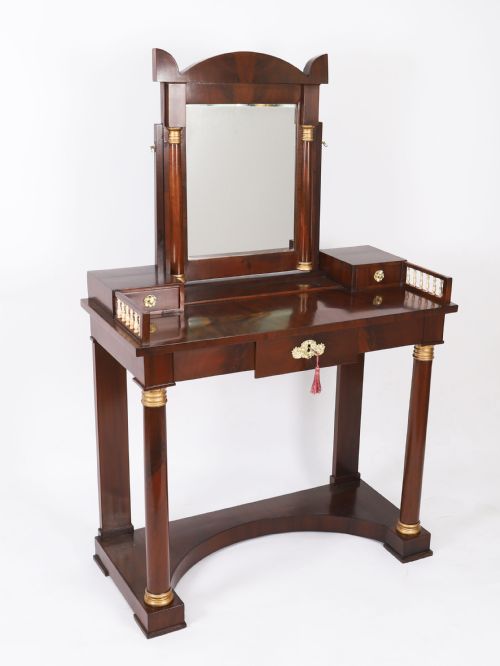


Empire Toilet Table
An empire toilet table brings neoclassical presence and functional mirror work into a room, offering the refined proportions collectors seek.
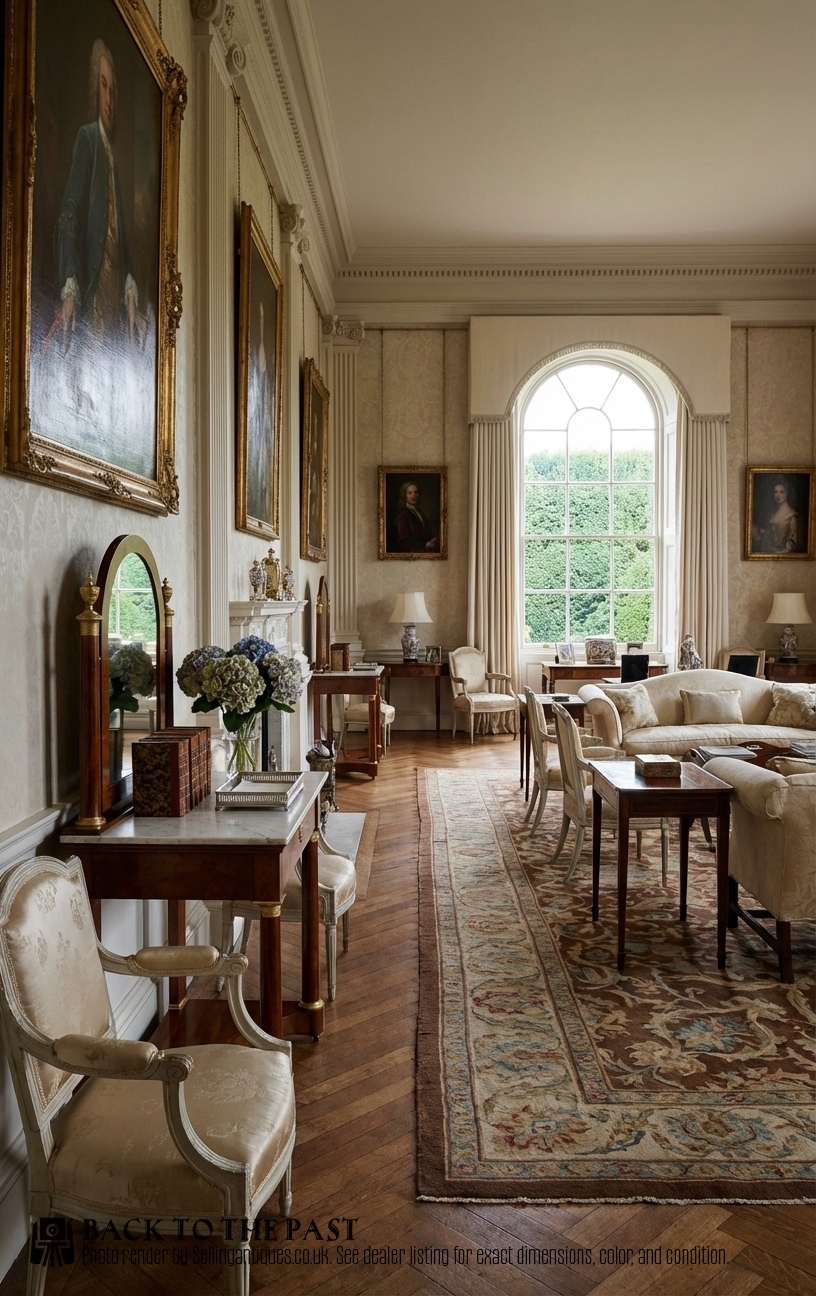
Empire Toilet Table
An empire toilet table or related dressing mirror combines vanity utility with classical design, originating primarily in the nineteenth century. The selection on this page centres on dressing tables, table mirrors, and vanity mirrors dating from the nineteenth century.
Buyers frequently encounter French Empire and Victorian interpretations alongside Swedish Biedermeier examples. These pieces range from large oval walnut and ormolu toilet mirrors to full dressing tables with integrated mirrors.
Origin points visible in the listings include France, Russia, Vienna, and Sweden. Forms vary from pedestal mirrors to substantial mahogany dressing tables incorporating bronze and marble elements.
Materials and Construction
Cabinetmakers utilised primary woods such as mahogany, walnut, rosewood, birch, and ebonised wood to build these structures. Inlaid details and solid timber construction define the core frames of the tables and mirror surrounds.
Decorative metalwork plays a major role, utilising ormolu, gilt bronze, and gilt metal mounts cast in classical motifs. Several pieces incorporate glass mirror plates and marble components to complete the composition.
Some nineteenth-century mirrors feature adjustable pedestal frames designed to tilt on command, giving rooms an attentive, nodding posture.
Assessing Quality and Execution
The refinement of the ormolu and gilt bronze mounts dictates much of the visual success of an empire toilet table. Finer examples display crisper chasing and heavier casting in the classical brass and bronze elements.
The choice of timbers and the handling of veneers, such as figured mahogany or walnut, separate standard pieces from more ambitious workshops. Integrated elements like adjustable pedestal mechanisms and original marble tops further distinguish the upper tier of surviving items.
The Empire Toilet Table Glossary
- Ormolu
- Gilt bronze mounts applied to furniture and decorative objects. This technique involves gilding a mercury and bronze amalgam to achieve a bright gold finish.
- Biedermeier
- A Central European style dating from the nineteenth century that favours clean lines and utilitarian grace over excessive ornamentation. Swedish interpretations often highlight pale woods like birch.
- Pedestal mirror
- A freestanding glass mirror supported on a vertical column or base. These often feature adjustable pivoting frames for utility.
- Ebonised wood
- Timber treated to resemble ebony. Makers utilised this finish to provide stark contrast against gilt metal mounts.
Empire Toilet Table: Frequently Asked Questions
What is an empire toilet table?
An empire toilet table is a nineteenth-century vanity or dressing piece styled after classical French motifs. These items typically feature architectural lines and metal mounts.
Surviving examples include full dressing tables and smaller tabletop mirrors designed for domestic grooming.
How were these mirrors used?
These pieces served practical grooming functions in bedrooms and dressing rooms. Adjustable stands allowed users to tilt the glass plate to the desired angle.
Many incorporated surface space for perfumes, brushes, and small personal belongings.
Where were these pieces made?
The listings show origins primarily across continental Europe, including France, Sweden, Vienna, and Russia. French workshops heavily influenced the broader neoclassical aesthetic seen in these items.
Regional variations appear in the choice of native timbers, such as Swedish birch.
How do I identify French Empire style?
French Empire pieces display heavy classical influence inspired by antiquity. Look for symmetrical forms, architectural columns, and contrasting ormolu mounts.
Woods like mahogany and ebonised elements frequently anchor the dark, stately palette.
How do I care for antique wood and ormolu?
Maintain timber surfaces with appropriate wax polishes to preserve the finish and prevent drying. Avoid harsh chemical cleaners that can strip gilt bronze and ormolu mounts.
Keep the mirrors away from direct sunlight and excessive moisture.