
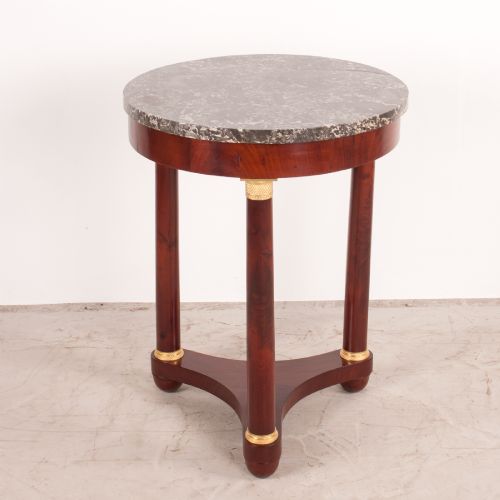
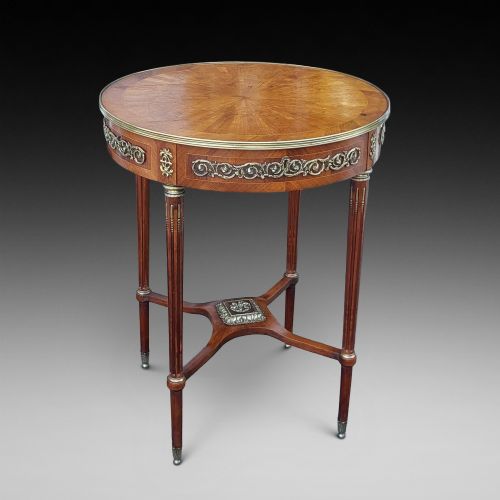
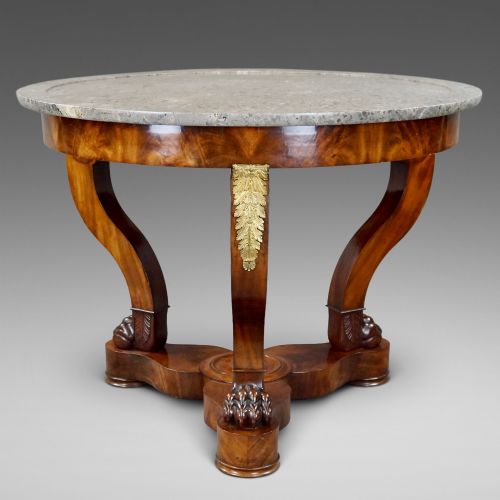
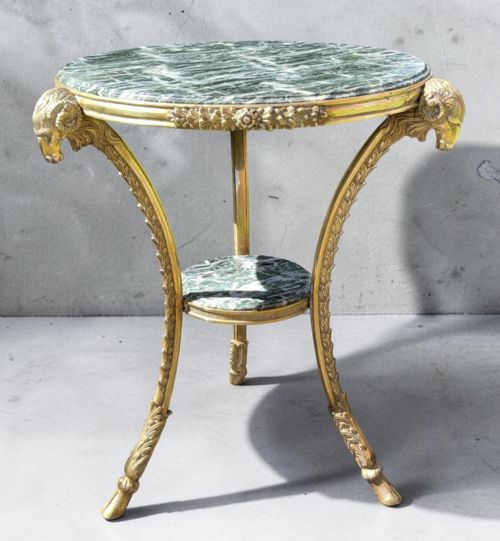


Empire Style Gueridon
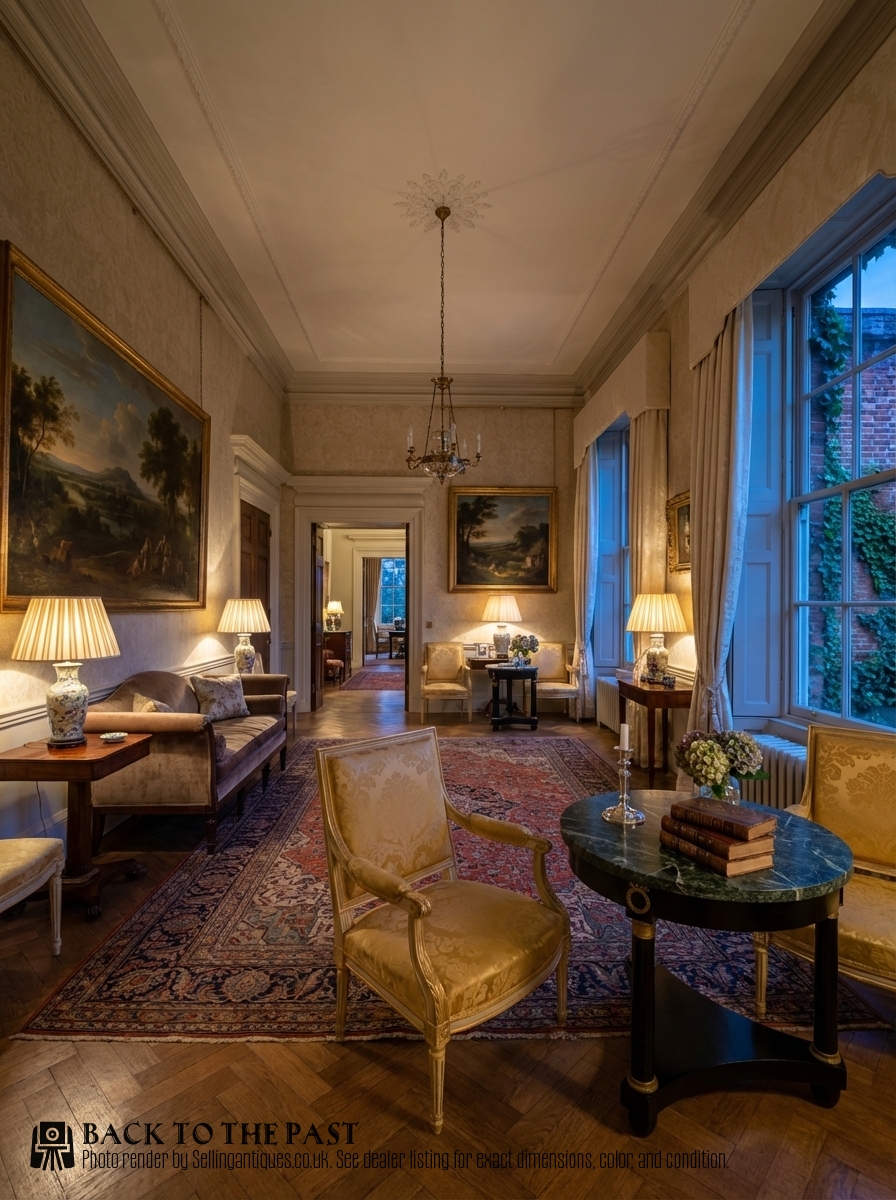
An empire style gueridon is a striking round pedestal table that brings classical French proportion and striking circular presence to any room.
Understanding Empire Style Gueridon
When you search for an empire style gueridon, you are looking at round pedestal tables rooted in French design, predominantly appearing from the nineteenth century and later revival periods. These pieces function variously as centre tables, side tables, occasional tables, and coffee tables within domestic spaces.
The most common examples on this page are French centre tables and smaller side tables featuring heavy circular tops supported by central columns. These tables emerge from periods spanning the early nineteenth century through to the nineteen-thirties revival era.
Makers and designers drew heavily on neoclassical idioms, creating striking silhouettes that work effectively as freestanding centrepieces in a room. Their round formats make them particularly versatile for placing in hallways, drawing rooms, or as intimate coffee tables.
Materials and Construction
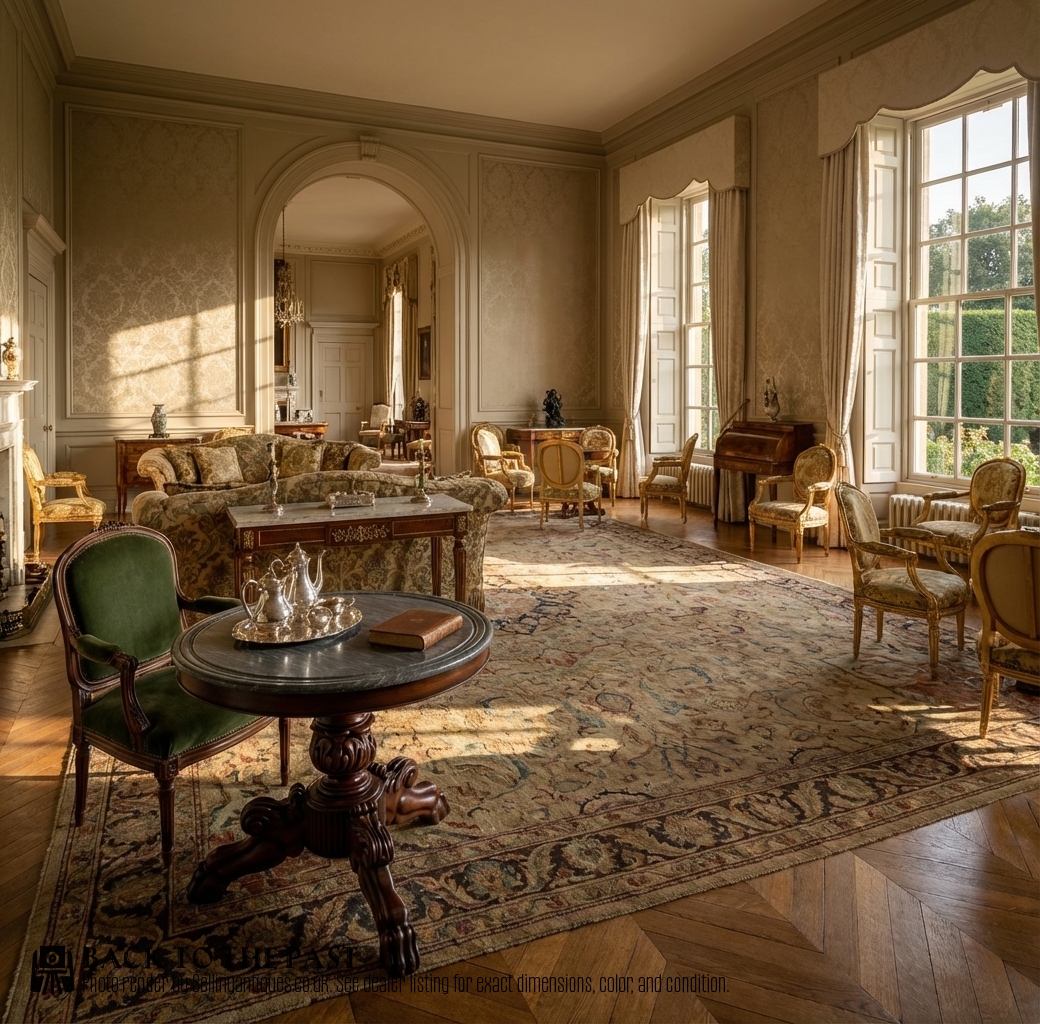
Construction relies upon dense timbers such as mahogany, walnut, ebonised wood, and coromandel wood to form sturdy pedestals and aprons. These wooden frames provide the structural strength necessary to support heavy stone upper surfaces.
Tops are frequently fashioned from polished marble, providing a cool and durable circular surface that contrasts with the warm grain of the timber below. Metal elements including brass and gilt metal are cast into mounts, feet, and decorative details like rams heads.
Retail Price Guide 2026
Typical UK retail prices for empire style gueridon, calculated from the Sellingantiques database of over a million retail prices indexed since 2003. This retail price guide relies exclusively on Sellingantiques data; no external sources or auction records are used, so the figures do not describe the wider market.
Cast brass rams heads peer out from beneath table tops, keeping a silent, watchful eye on generations of dropped keys and spilled tea.
Assessing Quality and Execution
The distinction between standard examples and finer pieces rests upon the crispness of cast brass mounts and the selection of timber veneers. Superior tables display finely detailed cast ornamentation, such as well-defined rams heads, alongside richly figured mahogany or exotic coromandel woods.
Structural harmony also dictates quality, where the weight of a heavy marble top is perfectly balanced by a stable, well-proportioned pedestal base. The integration of classical neoclassical motifs demonstrates the maker's adherence to proper proportions and clean architectural lines.
The Empire Style Gueridon Glossary
- Gueridon
- A small round table, typically supported by a central pillar or pedestal column. This French form originated in the seventeenth century and remains popular for occasional use.
- Centre Table
- A freestanding table designed to be viewed from all sides rather than pushed against a wall. These pieces traditionally occupy the middle of a room.
- Neoclassical
- A style of art and design inspired by classical antiquity, incorporating symmetrical layouts and classical motifs. It forms the basis of the Empire aesthetic.
- Ebonised Wood
- Timber treated with a dark stain or finish to imitate expensive ebony. This technique creates a dramatic, high-contrast surface often paired with gilt metal mounts.
- Coromandel Wood
- A dense, heavily figured exotic timber featuring dark brown and black streaks. It provides a luxurious surface on high-end nineteenth-century tables.
Frequently Asked Questions
Where should I place a gueridon?
These round tables suit a central position in a hallway or drawing room where their circular form can be appreciated from all sides. Smaller versions also function well as side tables or coffee tables next to seating.
Because they stand on central pedestals, they allow comfortable movement around the perimeter without legs obstructing chairs or traffic.
How do I care for a marble top?
Marble surfaces require simple wiping with a damp cloth and mild soap to remove dust and daily marks. Avoid acidic liquids like citrus juice or wine, which can etch the polished stone finish.
Using coasters and mats will protect the cool stone surface from scratches and staining over years of domestic use.
What is the difference between an original and a revival piece?
Original pieces date from the early to mid-nineteenth century during the height of the Empire and French Restoration periods. Revival pieces emerged later, notably around eighteen-ninety and into the nineteen-thirties, copying the earlier classical styles.
Both categories utilise similar materials like mahogany and marble, but construction marks and wood ageing help distinguish the exact period of manufacture.
Can these tables hold heavy items?
The sturdy pedestal construction and solid timber framing make these tables robust enough to support heavy lamps, large vases, and stacked books. Their heavy marble tops also add natural downward stability to the central column.
Care should still be taken not to lean excessive body weight on the outer edges of smaller side table variants.