
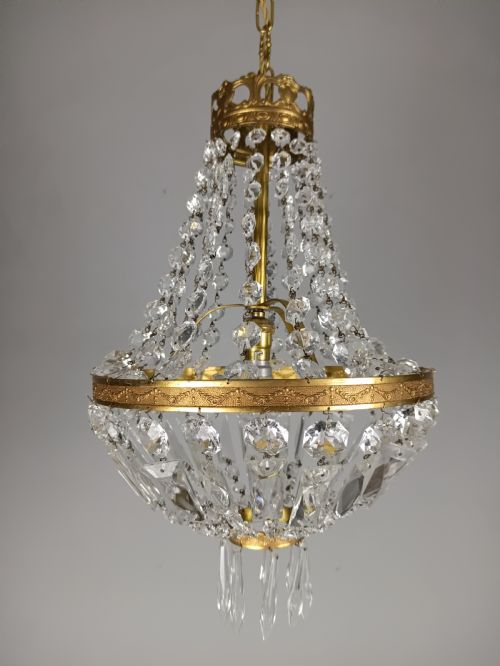


Empire Style Glass Chandelier
An empire style glass chandelier brings commanding French neoclassicism and brilliant prism light to a high-ceilinged room.
Empire Style Glass Chandelier
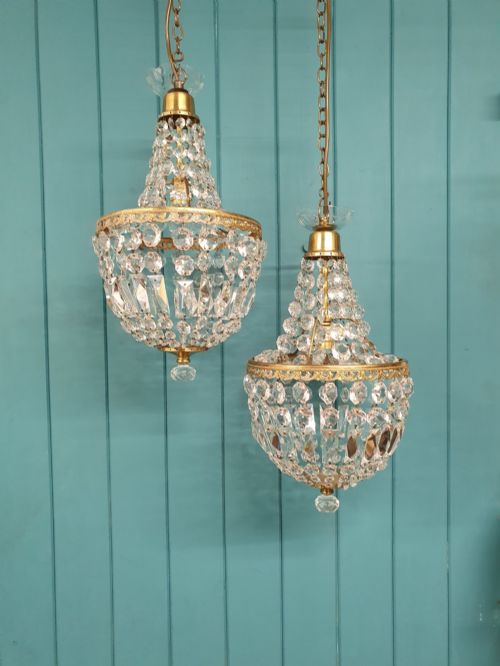
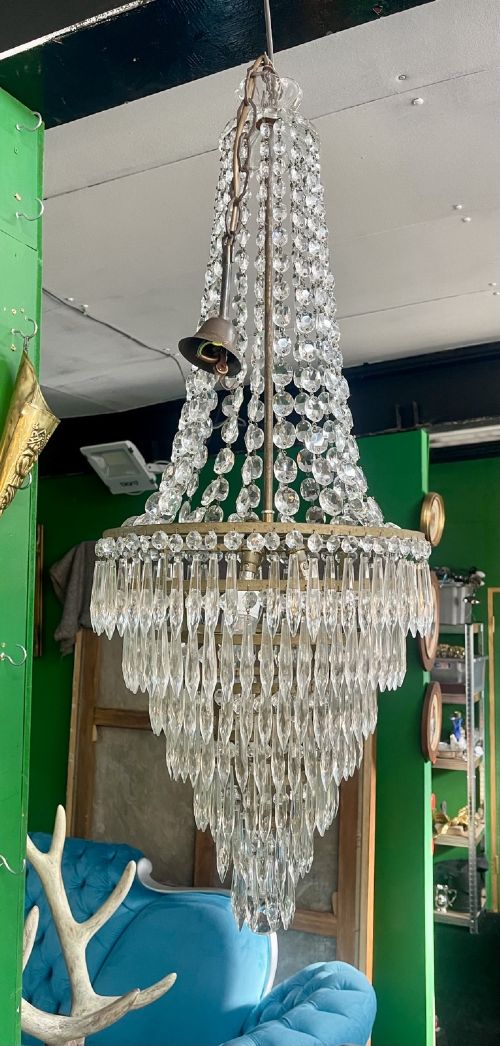
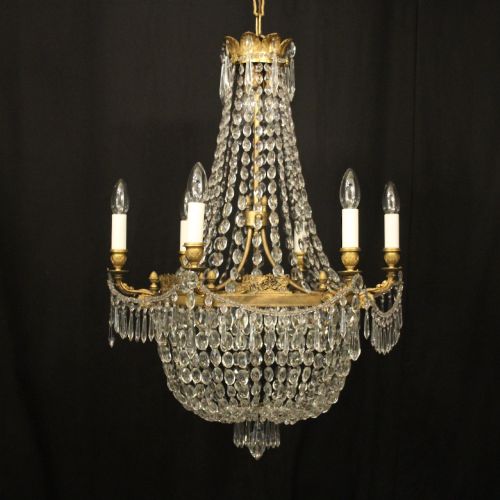
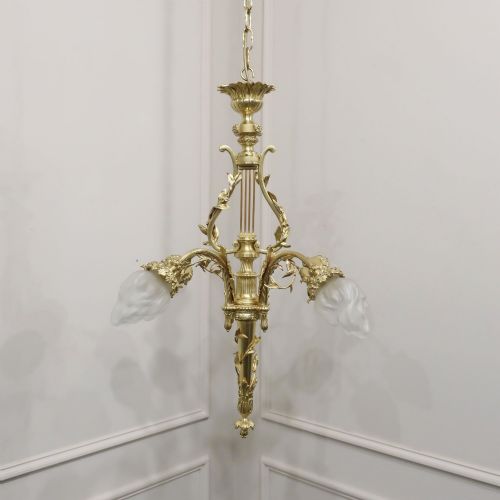
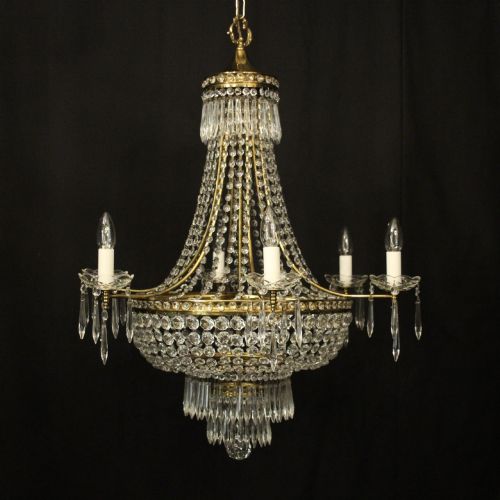
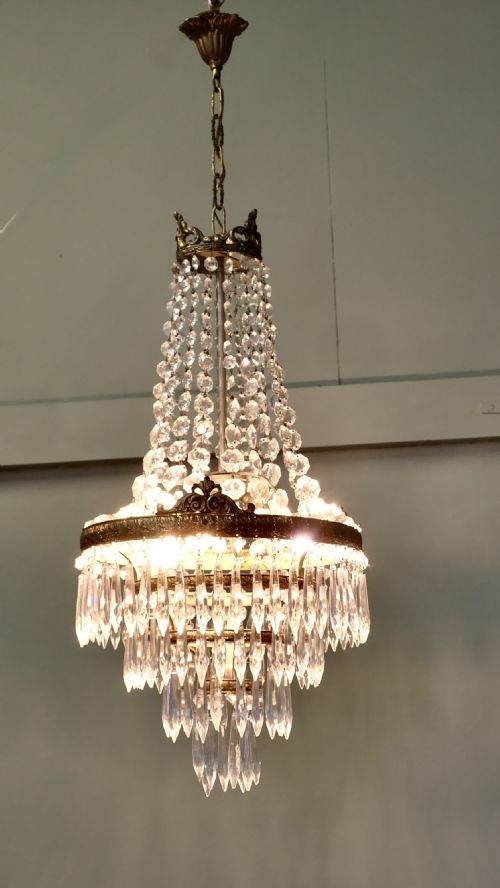
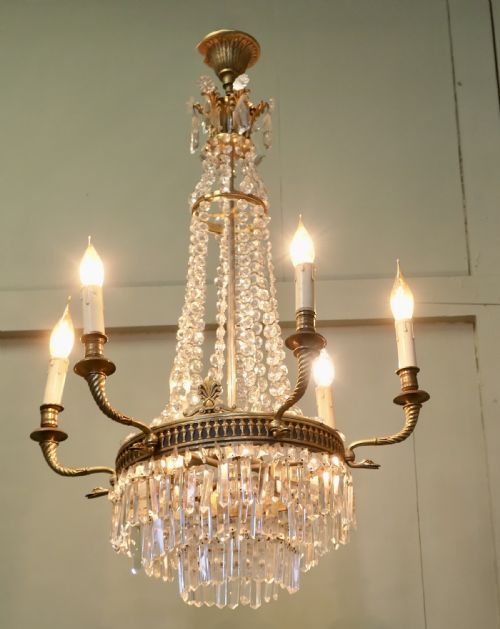
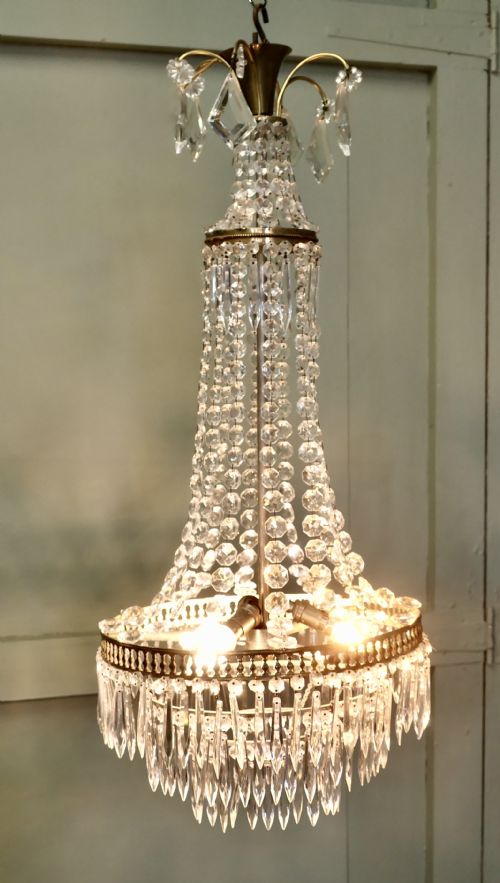
An empire style glass chandelier combines formal neoclassical design with cascading crystal prisms, hanging drops and cut glass bowls. These fixtures draw upon French Empire and Regency aesthetics, often taking the distinctive form of tent-and-waterfall compositions, baskets or multi-branch light fittings.
The selections on this page span from eighteenth-century originals to early twentieth-century interpretations, with pieces dated across the 1890s, 1900s, 1910s, 1920s and 1930s. Buyers frequently encounter French-origin designs ranging from single-light basket fixtures to substantial multi-armed chandeliers carrying numerous bulbs.
Configurations vary from simple drop designs to elaborate arrangements featuring brass or gilt bronze frames supporting graduated tiers of glass beads. Whether styled with a classic tent top or structured as an open basket, each hanging light serves as a focal point for historic and traditional interiors.
Materials and Construction
Makers built these chandeliers around robust internal frames of brass, bronze or gilt metal, which provided structural support for heavy glass elements. Metal components were cast, chased and occasionally gilded, forming the structural crowns, bands and arms that hold the illumination.
Suspended from these metal skeletons are elements of clear crystal, cut glass, frosted glass and specialised beads held together by fine wire pins. Artisans cut and polished the glass drops by hand to maximise light refraction, combining large centre prisms with dense cascades of smaller beads.
The documented periods span the eighteenth century alongside the 1890s, 1900s, 1910s, 1920s and 1930s.
Assessing Quality and Craftsmanship
Superior examples distinguish themselves through the clarity and density of the cut crystal rather than mere size. Higher-quality pieces feature hand-cut prisms with sharp facets that scatter light cleanly, alongside heavier cast bronze or brass frames rather than stamped sheet metal.
The integration of the metalwork with the glass ornamentation dictates the overall refinement of the fixture. Finer chandeliers display meticulous wirework securing hundreds of individual glass drops, ensuring the tents, waterfalls and bag configurations maintain precise geometric symmetry.
Osler·Wedgwood
The Empire Style Glass Chandelier Glossary
- Tent and waterfall
- A traditional chandelier configuration where an upper conical section of beads drops down to a wider, cascading tier of crystal strands. This arrangement mimics neoclassical drapery.
- Gilt bronze
- Metal cast in bronze and treated with a gold-coloured finish or gold leaf, providing a rich metallic sheen to the chandelier frame. It is frequently seen on French neoclassical fixtures.
- Prism
- A cut glass or crystal pendant designed to refract light into spectral colours. These elements hang from the arms and crowns of the lighting fixture.
- Basket chandelier
- A lighting form featuring a rounded, bowl-shaped lower section composed of densely strung glass beads. The light sources sit inside or just above the woven glass enclosure.
Empire Style Glass Chandelier: Frequently Asked Questions
How do I hang a heavy crystal chandelier?
These fixtures require secure ceiling joists and appropriate metal fixings to support the combined weight of the metal frame and glass components.
Professional installation by an electrician ensures the wiring and hanging chains safely bear the total load of the chandelier.
Are these antique chandeliers rewired?
Many surviving light fittings arrive with updated wiring to meet modern electrical safety standards while preserving their historic exterior frames.
Buyers should inspect the specific listing details to confirm whether the electrical components have been recently restored or require updating.
How do I clean an empire style glass chandelier?
Routine maintenance involves gentle dusting of the glass drops in situ using a specialised spray and a soft cloth beneath to catch drips.
Deep cleaning requires carefully removing individual crystal strands and washing them by hand in warm soapy water before reattaching.
What rooms suit an empire style glass chandelier?
These grand hanging lights suit formal reception rooms, high-ceilinged dining spaces and entrance halls where their vertical drop commands the room.
Smaller single-light basket versions function effectively in intimate bedrooms or hallways requiring subdued, refracted illumination.