



Six Arm Crystal Chandelier
A six arm crystal chandelier brings focus to a room, offering illumination shaped by glass and metal from the nineteenth and twentieth centuries.
Six Arm Crystal Chandelier
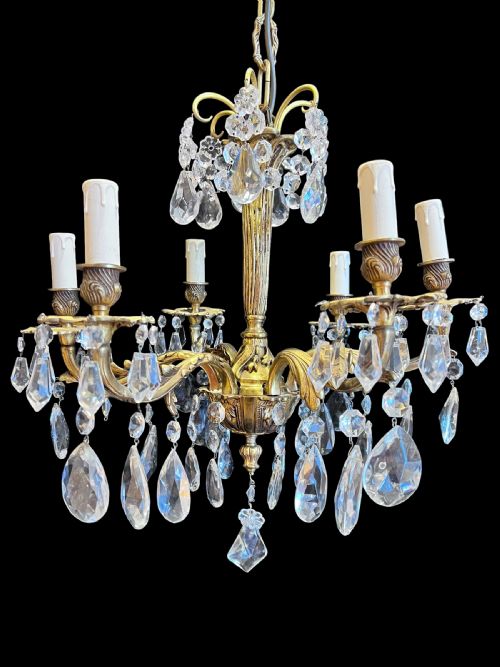
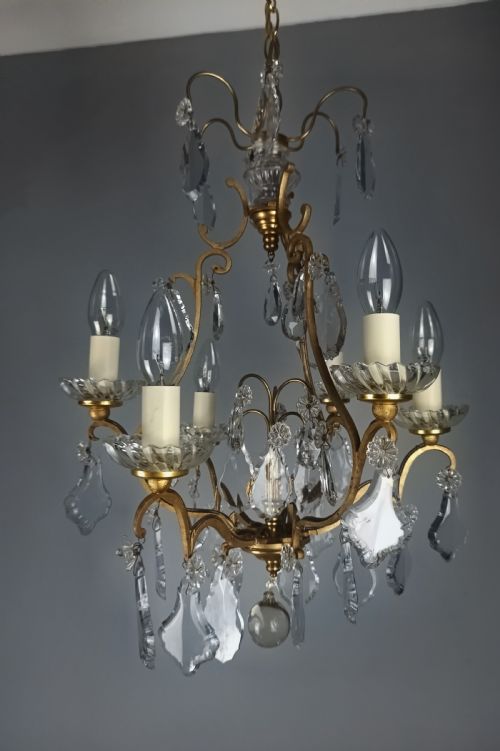
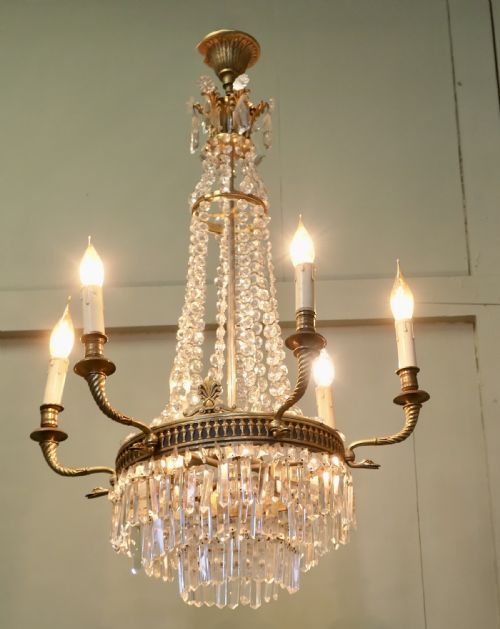
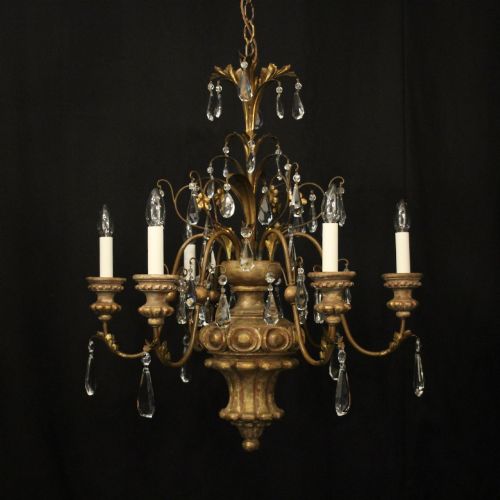
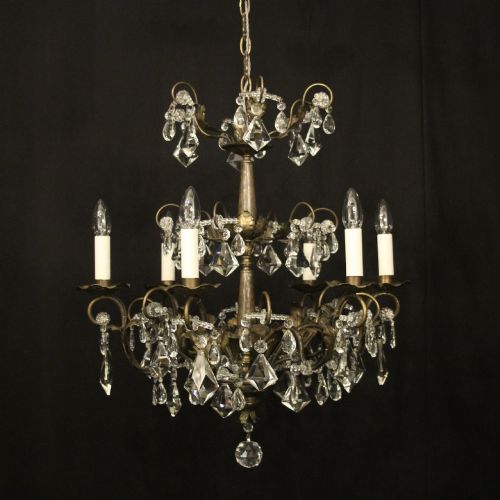
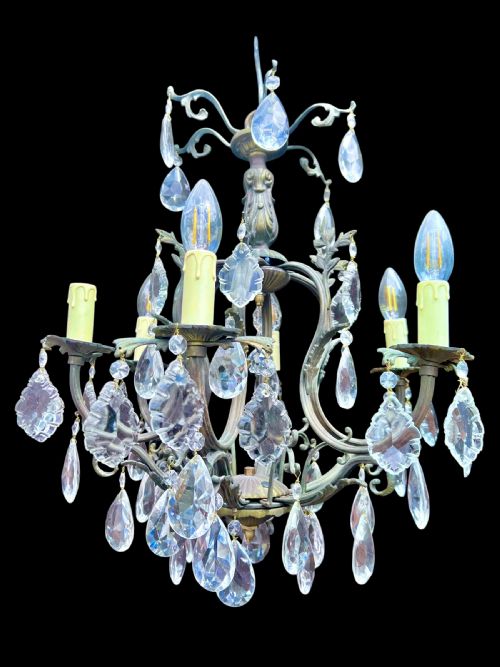
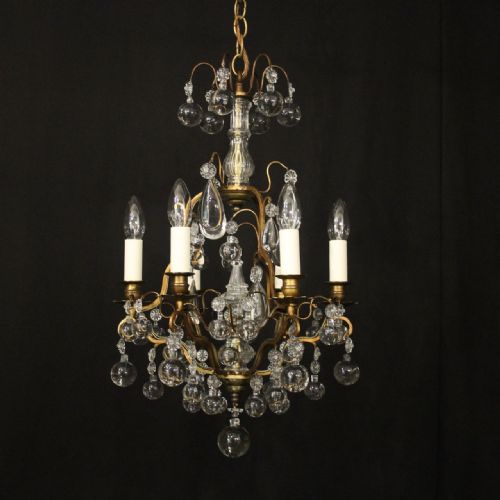
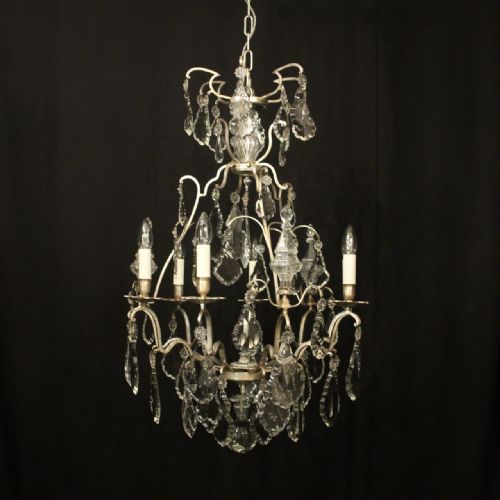
A six arm crystal chandelier is a hanging light fixture designed with six branches to hold illumination, appearing most often in French and Italian regional styles from the early decades of the twentieth century. These pieces emerge from periods such as 1920 and 1930, alongside nineteenth-century examples, forming a selection that spans diverse continental aesthetics. The forms range from traditional birdcage frames and tent-and-waterfall configurations to restrained swan styles and compact table lamp girandoles.
The aesthetic vocabulary encompasses French Chateau, French Rococo Revival, French Empire, Florentine Baroque, and Gustavian designs. Makers and workshops utilised brass, gilt metal, silvered metal, and wrought iron to construct the foundational armatures which support extensive crystal and cut glass drops. While the majority hang from ceilings as chandeliers, the evidence also includes smaller brass table lamps built with six branches.
What varies in quality
The standard of a six arm crystal chandelier rests upon the clarity and cutting of its glass components and the substance of its metal frame. Heavier cast brass, ormolu, and fire-gilded bronze form sturdy skeletons that support dense arrays of hand-cut crystal drops rather than pressed glass.
Design complexity also distinguishes individual pieces, separating simpler utilitarian frames from elaborate creations featuring intricate birdcage wirework, polychrome detailing, or structured tent-and-waterfall formations.
Six Arm Crystal Chandelier Retail Price Guide 2026
Typical asking prices for six arm crystal chandelier among the pieces listed under this phrase on Sellingantiques today, from the lower quarter to the upper quarter. They describe what is for sale here now, not the wider market.
Materials recorded across the inventory include cut glass, crystal, brass, gilded brass, gilt metal, silvered metal, bronze, and wrought iron.
The Six Arm Crystal Chandelier Glossary
- Birdcage
- A central open framework of metal hoops and vertical wires that supports concentric tiers of crystal drops. This construction style is characteristic of classic light fixtures from the eighteenth and nineteenth centuries.
- Girandole
- An ornamental branched candlestick or light fixture, sometimes adapted to electricity. In the evidence, this term appears alongside table lamps featuring multiple arms.
- Ormolu
- Ground metallic bronze applied to objects through a mercury amalgamation process, yielding a rich golden finish. It appears frequently on French frames of the early twentieth century.
- Tent and waterfall
- A lighting configuration where strings of crystal beads form an upper conical tent shape that cascades down into a lower bowl or waterfall of drops. This arrangement maximises the refraction of light.
- Cut glass
- Glass that has been shaped and faceted on a wheel to produce sharp edges that scatter light. It is distinct from moulded glass, which is shaped in a kiln or mould.
Six Arm Crystal Chandelier: Frequently Asked Questions
How do I clean a crystal chandelier?
Cleaning requires a soft cloth and a gentle solution applied directly to the glass drops while they remain on the frame. Care must be taken not to strain the wire bindings.
Heavier frames benefit from professional dusting to preserve the gilt metal or silvered surfaces without disturbing the suspended crystals.
Can these chandeliers be rewired for modern homes?
Most antique lighting fixtures require rewiring to meet contemporary safety standards before installation. A qualified electrician can adapt the internal channels for modern bulbs.
Retaining the original sockets and internal brass components preserves the historical integrity of the piece while ensuring safe daily use.
What rooms suit a six arm chandelier?
Dining rooms and living spaces provide suitable proportions for a six-branch fixture, where the spread of light can illuminate a central table or seating area. Smaller iterations fit comfortably in entryways or bedrooms.
Ceiling height dictates the hanging length, particularly for tent-and-waterfall designs that require vertical space to display their drops.
How do I identify French versus Italian styles?
French pieces often display Rococo or Empire characteristics, utilising ormolu, birdcage frames, and gilded bronze with symmetrical floral motifs. The overall composition leans toward formal elegance.
Italian examples, such as Florentine or Genoa pieces, frequently incorporate wrought iron, polychrome details, and silvered metal, reflecting regional baroque and classical traditions.
What is the difference between brass and gilt metal?
Brass is an alloy of copper and zinc that forms a durable yellow metallic base for many chandelier frames. It can be polished or left with an aged patina.
Gilt metal involves a thin layer of gold or gold-coloured finish applied to a lesser metal substrate to simulate solid gold or high-grade ormolu.