

French Crystal Light Fixture
A French crystal light fixture brings remarkable refraction and period illumination into a room, spanning Edwardian designs and nineteenth-century forms.
French Crystal Light Fixture
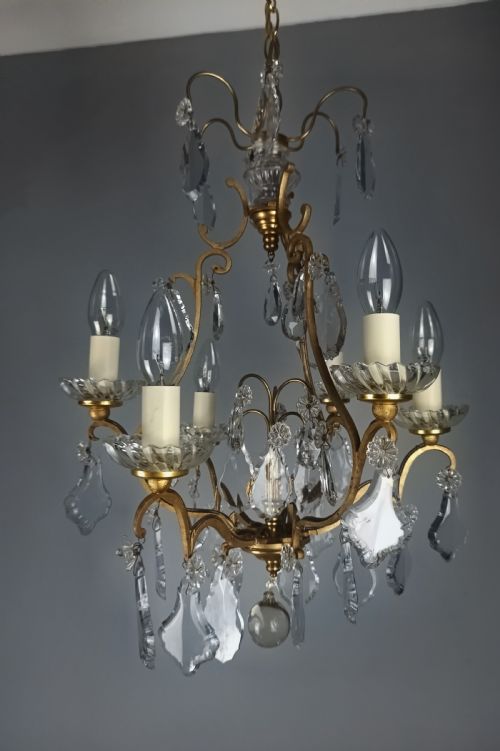
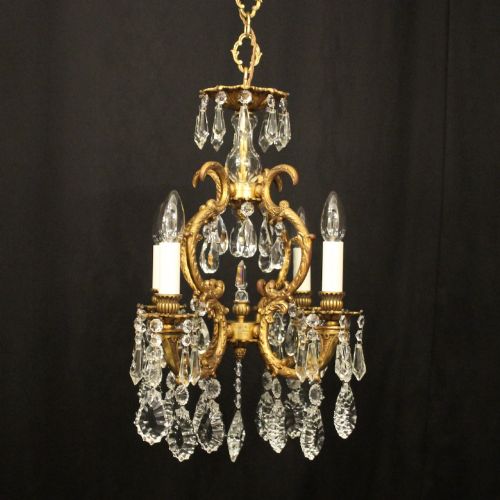
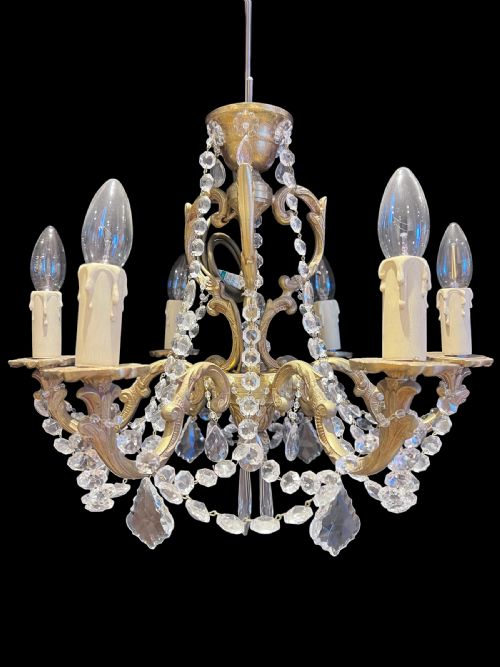
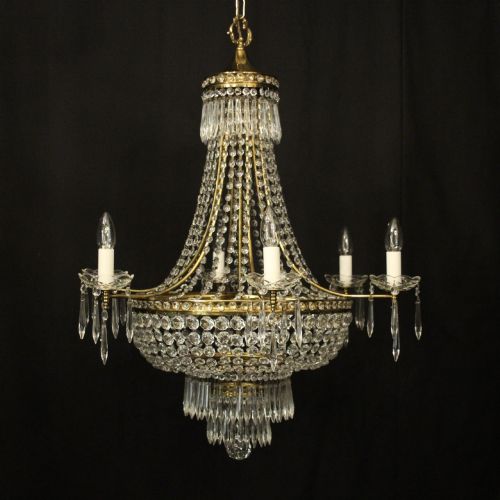
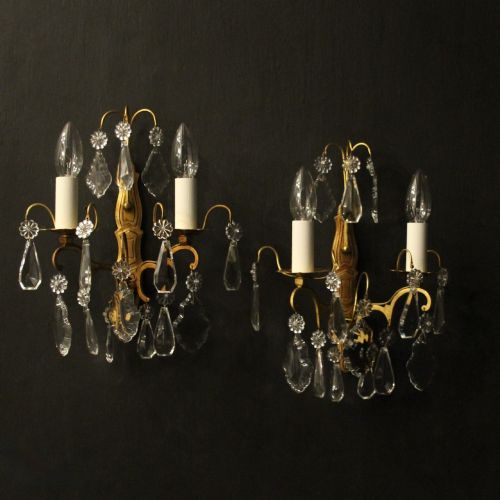
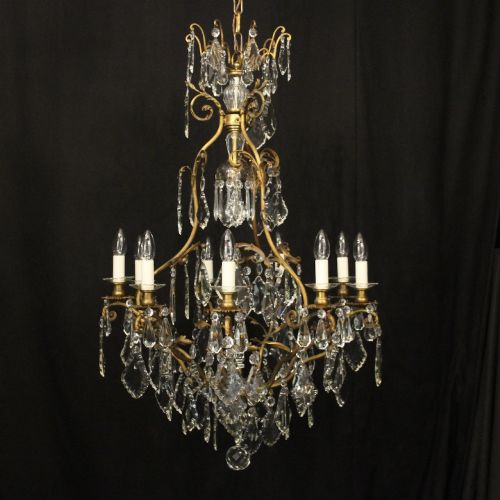
A French crystal light fixture encompasses grand chandeliers, multi-light ceiling fittings, flush plafonieres, and matching wall sconces designed to illuminate interior spaces. The selection on this page draws heavily from the early twentieth century, including pieces dated across the 1900s, 1910s, 1920s, and 1930s, alongside nineteenth-century examples.
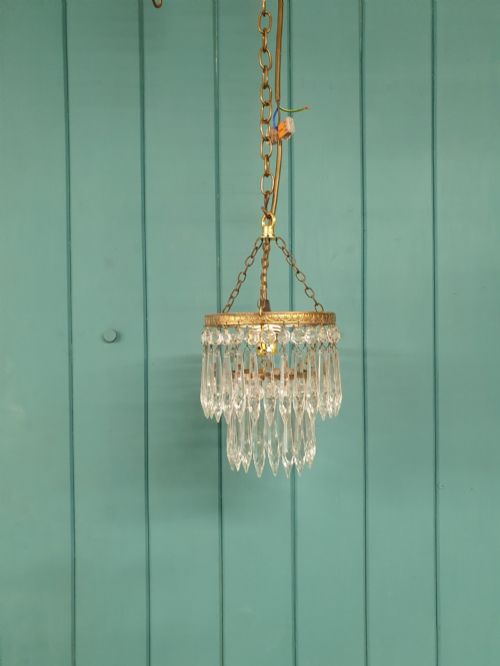
Buyers will encounter prominent styles such as French Chateau, French Empire, and French Rococo Revival, alongside Italian Florentine and Rococo variations. Forms range from intimate single-light pendants and small dome-top fixtures to expansive multi-arm ballroom chandeliers hung with numerous lights.
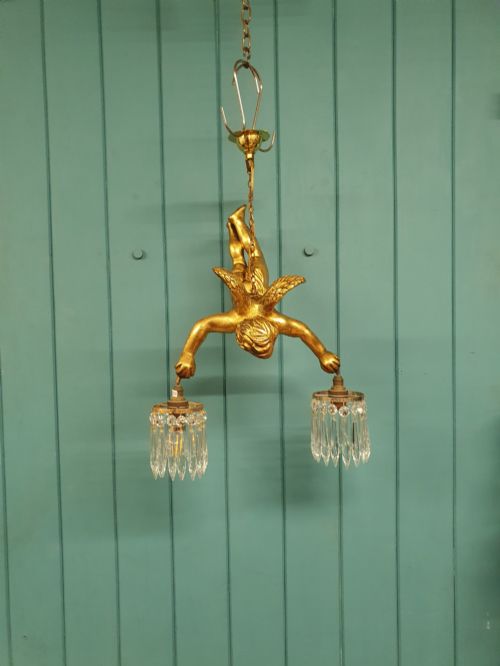
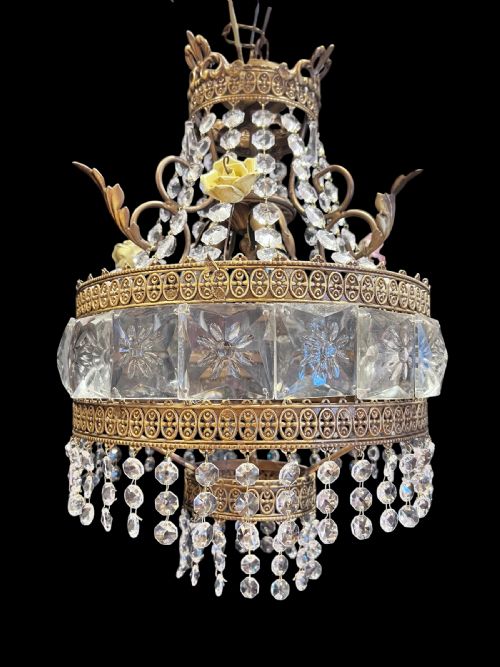
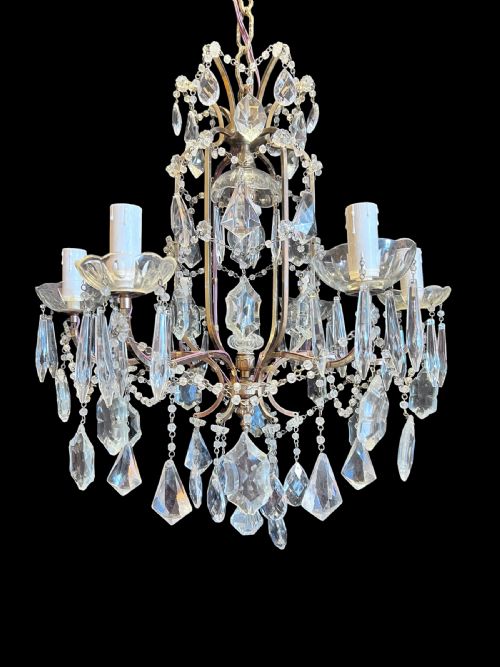
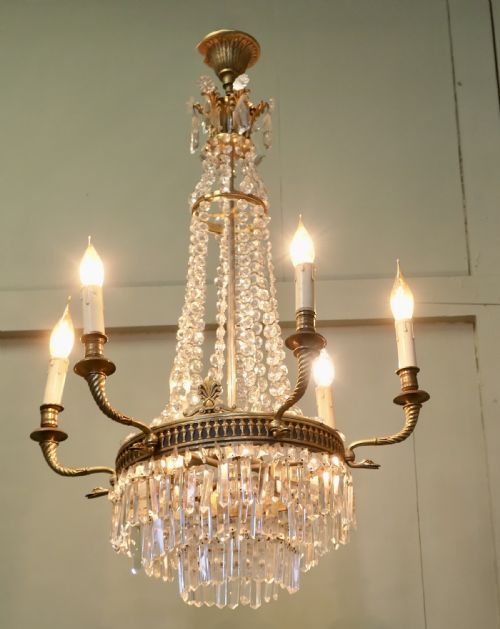
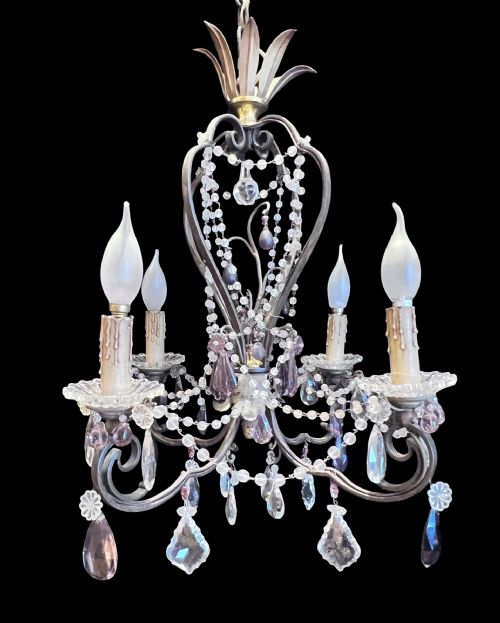
Common configurations include tent and waterfall arrangements, fixtures adorned with coloured crystals or porcelain flowers, and works incorporating decorative figures like flying cherubs. Wall lights and twin or triple-arm sconces complement the larger ceiling-mounted chandeliers found within the listings.
How they were made
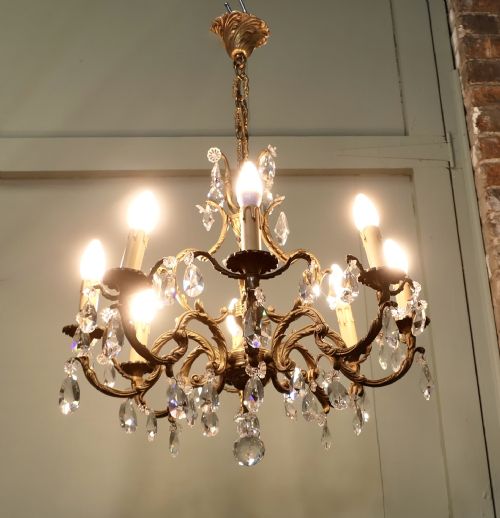
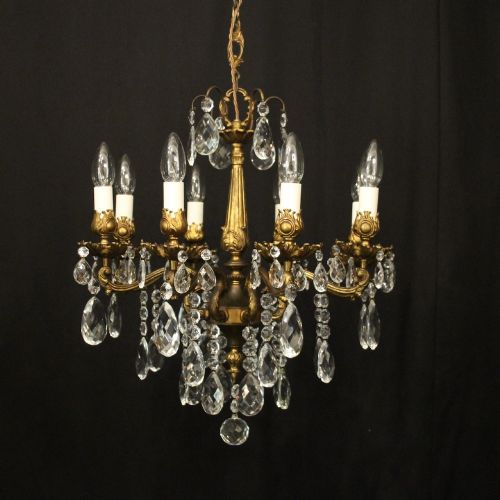
The structural framework of a French crystal light fixture relies on cast and worked metals, predominantly brass, bronze, and gilt metal, often finished with silver or gold gilding. Spelter and tolewear also appear in specific decorative components such as cherubs or painted floral elements.
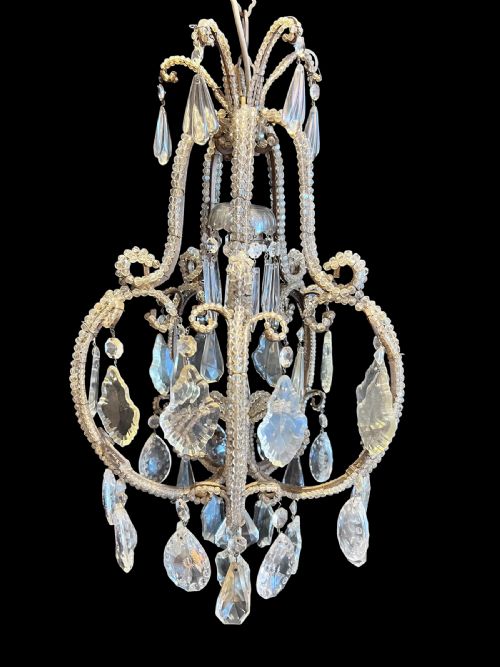
Hanging elements and prisms are fashioned from cut glass and crystal glass, shaped into teardrops, lustres, coffin prisms, and spikes. These glass components are suspended from the metal frames using wire or pins to maximise light reflection.
One playful antique design suspends cut glass crystal spikes beneath a gilt spelter flying cherub.
What varies in quality
The sophistication of the metalwork establishes the foundation of the piece, distinguishing standard cast brass frames from elaborately chased gilt bronze mounts featuring detailed motifs like lion masks or leaf decoration. Heavier arm counts and integrated structural complexity require superior internal engineering to support the considerable weight of the glass.
The cut and clarity of the crystal components dictate the brilliance of the illumination, separating standard pressed glass drops from finely cut crystal prisms that disperse light cleanly. The presence of specialised decorative elements, such as amethyst or amber coloured crystals and hand-painted porcelain flowers, further differentiates individual pieces.
The French Crystal Light Fixture Glossary
- Tent and waterfall
- A chandelier design where an upper conical section of beads forms a tent shape above a wider cascading tier of crystals. This configuration concentrates glass density towards the upper portion of the fixture.
- Coffin prism
- A flat-backed, wedge-shaped cut glass pendant suspended from the arms or rim of a light fixture. These linear prisms refract light in distinct geometric patterns.
- Plafoniere
- A ceiling light fixture mounted flush or semi-flush against the plaster rather than suspended on a chain. These are frequently utilised in rooms with lower ceiling heights.
- Lustre
- A cut glass or crystal pendant hung from a chandelier to enhance light reflection. Lustres come in various drop shapes including teardrops and spikes.
- Tolewear
- Painted sheet metal utilised in the decorative body or arms of a fixture. It allows for applied colouration such as turquoise or gilt leaf details.
French Crystal Light Fixture: Frequently Asked Questions
How do I hang a heavy chandelier?
Suspended fixtures require secure ceiling joist anchorage and appropriate weight-bearing fixings to support the metal frame and crystal elements safely. Professional electrical installation is recommended for multi-arm antique lighting.
Weight distribution depends on the number of lights and the density of the glass hung from the bronze or brass frame. Consulting a structural specialist ensures the ceiling can bear the load.
What rooms suit a tent and waterfall chandelier?
These grand fixtures suit formal reception rooms, high-ceilinged dining spaces, or entrance hallways where their vertical drop and expansive arm spread can be appreciated. Their complex crystal arrangements demand surrounding space to project light effectively.
Smaller iterations or flush plafonieres provide an alternative for more intimate settings while maintaining period character.
How do I identify an Edwardian crystal light?
Edwardian pieces often feature lighter brass frames, smaller dimensions, and specific forms such as dome tops or delicate cut glass spike arrangements. These fixtures reflect early twentieth-century design preferences distinct from heavier nineteenth-century Empire styles.
Examining the metal patina and the cut of the glass helps distinguish these early pieces from later revivals.
Can I match wall lights with a main chandelier?
Matching sets of twin or triple-arm wall sconces share the metal finishes, gilding, and crystal drop types found on the larger ceiling fixtures. Utilising these paired wall lights creates a cohesive illumination scheme across a room.
Listings frequently include matched pairs or sets of wall lights designed in the same French gilded style.