
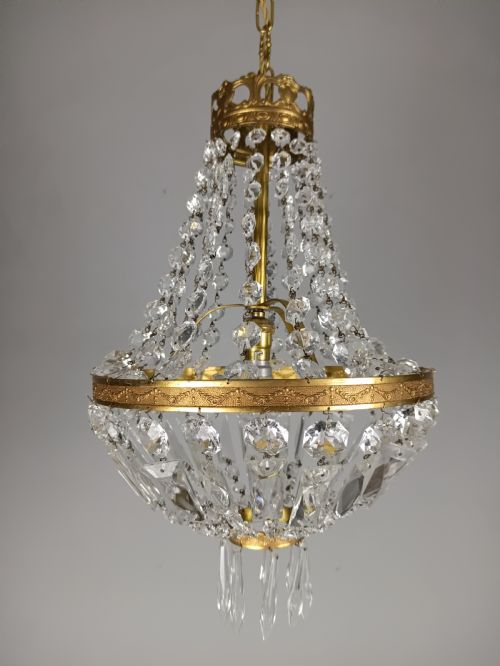


Regency Crystal Light Fixture
These regency crystal light fixture examples bring brilliant illumination and cut glass sparkle to a room.
Regency Crystal Light Fixture
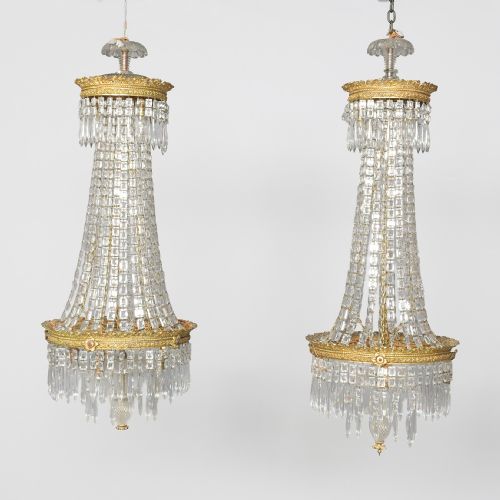
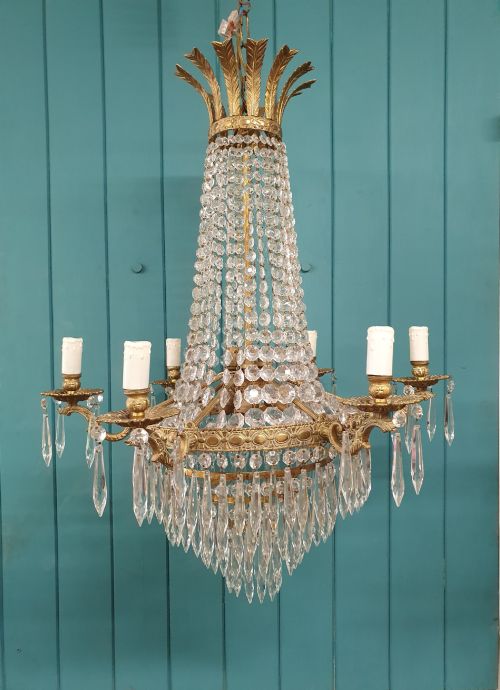
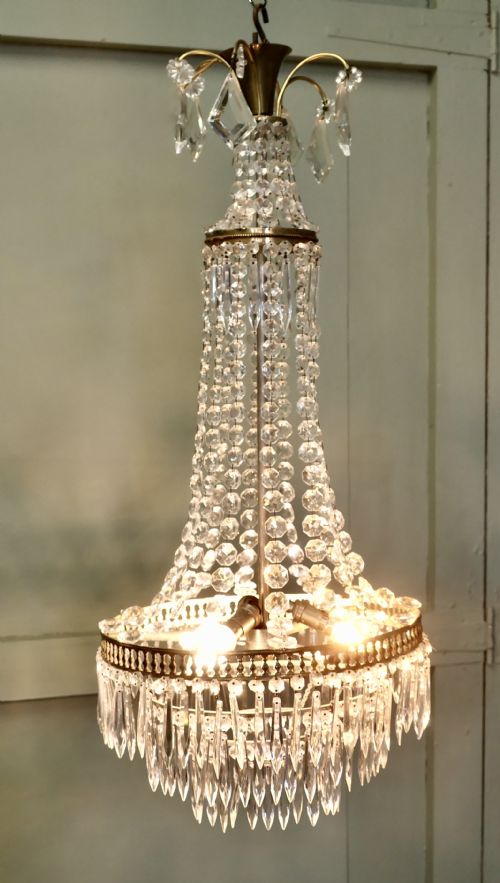
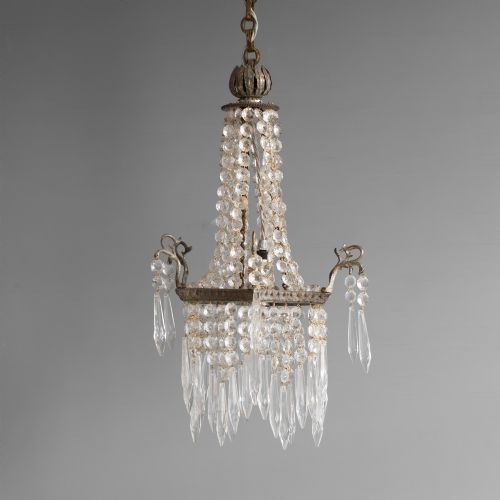
A regency crystal light fixture encompasses grand chandeliers, basket lights, and pendant lanterns designed to scatter light through multifaceted drops. When exploring these fixtures, buyers encounter forms that span from the nineteenth century into the twentieth century.
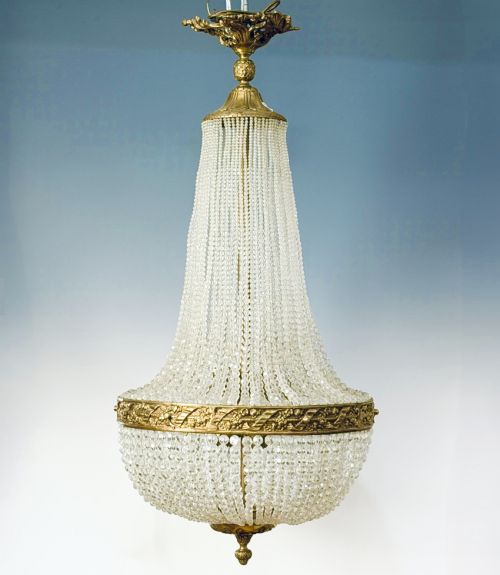
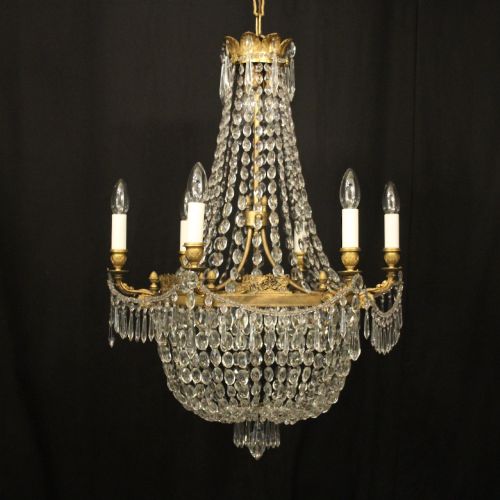
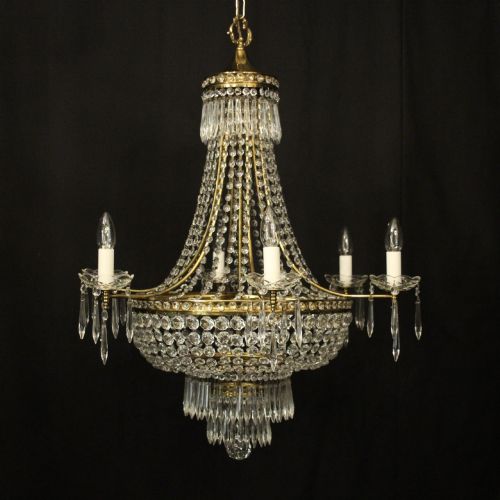
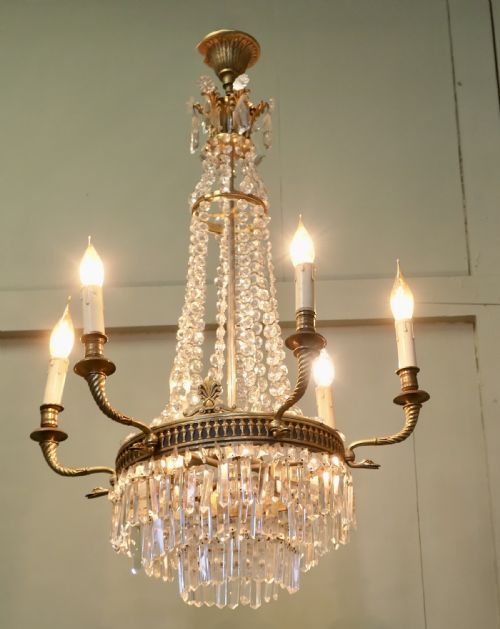
The pieces appearing here include tent and waterfall structures, multi-tiered brass frames, and simpler bell jar lanterns. French Empire and Regency styles dominate the selection, bringing classical ornamentation and tiered glass drops into domestic spaces.
While genuine Regency era pieces appear alongside later interpretations from the Edwardian period and the early twentieth century, all share a reliance on brass, gilt metal, and cut crystal elements to create their characteristic glow.
Materials and construction
Makers built the structural frameworks of these lights using brass, gilded bronze, and gilt metal, forming strong rings and arms to support heavy glass components. These metal mounts often feature decorative leaf work, cast details, or polished gilded surfaces.
The luminous quality comes from hand-blown glass, cut crystal drops, and cascading strings of beads assembled into tents, waterfalls, and bag shapes. Individual pieces are wired for suspension, utilising chains or flush mountings to hang securely from the ceiling.
French Empire and Regency styles dominate the design vocabulary, featuring tent, waterfall, and bag configurations across multiple branches.
Judging the quality of the work
Quality in these fixtures rests on the depth of the metal casting, the clarity of the cut glass, and the complexity of the drop configuration. Superior examples display crisp hand-cut facets on the crystal and substantial brass or gilded bronze frames that hold their shape under the weight of the glass.
The refinement of the decorative details, such as leaf motifs on the upper arms or elaborate gilt bronze mounts, distinguishes finer pieces from simpler productions. The integration of the tiers and the density of the crystal swags determine the visual presence of the fixture in a room.
The Regency Crystal Light Fixture Glossary
- Tent and waterfall
- A lighting configuration featuring an upper canopy of glass strings forming a tent shape above a cascading waterfall of further crystal drops. This arrangement maximises the reflection of light across the room.
- Bag chandelier
- A compact lighting form where crystal drops gather in a tapering bag or basket shape beneath the metal frame. These pieces often feature tight clusters of glass beads and prisms.
- Bell jar lantern
- A ceiling light enclosed in a rounded, bell-shaped glass jar, frequently decorated with hand-blown diamond cut patterns. They provide a self-contained housing for the internal light source.
- Gilt metal
- A base metal treated with a thin layer of gold or gilt finish to simulate solid gold or ormolu. It provides a bright, reflective framework for the crystal drops.
- Cut crystal
- Glass that has been hand-cut and polished on a wheel to create sharp facets that refract light. It forms the primary decorative element of these hanging fixtures.
Regency Crystal Light Fixture: Frequently Asked Questions
How do I hang a heavy crystal chandelier?
These fixtures require secure ceiling fixings attached directly to a joist or heavy-duty support hook to bear the combined weight of the metal frame and glass drops.
Professional installation is recommended to ensure the electrical wiring and suspension chain safely handle the load of larger multi-branch chandeliers.
How do I clean the crystal drops?
Maintenance involves wiping individual glass prisms with a specialist cleaning solution while they remain attached to the frame, or carefully removing them for a gentle wash.
Using a soft cloth prevents scratching the polished surfaces of the cut glass and preserves the brilliance of the fixture.
What rooms suit a bag chandelier?
Compact bag chandeliers suit hallways, bedrooms, or smaller reception spaces where lower ceilings make larger multi-tier fixtures impractical.
Their contained profile delivers concentrated sparkle without dominating the proportions of an intimate room.
How do I distinguish nineteenth-century pieces?
Nineteenth-century examples show hand-cast brass or bronze components, hand-cut crystal drops with subtle imperfections, and construction methods characteristic of earlier workshop production.
Comparing the mounting techniques and the weight of the metal framework helps differentiate older pieces from twentieth-century revivals.