



Empire Style Candle Stands
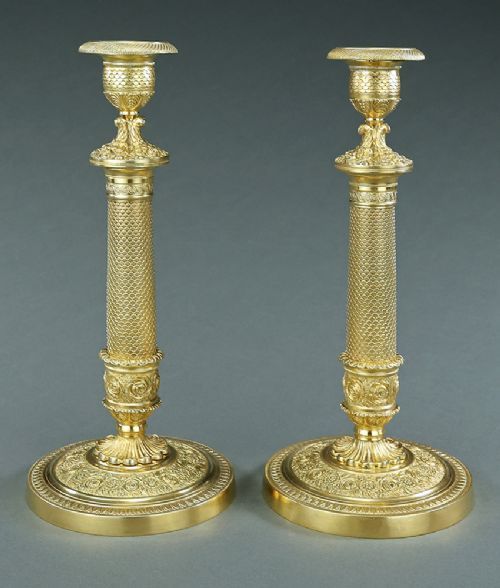
These empire style candle stands bring heavy neoclassical dignity to a room, cast in bronze and ormolu to catch the flicker of the wick.

Empire Style Candle Stands
When you search for empire style candle stands, you encounter sturdy pairs intended for mantelpieces, desks and grand side tables. The selection relies heavily on nineteenth-century French and Regency pieces, spanning candlesticks and multi-armed candelabra.
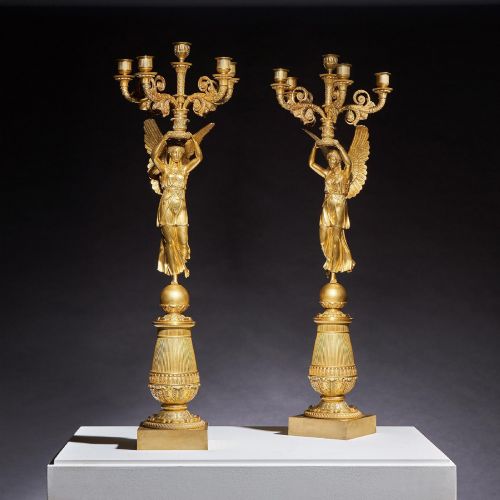
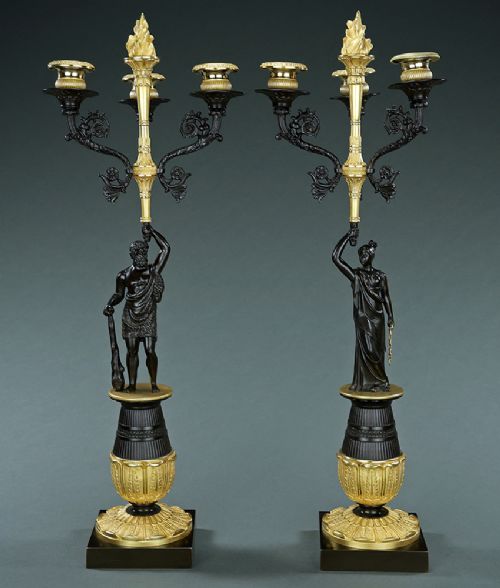
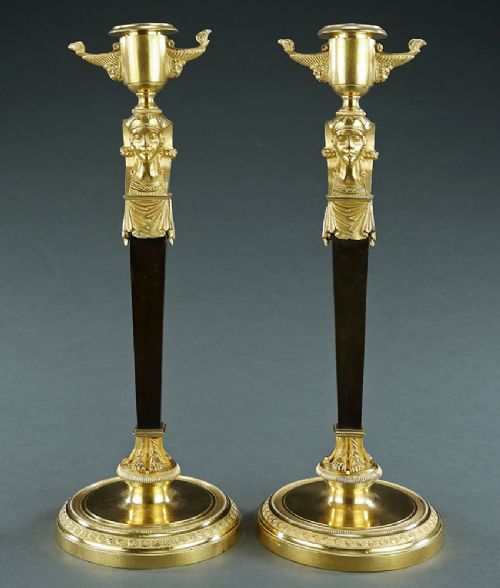
Most examples appear as matched pairs, incorporating classical figures, caryatids or mythological motifs such as Hercules and Hesione. Alongside standard candlesticks, the listings include torcheres and pedestals that share the same heavy architectural lineage.
The aesthetic draws directly from French Empire, Neoclassical and Regency vocabularies. You will find items dated across the nineteenth century, including specific periods like the French Restoration and Charles X.
How they were made
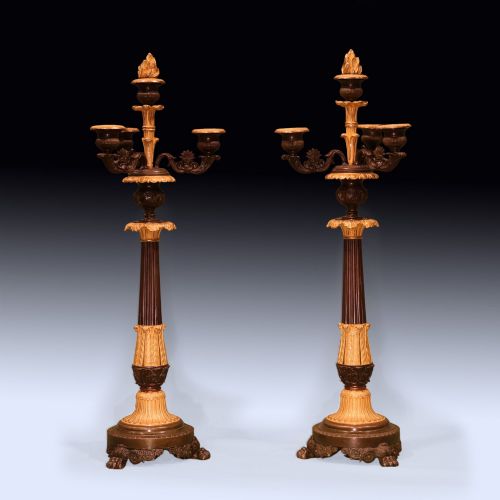
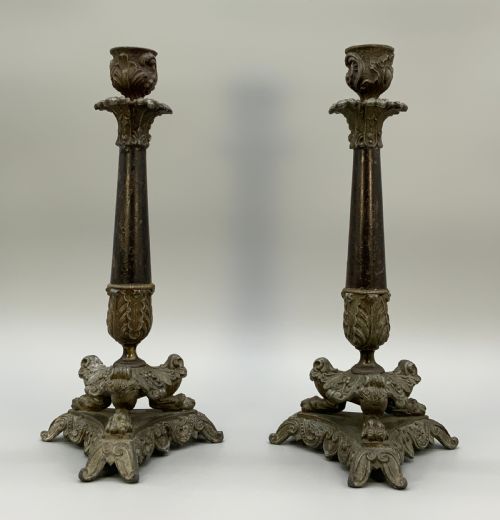
Maker workshops relied on bronze, patinated bronze and cast metal for the foundational structure, often combining dark patinated surfaces with bright gilt bronze and ormolu. This deliberate contrast highlights the crispness of the chased details.
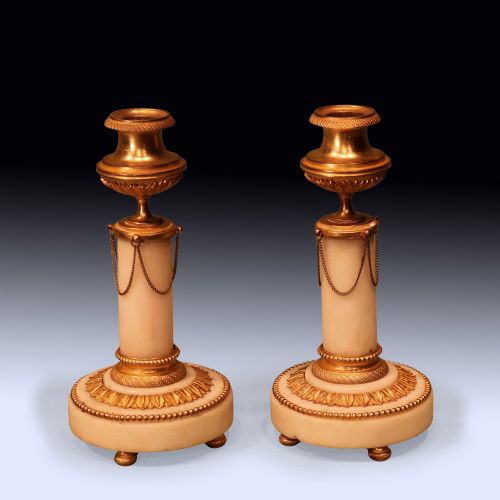
Many designs integrate white marble bases or columns, adding cool weight and a clean geometric contrast to the metallic mounts. Brass and cast iron also appear among the structural metals, shaped through traditional foundry methods.
Finishing involved meticulous gilding and hand-chasing to sharpen the acanthus leaves, classical drapery and figural elements. The integration of bronze with marble required precise fitting to ensure the heavy components stood true.
Hercules once set aside his lion skin just long enough to hold up your evening taper.
What varies in quality
The choice and combination of materials distinguish standard production from exceptional works. The inclusion of heavy ormolu, finely veined white marble and complex figural shafts such as caryatids or zodiac symbols signals higher ambition in the workshop.
Proportion and architectural balance dictate the visual success of each stand. The best examples maintain a rigorous symmetry and a satisfying heft that anchors the design to the surface it occupies.
Pierre Philippe Thomire·Clodion
The Empire Style Candle Stands Glossary
- Ormolu
- Gilt bronze produced by applying a mercury and gold amalgam to a bronze object and heating it to drive off the mercury. This technique creates a rich, durable golden surface.
- Candelabra
- A branched candlestick holding multiple candles on separate arms. These often feature removable central finials or figural shafts.
- Caryatid
- A sculpted female figure serving as an architectural support in place of a column. They frequently appear supporting the shafts of classical candlesticks.
- Athenienne
- A tripod stand or small burner styled after ancient Greek furniture forms. They translate classical archaeological finds into domestic lighting supports.
- Patinated Bronze
- Bronze treated with chemicals or heat to alter its natural surface colour. This produces deep brown, black or greenish tones that contrast with bright gilt mounts.
Empire Style Candle Stands: Frequently Asked Questions
How do I clean ormolu and bronze stands?
Dust these pieces gently with a soft, dry brush to prevent dirt settling into the chased recesses. Avoid harsh commercial metal polishes, which can strip away the historic gilding.
If the marble base requires attention, use a damp cloth followed immediately by a dry one, keeping moisture away from the metal components.
Where were these stands placed in a period room?
Pairs typically stood on mantelpieces flanking a mirror, or on console tables and desks within formal reception rooms. Their reflective surfaces helped amplify the modest light cast by wax tapers.
Heavier torcheres and pedestals stood directly on the floor to support larger lighting arrangements or decorative urns.
How can I tell a French Empire piece from a Regency one?
French Empire pieces often lean heavily into Napoleonic symbolism, military trophies and precise archaeological interpretations derived from Egyptian and Roman campaigns. Regency items share a parallel neoclassical interest but frequently incorporate British interpretations of Greek forms.
Both styles utilise similar patinated bronze and ormolu palettes, making the specific decorative motifs and national foundry marks the clearest indicators of origin.