


Ormolu Marble Candelabra Pair
These ormolu marble candelabra pair selections combine gilt bronze and stone bases to bring warmth and classical balance to a room.
Ormolu Marble Candelabra Pair
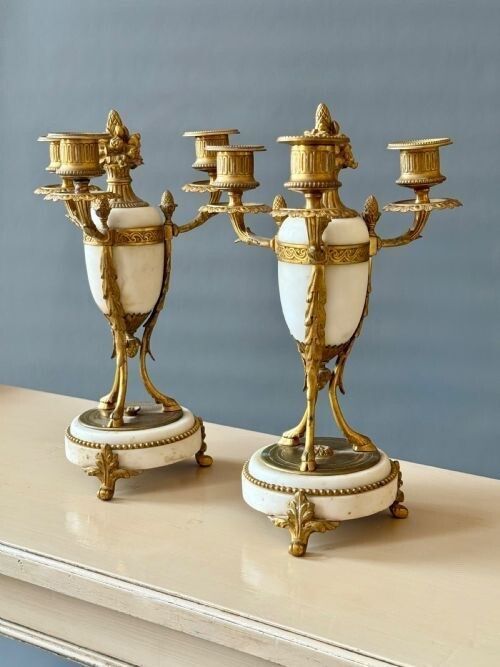
An ormolu marble candelabra pair brings together cast metal and polished stone to create balanced symmetry on a mantelpiece or side table. These decorative lighting supports trace their lineage through the eighteenth and nineteenth centuries, drawing heavily on classical motifs. When searching for an ormolu marble candelabra pair, buyers encounter French and Victorian interpretations ranging from two-arm candleholders to large five-light fixtures.
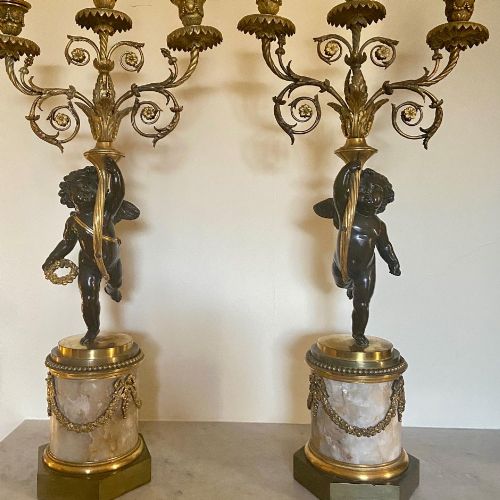
The dominant style on this page is Louis XVI Revival, alongside French Empire and Victorian examples. Many pieces incorporate patinated or gilded bronze putti, cherubs, and winged figures supporting the candle branches. Porphyry, verde antico, and white marble form the heavy plinths that ground these substantial decorative objects.
How they were made
Foundry workers cast bronze using traditional methods before applying fire gilding, known as ormolu, to create a durable, golden surface layer. Patinated bronze elements provide a dark contrast to the bright gilt components and the pale stone bases. Stonemasons turned and polished the marble plinths, drilling them to accommodate the metal mounts and structural fixings.
Candelabra arms and bobeches were cast separately and joined to central shafts through threaded pins or brazed joints. Fluorspar and porphyry appear alongside standard white and green marble, showing the variety of mineral resources utilised by nineteenth-century makers. Artisans finished the metal surfaces with hand-chasing to sharpen the details on acanthus leaves, drapery, and feather motifs.
Materials recorded on this site include white marble, verde antico, porphyry, and fluorspar paired with patinated bronze, brass, and gilt ormolu.
What varies in quality
The choice and preparation of the marble plinth influence the overall presence of the object. Solid blocks with rich veining and high-polish finishes elevate the piece, whereas poorly matched stone or repaired breaks diminish the visual harmony. Heavy, stable bases indicate that the maker used substantial materials to support the weight of the bronze branches.
Francois Redmond·Claude Clodion·Thomas Hope
The Ormolu Marble Candelabra Pair Glossary
- Ormolu
- Gilded bronze produced by applying a mercury and gold amalgam to the metal and heating it to vaporise the mercury. This technique creates a rich, matte gold surface characteristic of fine antique metalwork.
- Bobeche
- A removable drip pan fitted beneath the candle nozzle to catch wax. These small circular plates help protect the arms and lower sections of the candelabra.
- Putto
- A plump male child figure, often winged, used extensively in classical and revival decorative arts. These figures frequently appear supporting the candelabra stems.
- Verde Antico
- A dark green serpentine breccia marble prized for its mottled appearance. It provides a striking contrast against bright ormolu mounts.
- Garniture
- A set of matching decorative objects, typically comprising a clock flanked by a pair of candelabras or vases. These sets were designed to sit together on a mantelpiece.
Ormolu Marble Candelabra Pair: Frequently Asked Questions
How do I clean ormolu and marble?
Dust the surfaces gently with a soft, dry cloth to prevent dirt accumulation in the crevices of the bronze casting. Avoid using water, abrasives, or chemical polishes, as these substances can strip the historic ormolu gilding and stain the porous marble.
For stubborn grime on the stone base, use a slightly damp cloth with mild soap, drying the area immediately. Metal components require no liquid cleaner; gentle brushing removes loose particles without risking the delicate surface finish.
Were these electrified later?
Many nineteenth-century examples have been adapted to take modern wiring for use as table lamps alongside their traditional candle function. These conversions often involve running a cord down the central shaft or through a discreet channel in the marble base.
Buyers should inspect the underside of the plinth to see how any wiring was introduced. Reversible conversions preserve the original structure, allowing a collector to restore the pieces to pure candle use if desired.
How do I spot a matched pair?
Examine the casting details, base dimensions, and weight distribution across both objects to confirm they started life together. Slight variations in hand-chasing or minor differences in the marble veining can indicate that two individual pieces were united later.
Matching patination and identical wear patterns on the gilt surfaces provide strong evidence of shared origin. Look closely at the construction of the candle arms and the fixing screws beneath the base for consistency.
Where should I display them?
Place these substantial decorative objects on a sturdy mantelpiece, sideboard, or console table where their height and weight receive adequate support. Ensure they sit away from high-traffic walkways to prevent accidental knocks against the delicate bronze arms or stone corners.
Positioning them out of direct, intense sunlight protects the patinated bronze and prevents any modern wax inserts from softening. Their balanced symmetry makes them ideal focal points for the centre of a room.