





Empire Style Bronze Candelabra
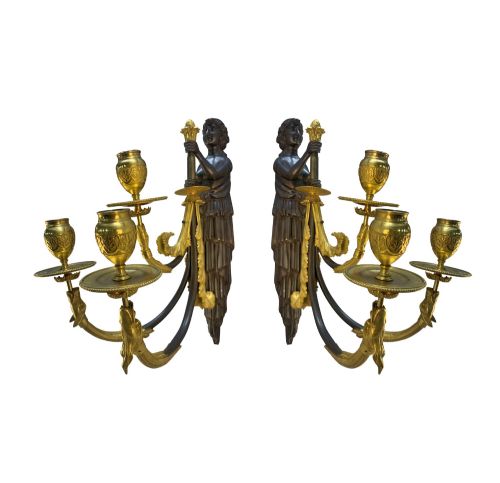
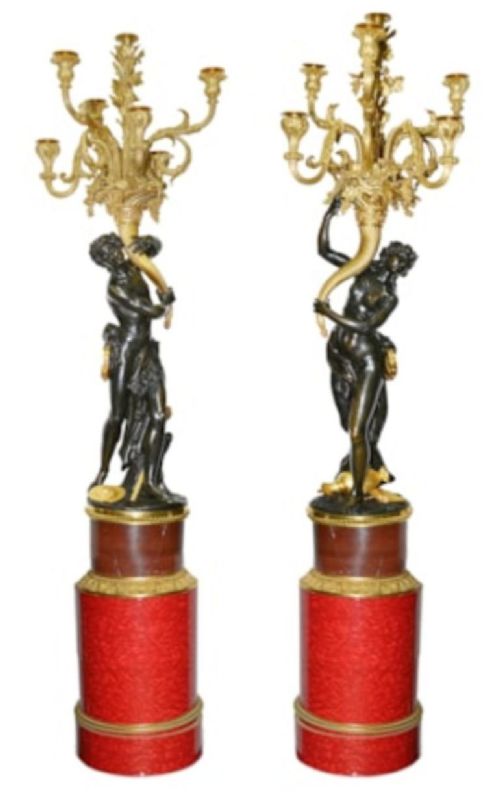
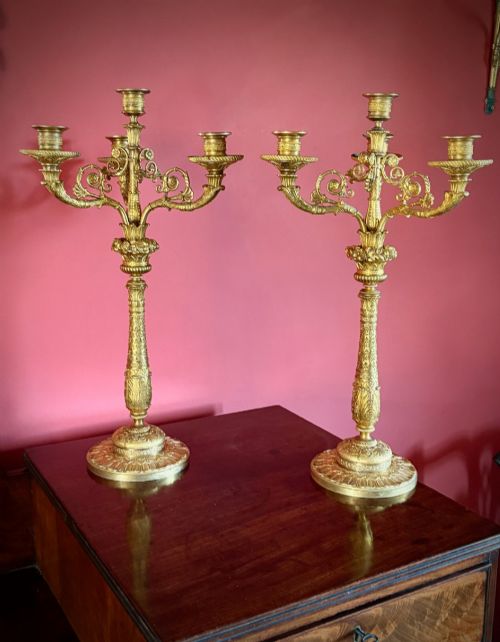
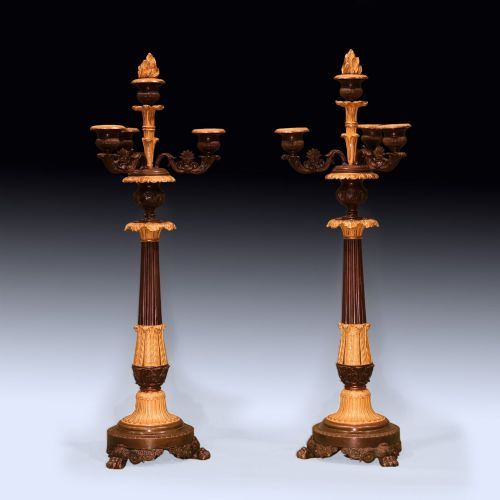
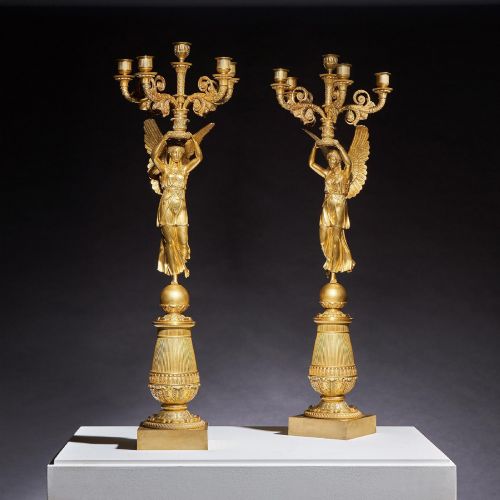
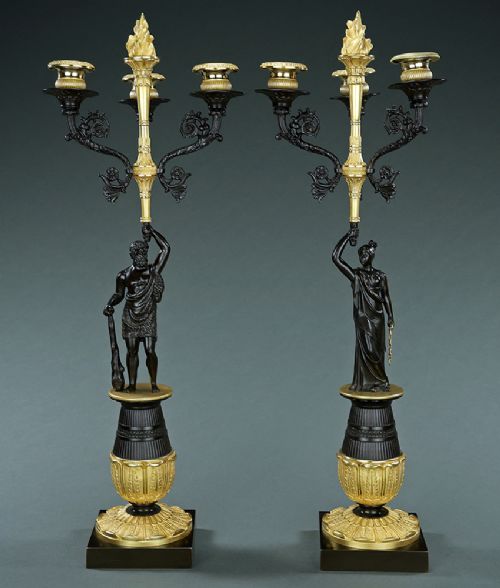
These empire style bronze candelabra combine heavy patinated metal with bright ormolu mountings to bring classical symmetry into a room.
Empire Style Bronze Candelabra
Empire style bronze candelabra are lighting pieces shaped by classical motifs, military triumphs and mythological figures. When searching this phrase, a buyer finds matching pairs designed for heavy mahogany surfaces and mantelpieces.
The versions most common on this page date from the nineteenth century, ranging from French Empire origins to Regency and Victorian interpretations. These pieces often take the form of multi-armed candelabra, candlesticks, or clock garnitures flanked by matching lights.
Many examples incorporate figural elements such as maidens, putti, cherubs, and mythological heroes like Hercules. Other variants introduce marble bases, onyx, or converted lamp fittings alongside the standard bronze arms.
Materials and construction
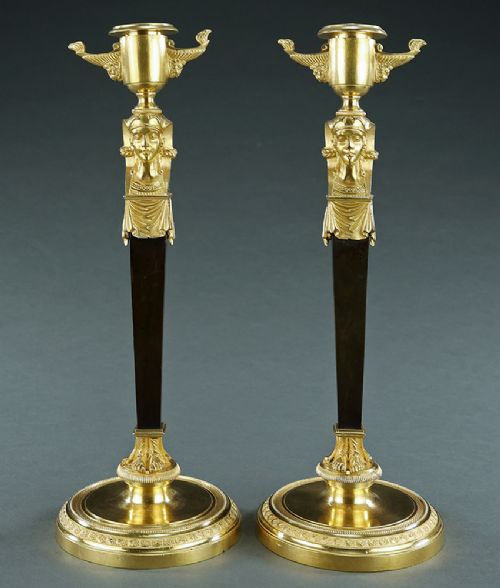
The foundational structures rely on cast bronze, finished with either a dark patinated surface or a bright mercury-gilt treatment known as ormolu. These two contrasting metal finishes create the signature visual tension seen across French and Regency designs.
Secondary materials such as white or siena marble frequently form the plinths and bases, adding physical weight to support the branching arms. Glass, crystal, and enamel accents sometimes appear in later nineteenth-century adaptations and clock sets.
Empire Style Bronze Candelabra Retail Price Guide 2026
Typical asking prices for empire style bronze candelabra among the pieces listed under this phrase on Sellingantiques today, from the lower quarter to the upper quarter. They describe what is for sale here now, not the wider market.
Listings feature nineteenth-century materials including patinated bronze, ormolu, white marble, siena marble, onyx, and crystal.
Judging quality and execution
The integration of materials also defines the tier of a piece, separating standard production models from works attributed to skilled makers or specific design repertoires. Heavy marble plinths combined with thick, even ormolu indicate a higher standard of period manufacture.
Pierre Philippe Thomire·Thomas Hope·Clodion
The Empire Style Bronze Candelabra Glossary
- Ormolu
- A gold-coloured alloy applied to bronze through a mercury amalgamation process. This finish provides the bright, metallic highlights characteristic of classical lighting.
- Patinated Bronze
- Bronze treated with chemical solutions to achieve a dark brown or black surface. It forms a stark contrast against polished gilt metal.
- Clock Garniture
- A set comprising a central mantel clock accompanied by matching side pieces such as candelabra or urns. These matched groupings decorated nineteenth-century drawing rooms.
- Retour d'Egypte
- A design style inspired by Napoleon's Egyptian campaign. It incorporates pharaonic symbols, sphinxes, and classical military motifs into domestic objects.
Empire Style Bronze Candelabra: Frequently Asked Questions
Were these candelabra wired for electricity?
Period lighting was strictly designed for wax candles rather than electric bulbs. Many surviving examples retain their original candle sockets and drip pans.
Some pieces underwent later conversion into table lamps during the twentieth century. Check the base and wiring channels to determine if alterations occurred.
How do I distinguish French Empire from Regency?
French Empire pieces lean heavily into Napoleonic iconography, laurel wreaths, and classical military trophies. They often feature intense contrasts between deep patinated bronze and bright ormolu.
Regency examples share similar classical roots through British interpretations. These often incorporate lighter frames and specific local cabinet-making traditions.
Where should I place a clock garniture?
Clock sets suit wide mantelpieces, sideboards, or console tables where the central clock and flanking candelabra stay balanced. Keep them away from direct heat sources to protect any marble and bronze finishes.
Ensure the surface supports the considerable weight of the combined marble and metal components.