



Empire Period Gilt Clock
These empire period gilt clock examples bring classical bronze work and striking mechanical precision into any room.
Empire Period Gilt Clock
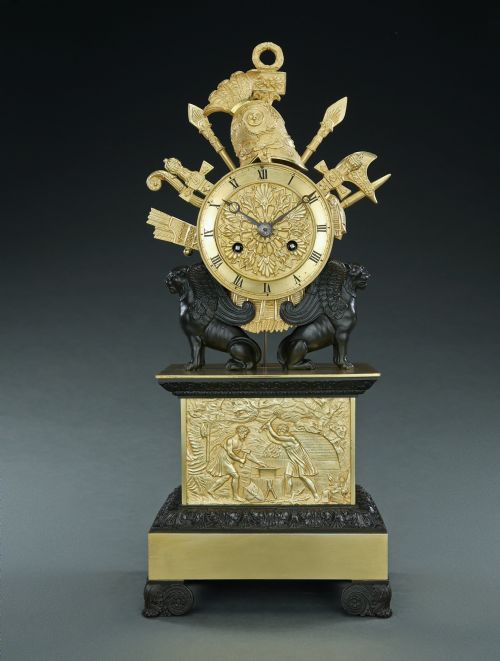
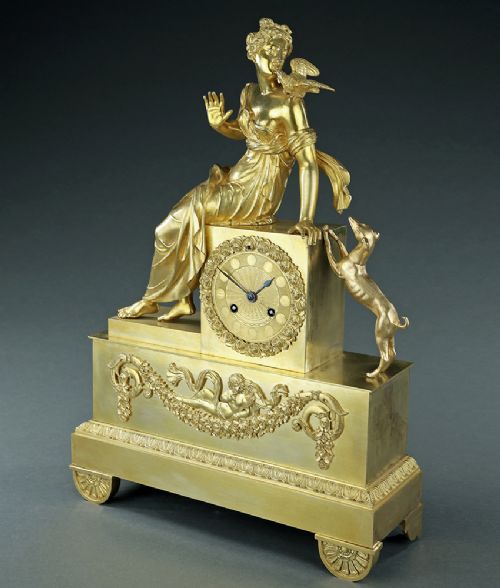
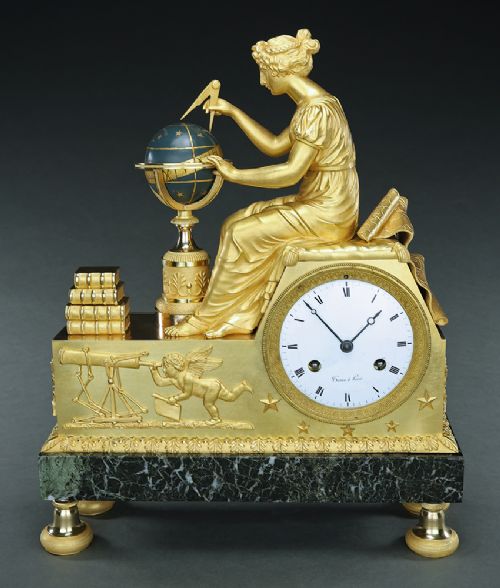
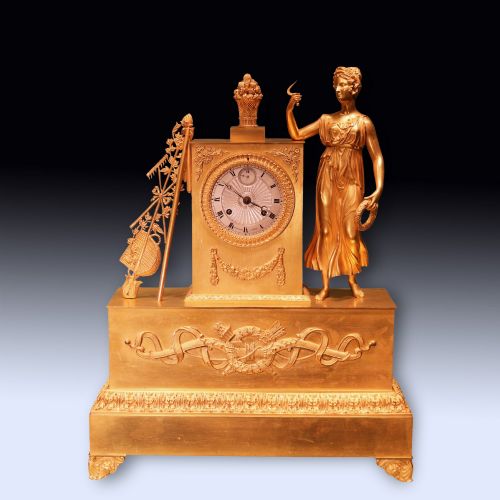
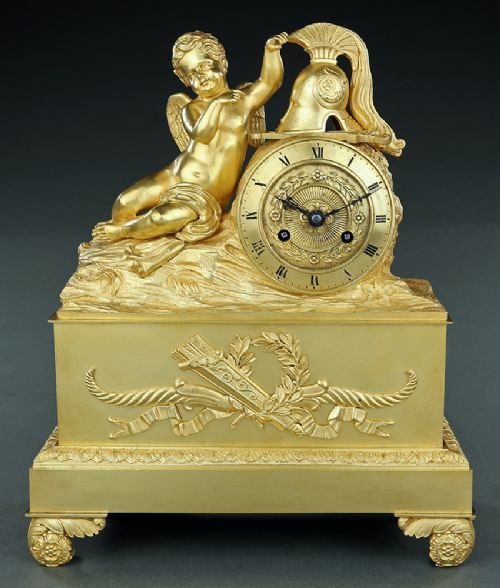
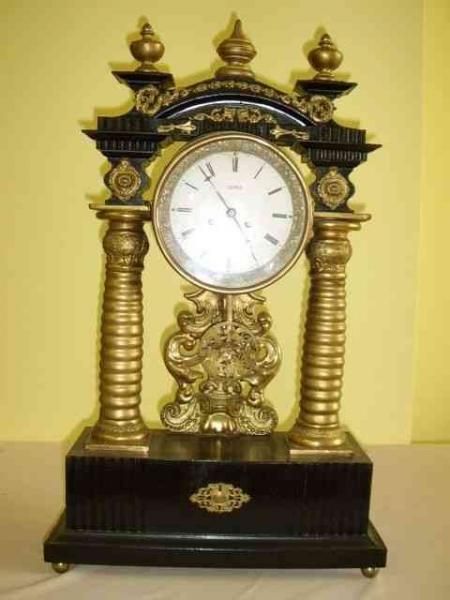
When you search for an empire period gilt clock, you encounter heavy, sculptural mantel clocks and portico designs rooted in nineteenth century French and Regency aesthetics. These pieces typically take the form of figural mantel clocks, musical portico clocks, and clock garnitures that dominate a fireplace mantel with considerable presence.
You are most likely to meet French Empire and Regency interpretations featuring allegorical subjects, classical figures, and architectural motifs. Common variations include bronze and ormolu cases paired with white marble, rouge marble, siena marble, or ebonised wood bases.
The selection ranges from early nineteenth century astronomical themes and mythical beasts like lions and goats to later Napoleon III revival pieces. Collectors lean towards these works for their fusion of sculptural artistry and mechanical timekeeping.
Materials and construction
Casework relies heavily on cast ormolu and patinated bronze, often contrasted against rich marble or brass components. Makers employed fire-gilding techniques to impart a brilliant, lasting lustre to the bronze elements.
Internal movements feature eight-day bell striking mechanisms, anchor escapements, and chain fusee systems. Dials incorporate enamel for legibility, protected by glass bezels within the heavy metal frames.
Empire Period Gilt Clock Retail Price Guide 2026
Typical asking prices for empire period gilt clock among the pieces listed under this phrase on Sellingantiques today, from the lower quarter to the upper quarter. They describe what is for sale here now, not the wider market.
Listings feature eighteenth and nineteenth century periods, utilising materials such as ormolu, patinated bronze, white marble, siena marble, and malachite.
Factors of quality
The complexity and integration of the mechanical movement also dictate standard. Original chain fusee movements and signed dial work by recognised makers elevate a piece above standard domestic timepieces.
Canaillor of Paris·FB Adams London·Pons de Paul·Ravrio
The Empire Period Gilt Clock Glossary
- Ormolu
- Finely ground high-carat gold applied to a bronze object using a mercury amalgamation technique. This method creates a durable, luminous golden finish characteristic of the period.
- Portico clock
- A mantel clock designed with architectural pillars framing the central pendulum. This style references classical porticos and often includes a suspended movement.
- Clock garniture
- A set comprising a central mantel clock accompanied by matching side ornaments such as candelabra or urns. These sets create a balanced decorative arrangement on a fireplace mantel.
- Silk suspension
- A method of hanging the pendulum from a small loop of silk thread behind the dial. This traditional French mechanism allows for fine adjustment of the clock's speed.
- Fusee
- A conical pulley used in spring-driven clocks to maintain equal power as the mainspring unwinds. This device ensures consistent timekeeping accuracy throughout the eight-day run.
Empire Period Gilt Clock: Frequently Asked Questions
How do I wind an empire period gilt clock?
Use the appropriate winding key on the dial holes to gently turn the mechanism until resistance is felt.
Take care not to overwind the mainspring, as this can damage the internal gear train or snap the spring.
Where should I place a heavy marble and bronze clock?
Position the piece on a sturdy, level mantelpiece or furniture surface capable of supporting considerable weight.
Ensure the clock sits flat to allow the pendulum to swing evenly without catching on the case interior.
How do I tell an original empire clock from a later revival?
Examine the casting quality of the bronze and the wear patterns on the fire-gilded surfaces.
Later nineteenth century Napoleon III revival pieces often display different chasing styles and machine-tooled components compared to early nineteenth century originals.
What maintenance do these antique movements require?
Professional servicing every few years ensures the mechanical parts remain clean and properly lubricated.
Avoid applying household oils or attempting to repair the delicate escapement and fusee chain without specialist knowledge.