





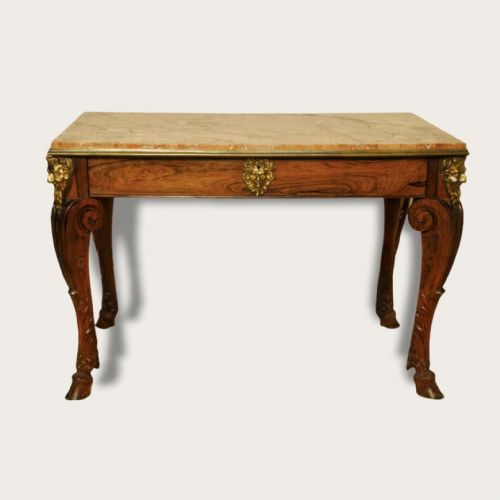

Empire Gilt Console Table
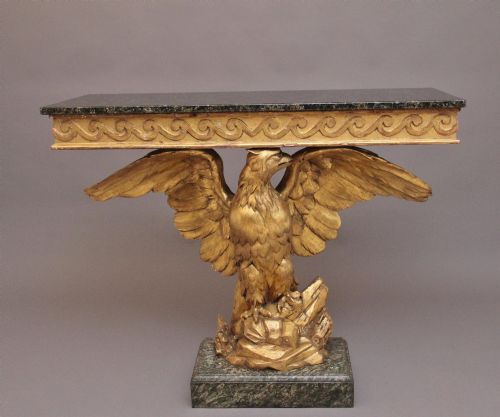
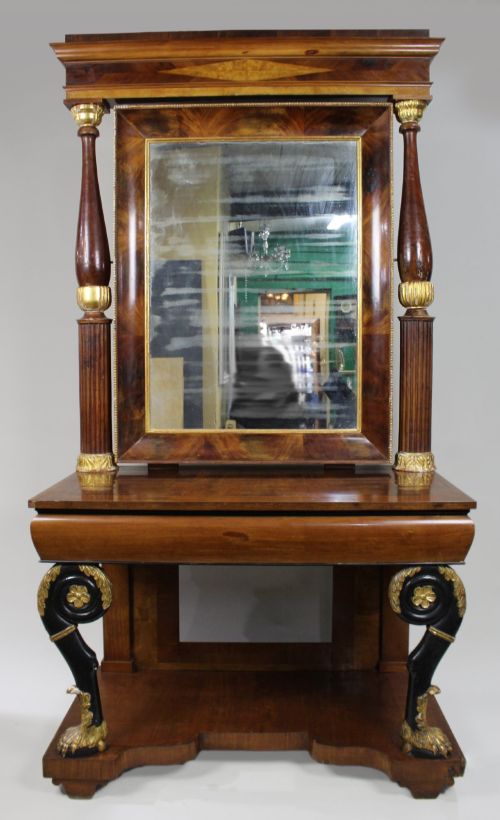
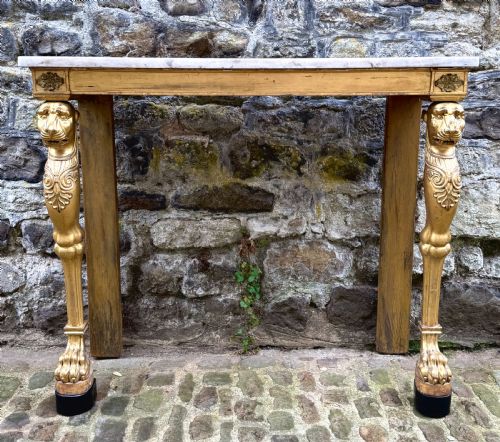
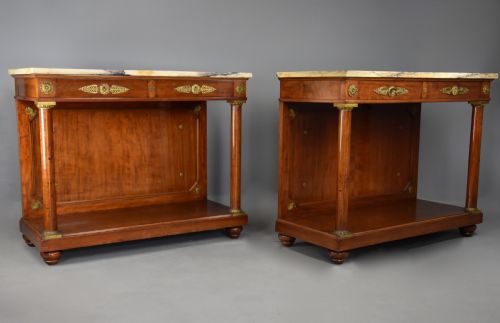
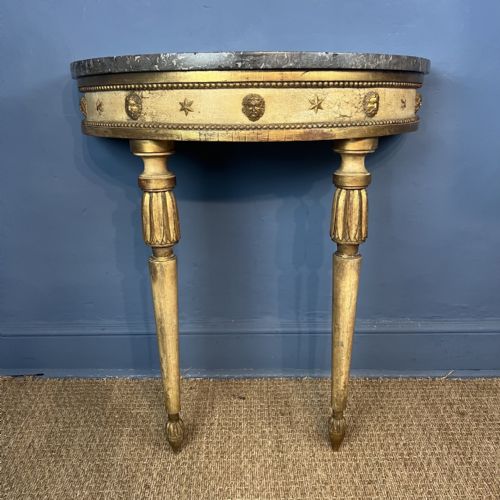
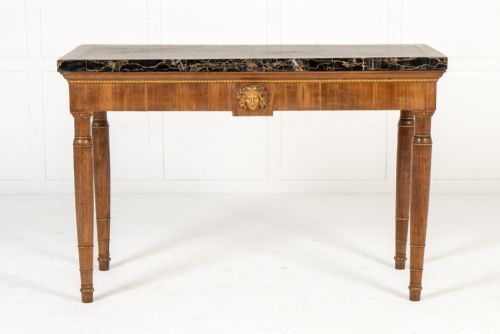
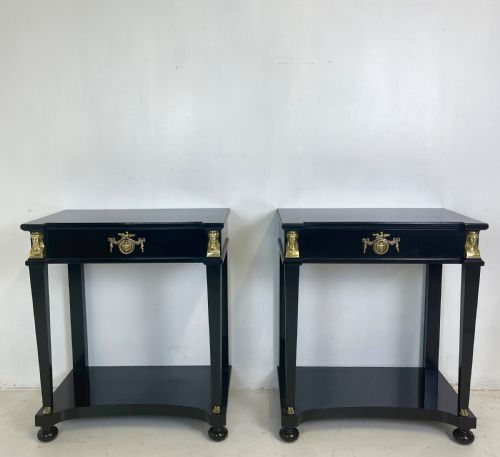
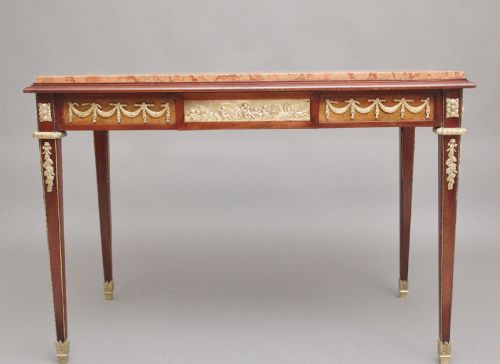
These pieces are empire gilt console table examples, bringing neoclassical grandeur and striking surface contrast to any hallway or principal room.
Empire Gilt Console Table
An empire gilt console table brings together classical form and rich surface decoration, originating from the nineteenth century alongside later revivals. Buyers seeking an empire gilt console table will find examples spanning French Empire, Regency, and Italian Neoclassical styles.
The inventory on this page consists principally of console tables, side tables, and occasional tables, often accompanied by marble tops. These items bridge architectural presence and functional furniture, designed to stand flat against a wall.
The most common iterations encountered here date from the nineteenth century and the early twentieth century revival periods. They utilise mahogany, walnut, and rosewood carcasses enhanced by paint, parcel gilt, or full giltwood treatments.
How They Were Made
Carcases of mahogany, walnut, and rosewood provide the structural foundation, shaped through traditional cabinet-making carpentry. Giltwood, gesso, and painted wood finishes then apply decorative brilliance across the timber frames.
Ormolu mounts and gilt bronze details punctuate the wooden surfaces, adding precise metallic contrast characteristic of the period. Heavy marble slabs form the primary top surface across many pieces, resting directly upon the console frame.
Listings feature mahogany, walnut, and rosewood woods combined with marble, ormolu, and giltwood materials across the nineteenth century and early twentieth century.
What Varies In Quality
The refinement of the carved details and the weight of the underlying timber define the upper tier of production. Superior examples display crisp gilding and substantial marble tops that sit harmoniously within the architectural framework.
Proportion and execution distinguish standard workshop pieces from those carrying maker stamps or finer bronze mounts. The integration of parcel gilt highlights against painted or polished wood surfaces reveals the maker's artistic control.
Krieger Paris
The Empire Gilt Console Table Glossary
- Ormolu
- Gilt bronze ornamentation applied to furniture. This technique involves gilding a mercury-bronze amalgam to create a bright metallic finish.
- Gesso
- A plaster-like mixture applied to wood surfaces as a base for painting or gilding. It provides a smooth ground for intricate carved details.
- Parcel Gilt
- A decoration method where only specific parts of an object receive gilding, leaving the underlying wood or paint exposed elsewhere.
- Gueridon
- A small decorative table originating in seventeenth-century France. The term frequently describes round centre tables from the nineteenth century.
Empire Gilt Console Table: Frequently Asked Questions
Where should I place a console table?
These tables traditionally anchor a hallway, entrance hall, or principal reception room against a flat wall. Their shallow depth allows them to sit neatly without obstructing walking routes.
Pairing a console table with a matching pier mirror creates a cohesive architectural focal point. They function well beneath artwork or windows.
Are marble tops original to these tables?
Marble tops frequently accompany nineteenth-century console tables, providing a durable and cool surface. The stone varies from white varieties to darker veined options.
Many tables incorporate fitted marble slabs designed specifically for the wooden frame. Replacement tops occur due to the age of the pieces.
How do I distinguish Empire from Regency style?
French Empire style emerged under Napoleonic rule, favouring heavy classical motifs, dark mahogany, and prominent ormolu mounts. Regency furniture reflects British tastes during the early nineteenth century, sharing classical roots but employing lighter proportions.
Italian Neoclassical examples often incorporate painted and parcel gilt surfaces with delicate carvings. Overlapping revival periods in the late nineteenth and early twentieth centuries blended these traits.
How do I care for giltwood and ormolu?
Giltwood surfaces require gentle dusting with a soft, dry brush to protect the delicate metallic leaf. Moisture can damage traditional water gilding and gesso grounds.
Ormolu mounts benefit from minimal intervention, avoiding harsh cleaning agents that strip the original mercury finish. Professional maintenance preserves the historic surface integrity.