




Empire Gilt Candelabra
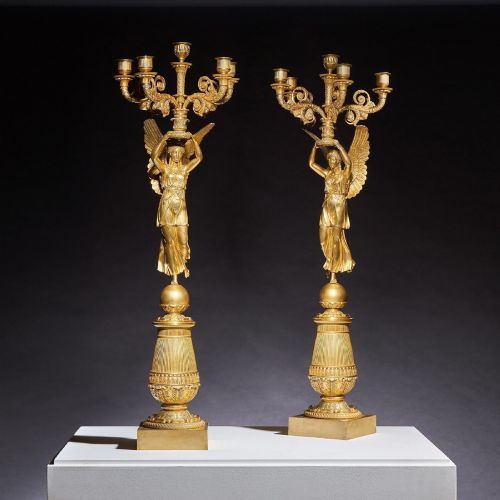
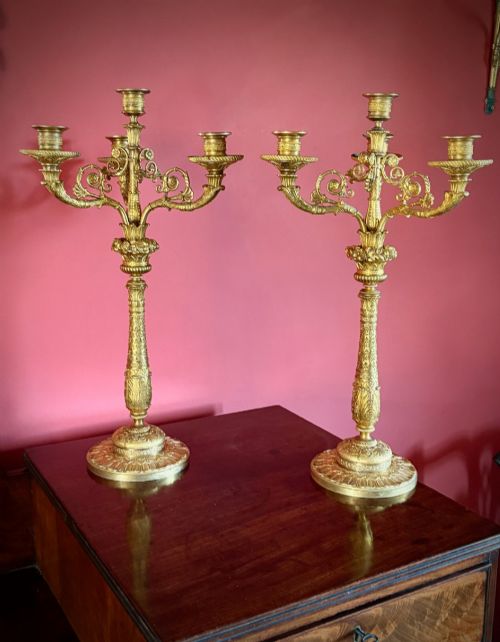
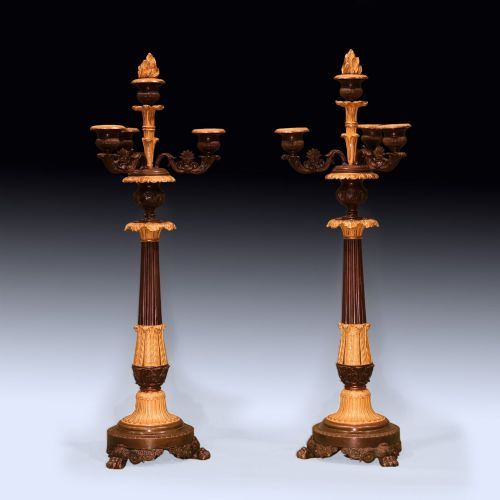
Empire gilt candelabra bring sculptural presence and warm candlelight to a room through heavy patinated bronze and brilliant ormolu.
Empire Gilt Candelabra
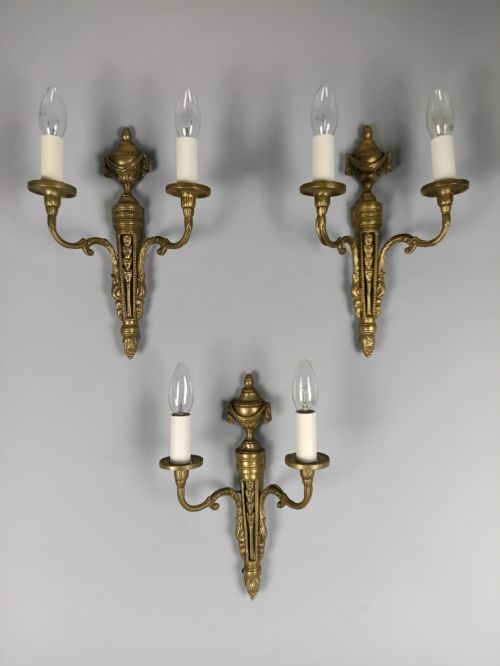
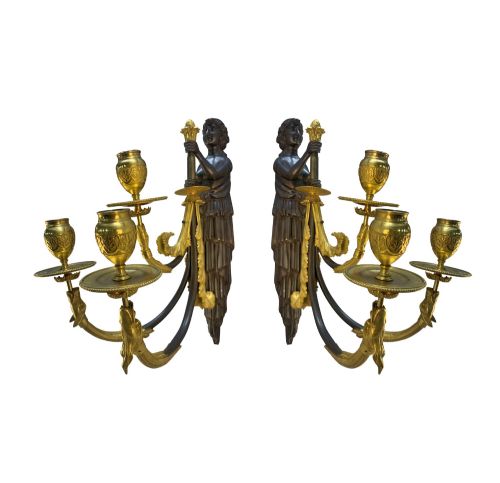
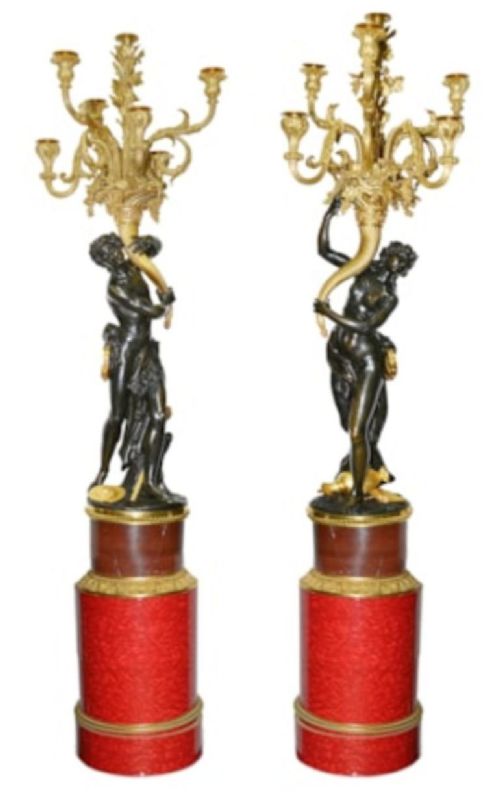
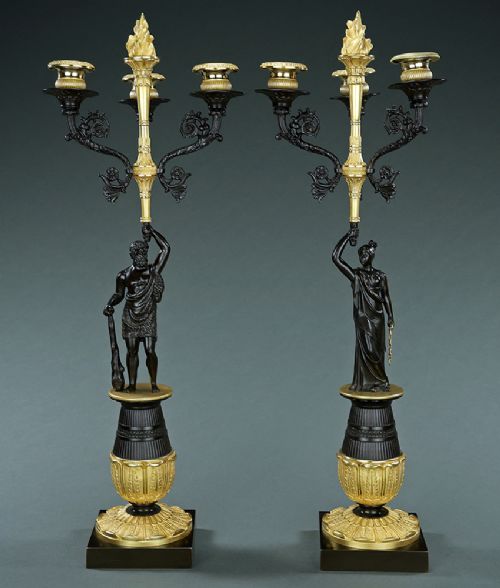
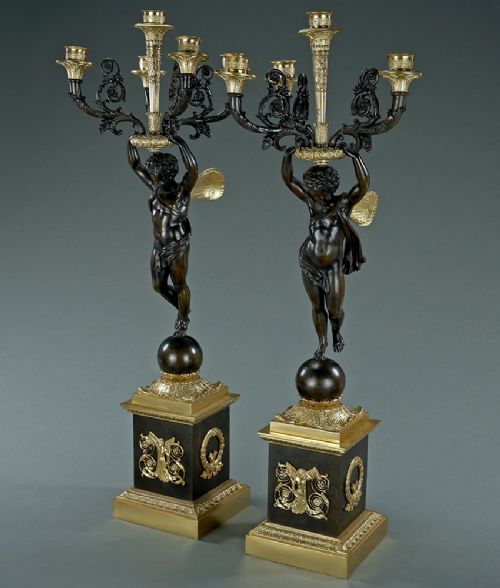
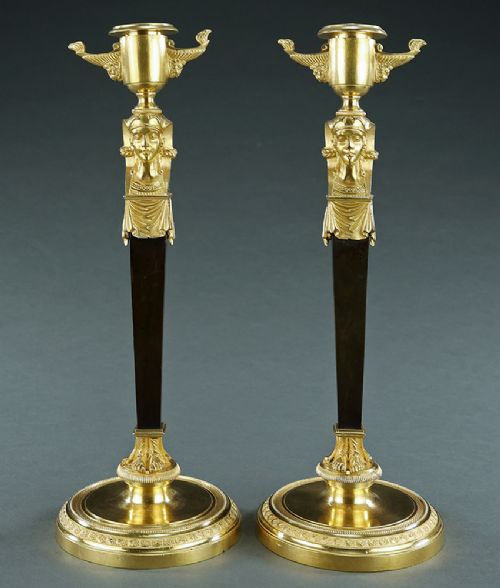
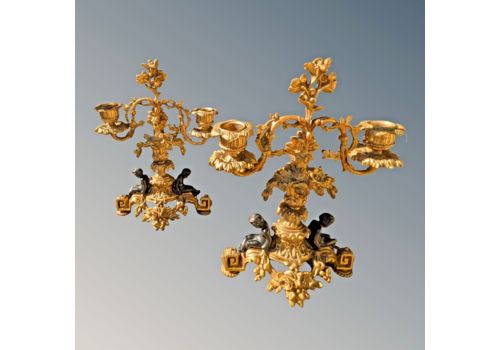
When you search for empire gilt candelabra, you look at heavy nineteenth-century bronze lighting fixtures cast in France, Sweden, and Britain. The most common version on this page is a matched pair of multi-arm candelabra featuring patinated bronze figures contrasted with bright gilt bronze and ormolu mounts.
Many examples incorporate white marble, onyx, or slate bases alongside neoclassical motifs like winged putti, cherubs, and classical figures. Makers also produced these pieces as part of grander mantel clock sets and garnitures alongside wall sconces and table lamps.
The styles span French Empire, Regency, Charles X, and later Victorian revivals, drawing heavily on classical antiquity and Egyptian revival themes like the 'Retour d'Egypte' aesthetic.
How They Were Made
Foundries produced these pieces using traditional lost-wax or sand-casting methods to shape the structural bronze and brass components. Artisans then applied mercury gilding, known as ormolu, to create a durable, brilliant gold surface finish alongside dark patination on the figural elements.
Empire Gilt Candelabra Retail Price Guide 2026
Typical asking prices for empire gilt candelabra among the pieces listed under this phrase on Sellingantiques today, from the lower quarter to the upper quarter. They describe what is for sale here now, not the wider market.
Object types range from multi-arm candelabra and wall sconces to complete clock garnitures and table lamps.
What Varies in Quality
The distinction between ordinary and exceptional pieces lies entirely in the crispness of the hand-chasing on the bronze and the depth of the mercury gilding. Top-tier examples exhibit meticulous anatomical precision in figures and foliage, while lesser pieces rely on softer, shallower factory casting.
The integrity of the original mercury ormolu finish against later chemical or electroplate re-gilding dictates desirability among serious collectors. Furthermore, the weight and quality of the underlying bronze and the selection of unblemished marble or onyx set the finer pieces apart.
Pierre Philippe Thomire·Rabiat·Auguste Cain·François-Christophe-Armand Toussaint
The Empire Gilt Candelabra Glossary
- Ormolu
- A golden surface finish created by applying a mercury and gold amalgam to bronze and firing it in a kiln. This historic technique produced a rich, deep lustre that does not fade like modern electroplate.
- Patinated bronze
- Bronze that has been chemically treated to achieve a dark brown, black, or greenish surface colour. It provides a striking visual contrast against bright gilt bronze mounts.
- Garniture
- A coordinated set of ornamental objects, typically consisting of a mantel clock flanked by matching candelabra or vases. These sets formed the visual centrepiece of nineteenth-century drawing rooms.
- Chasing
- The manual process of refining a cast metal surface using small steel punches and hammers. This technique restores crisp detail and texture lost during the initial sand-casting process.
- Retour d'Egypte
- A decorative style inspired by Napoleon's campaign in Egypt, featuring sphinxes, pharaohs, and canonical motifs. It formed a distinct sub-genre within the broader neoclassical movement.
Empire Gilt Candelabra: Frequently Asked Questions
Were these candelabra wired for electricity?
Nineteenth-century lighting fixtures were manufactured exclusively for candles, holding tallow or wax taper flames within their drip pans and nozzles. Many examples were subsequently adapted for electricity during the twentieth century.
Converters are frequently inserted into existing sockets without drilling, preserving the original structural integrity of the antique bronze work.
How do I tell Empire style from Regency?
French Empire pieces often lean heavily into militaristic and classical imperial symbolism, including laurels, eagles, and classical deities. Regency items, produced concurrently in Britain, share similar neoclassical roots but frequently incorporate lighter brass inlay and more restrained proportions.
Both styles utilise patinated bronze and ormolu, but the regional foundry marks and distinct casting signatures usually reveal their origin.
Can I use real candles in them?
You can burn traditional wax candles in these fixtures provided the sockets and drip pans are wide enough to catch melted wax safely. Care must be taken to protect the surrounding ormolu surface from direct heat and drips.
Using dripless taper candles minimises the risk of wax lodging in the intricate chased foliage and crevices of the metalwork.