
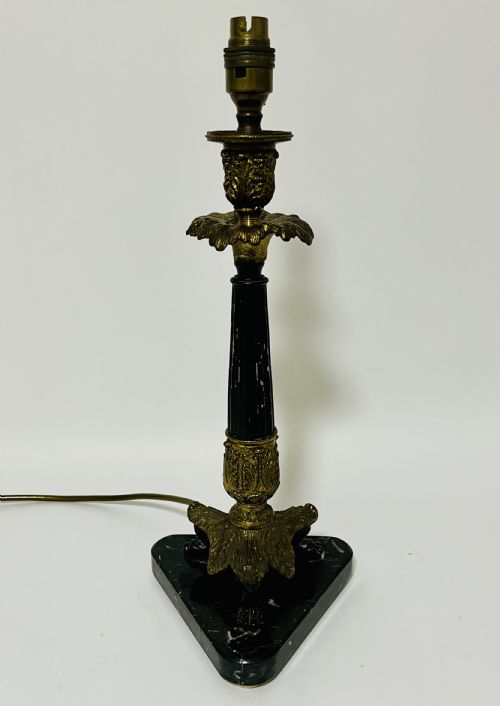


Empire Bronze Table Lamp
An empire bronze table lamp brings classical dignity and heavy metalwork to a room, drawing on French and Regency design.
Empire Bronze Table Lamp
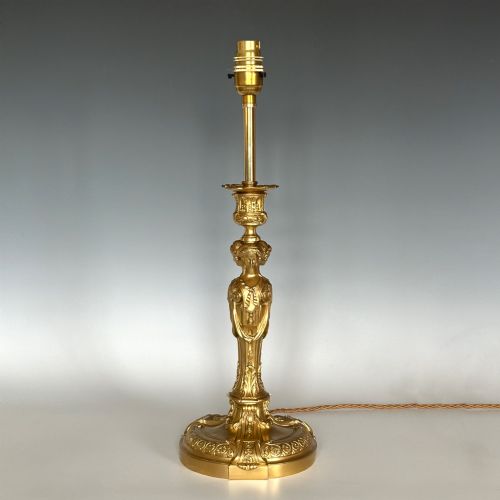
An empire bronze table lamp stands as a sturdy source of illumination rooted in nineteenth-century classicism. These pieces frequently adopt the forms of architectural columns, urns, or figural supports, reflecting French Empire and Regency aesthetics.
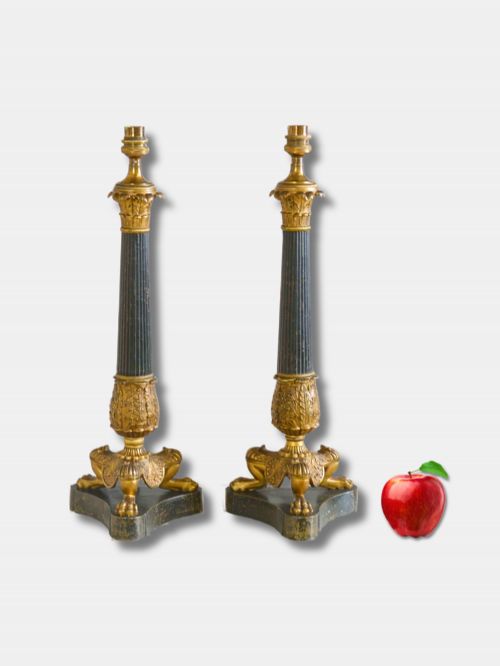
The version most commonly met on this page pairs cast bronze with gilded ormolu details, often mounted upon a marble plinth. Makers derived these classical shapes from antique precedents, sometimes utilising converted candlesticks or candelabra adapted for modern wiring.
How they were made
Craftsmen built these lamps using patinated bronze and bright ormolu, applying a fine layer of gold leaf or mercury gilding to cast brass and bronze components. Marble bases provided substantial weight at the base, while fabric or silk shades completed the assembly.
Foundries cast the metal elements in sections before hand-chasing the surface details to sharpen the foliage, figures, or fluting. Individual components screwed or pinned together, combining solid bronze bodies with decorative ormolu mounts.
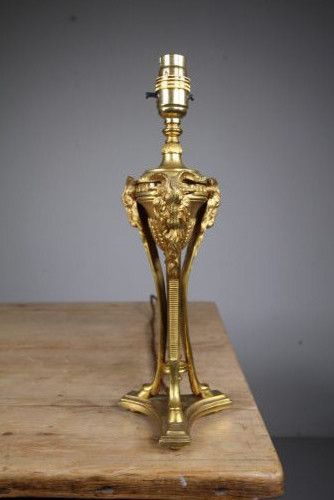
Several lamps proudly feature rams' heads and lion paws, proving that nineteenth-century desks took their interior design cues from menagerie expeditions.
What varies in quality
The depth and durability of the gilding also distinguish the range, alongside the quality of the marble plinths used for support. Original patination on the bronze body adds depth that inferior secondary finishes lack.
Jean-Démosthène Dugourc·Messenger
The Empire Bronze Table Lamp Glossary
- Ormolu
- Gilded bronze, where a layer of gold is applied to a bronze base. This technique creates a rich golden finish that contrasts with dark patinated bronze.
- Patinated bronze
- Bronze that has been chemically treated to achieve a darkened surface tone. This process highlights the bright ormolu mounts placed against it.
- Gueridon
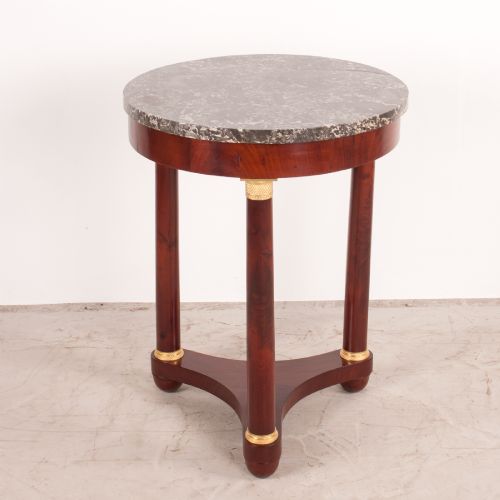
- A small circular table, sometimes adapted or associated with the decorative vocabulary found on lamp bases of the period. It reflects classical French interior schemes.
- Candelabra
- A branched candlestick holding multiple lights, frequently converted into a table lamp. These pieces retain their original arms or drip pans.
Empire Bronze Table Lamp: Frequently Asked Questions
How do I spot a converted candlestick?
Look for a central channel or drilled aperture where wiring passes through an older piece originally designed to hold a candle. These conversions maintain the original drip pans and socket mounts of the candlestick.
Many nineteenth-century lamps began life as candlesticks or candelabra before receiving electrical fittings later in their history.
What is the difference between bronze and ormolu?
Bronze is a heavy copper alloy used for the main structural body of the lamp, often given a dark patina. Ormolu refers to the gilded bronze elements applied as decorative mounts.
Together, these two metals create the characteristic two-tone contrast seen in classical French lighting.
How do I clean an ormolu lamp?
Dust the metal gently with a soft dry cloth to prevent accumulation in the recesses of the chasing. Avoid abrasive commercial cleaners that strip away the delicate gold gilding.
Water and harsh chemicals can damage both the patinated bronze and the gilded surfaces permanently.
Where should I place an empire lamp?
Position these heavy metal bases on sturdy side tables, desks, or pedestals where their substantial weight is supported. Their classical columns suit formal sitting rooms and libraries.
Keep them away from damp areas to protect the marble plinths and the metal patination.