

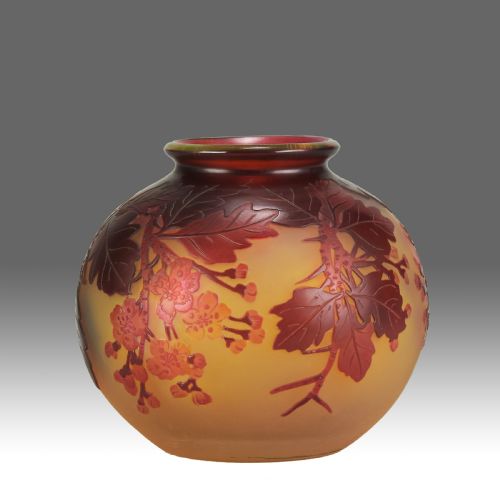


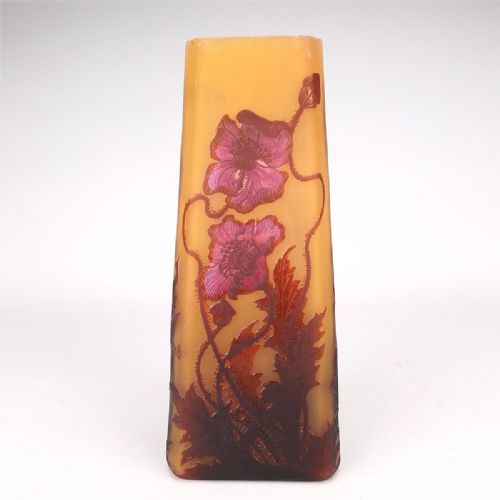


Emile Galle Floral Vase
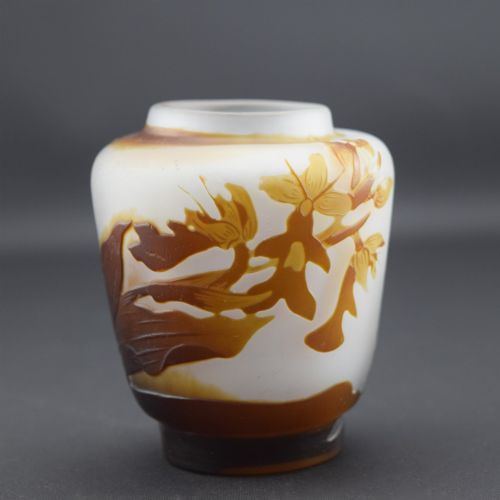
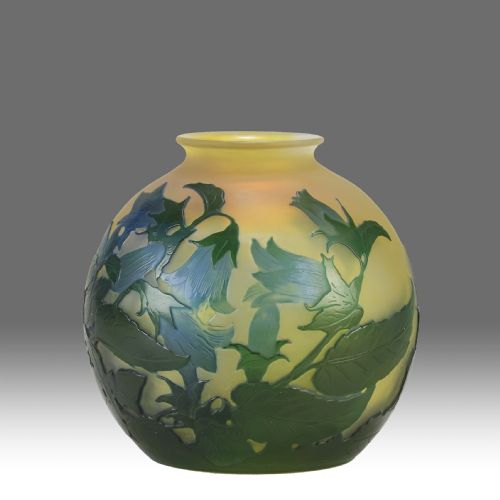
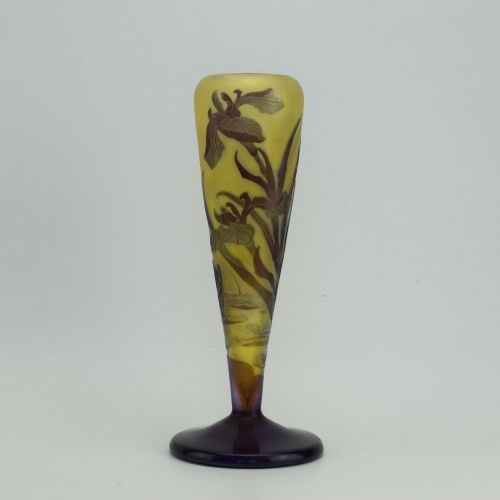
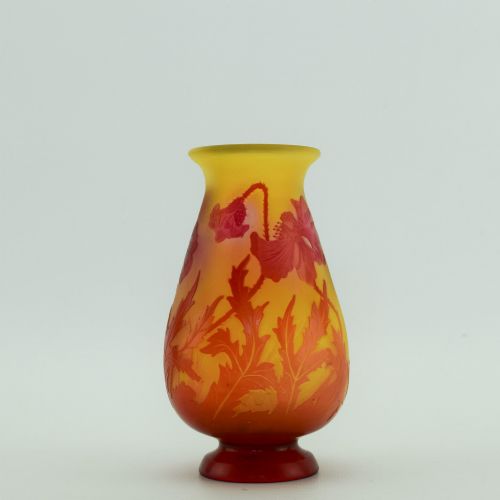
An emile galle floral vase brings the fluid botanical forms of Art Nouveau directly into glass through layered acid-etched cameo techniques.
Emile Galle Floral Vase
An emile galle floral vase embodies the natural world through depictions of campanula, poppies, iris, cornflowers, apple blossoms, honeysuckle, hydrangea, begonias, clematis, ferns, and blue flowers. These vessels emerge predominantly from the Art Nouveau period at the turn of the twentieth century, carrying plant motifs across various forms.
Collectors encounter pieces from the early twentieth century, spanning decades up to nineteen thirty. The physical shapes vary from standard footed and banjo profiles to tall and large formats, each showcasing botanical subjects rendered in glass.
The origin is distinctly French, aligning with the output of the famed workshop during periods dated around nineteen hundred, nineteen hundred and five, nineteen hundred and eight, nineteen ten, nineteen twenty, and nineteen thirty.
How they were made
Makers utilised blown glass as the foundational substrate, shaping molten material into the desired vessel silhouette before applying further layers of coloured glass. This hot-glass stage prepared the piece for subsequent reduction work.
The characteristic cameo effect relied on acid-etched glass techniques, where hydrofluoric acid bit away at outer coloured layers to reveal contrasting backgrounds. Frosted glass backgrounds often provided a textured matte contrast to the polished floral relief.
Specialised variations such as souffle or blow-out cameo glass introduced internal air pressure during forming to expand the vessel outward into a mould, capturing deeper botanical dimension.
Emile Galle Floral Vase Retail Price Guide 2026
Typical asking prices for emile galle floral vase among the pieces listed under this phrase on Sellingantiques today, from the lower quarter to the upper quarter. They describe what is for sale here now, not the wider market.
Listings feature cameo glass, frosted glass, acid-etched glass, and blown glass across the Art Nouveau style.
What varies in quality
Depth and clarity in the acid-etched cameo layers separate standard production from finer work, as precise chemical control dictates the sharpness of floral outlines. The transition between background frosted glass and raised botanical elements requires meticulous hand-finishing.
Complexity of the botanical subject and the number of coloured glass layers fused into the blown glass blank influence the visual richness of the piece. Multi-layered compositions depicting detailed floral species demand greater technical mastery than simpler single-colour overlays.
Emile Galle
The Emile Galle Floral Vase Glossary
- Cameo Glass
- Glass vessels created by fusing two or more distinct layers of coloured glass together and carving or acid-etching the outer layer away to form a raised design. This technique imitates traditional gemstone carving.
- Acid-Etched Glass
- Glass decorated by exposing unprotected surfaces to hydrofluoric acid to eat away the material. It creates matte textures or recessed background details around raised motifs.
- Frosted Glass
- Glass treated to achieve a textured, translucent surface finish rather than a transparent one. It scatters light and provides a soft background for cameo designs.
- Blown Glass
- Glass formed by inflating molten glass gathered at the end of a blowpipe using a handheld tool or mould. This traditional method creates the hollow vessel base.
- Art Nouveau
- A decorative art style prevalent from the late nineteenth century to the First World War characterised by flowing, asymmetrical organic lines. It draws heavily from floral and botanical inspiration.
Emile Galle Floral Vase: Frequently Asked Questions
What periods do these vases date from?
These pieces date from the early twentieth century, primarily originating around nineteen hundred through to nineteen thirty. The peak of production aligns with the height of the Art Nouveau movement in France.
Specific dated examples in records span across nineteen hundred, nineteen hundred and five, nineteen hundred and eight, nineteen ten, nineteen twenty, and nineteen thirty.
How are the floral designs formed?
The botanical designs are achieved through multi-layered cameo glass techniques, where outer layers of coloured glass are selectively eaten away with acid. This exposes contrasting glass underneath to create raised floral motifs.
Additional methods like souffle or blow-out techniques allowed makers to push the molten glass outward into complex mould shapes before etching.
What glass types are used?
Makers utilised blown glass as the base material, combining frosted glass backgrounds with coloured cameo glass overlays. Acid etching then created the tactile contrast between the glossy raised flowers and the matte field.
Different vessels employ single or multiple colour layers to render species such as clematis, iris, poppies, and cornflowers with realistic tonal variation.
What shapes do these vessels take?
Form variations include standard vases, footed vessels, banjo vase profiles, and tall or large scale display pieces. Each shape provides a different canvas for trailing plant motifs like honeysuckle, hydrangea, and ferns.
The silhouette often complements the botanical subject, such as tall cylindrical profiles for vertical flower stems.