





Yellow Floral Glass Vessel
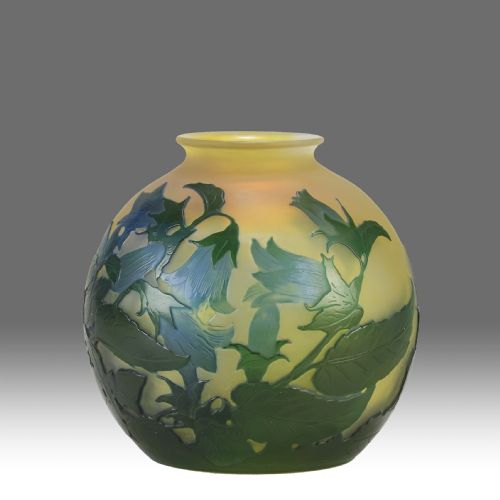
A yellow floral glass vessel brings together vibrant colour and botanical form, offering a striking centrepiece for any room.
Yellow Floral Glass Vessel
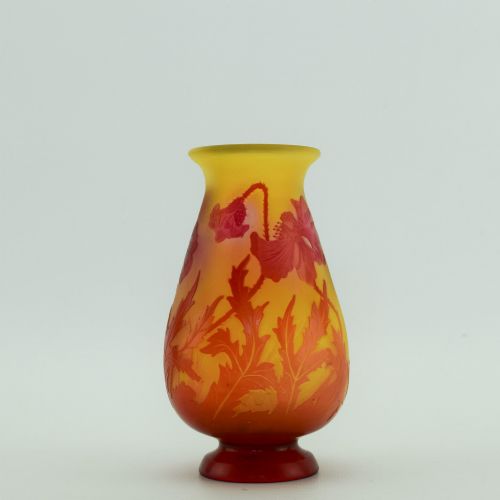
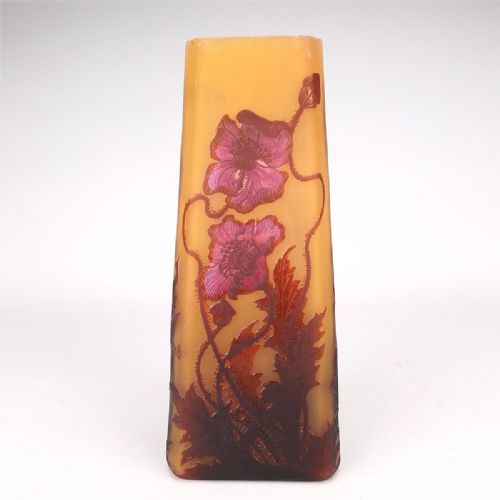
A yellow floral glass vessel is typically a vase created during the early twentieth century, spanning the Art Nouveau and Art Deco periods. These pieces showcase botanical subjects such as poppies, irises, ferns, and campanula rendered in striking shades of yellow.
The versions you are most likely to meet on this page originate from French workshops and continental makers working in cameo glass, acid-etched glass, and enamelled finishes. They take the form of tall display vases and footed vessels designed to highlight natural plant motifs.
Methods and materials
These vessels are fashioned from layered cameo glass and frosted glass, utilising acid-etching techniques to carve intricate botanical relief patterns into the body. Master glassmakers built up multiple layers of coloured glass to create depth within the floral and foliage designs.
Detailing was frequently enhanced with hand-applied enamel work, adding texture and colour variation to the blooms and stems. Uranium glass was also utilised in specific Art Deco examples, imparting a distinctive glow under ultraviolet light.
Yellow Floral Glass Vessel Retail Price Guide 2026
Typical asking prices for yellow floral glass vessel among the pieces listed under this phrase on Sellingantiques today, from the lower quarter to the upper quarter. They describe what is for sale here now, not the wider market.
Some vessels hide their luminous uranium green glow until the lights go out.
Judging the work
Quality in these vessels rests upon the crispness of the acid-etching and the subtlety of the colour gradient within the glass layers. Superior pieces display precise control over the depth of the carving, ensuring the floral motifs stand out sharply from the background.
The artistry of the surface enamel and the fluidity of the vessel's silhouette further separate exceptional examples from standard production. The finest items integrate the natural botanical form seamlessly with the structural contours of the glass.
Emile Gallé·Daum Frères·Karl Palda
The Yellow Floral Glass Vessel Glossary
- Cameo glass
- A method of glass-making where multiple layers of contrasting colours are fused together and partially carved away to create a raised design. This technique allows for detailed pictorial and floral motifs.
- Acid-etched glass
- Glass decorated by applying acid to eat away exposed surfaces, leaving a frosted or recessed pattern. It was widely used in early twentieth-century manufacture to replicate hand-carved relief details.
- Uranium glass
- Glass that has uranium added to the glass mix before melting, causing the material to fluoresce brightly under ultraviolet light. It is commonly found in pieces from the Art Deco era.
- Enamel
- Opaque vitreous composition applied to the surface of glass vessels for decoration and fired in a kiln. It adds tactile colour highlights to floral designs.
- Frosted glass
- Glass with a textured, matte surface created by acid-etching or sandblasting. This finish diffuses light and softens the appearance of the underlying colour.
Yellow Floral Glass Vessel: Frequently Asked Questions
What periods do these vessels come from?
The pieces span the early twentieth century, specifically covering the nineteen-tens and nineteen-twenties.
They reflect the transition from ornate Art Nouveau botanical designs to geometric Art Deco styling.
How were the floral designs created?
Makers used layered cameo glass and acid-etching to carve plant motifs into the body of the vessel.
Enamel decoration was then added by hand to give extra colour and texture to the flowers.
How do I care for a glass vessel?
Clean the piece gently using lukewarm water and a soft cloth to protect the delicate cameo and enamel surfaces.
Avoid harsh chemicals or submersing pieces with applied enamel for extended periods.
Are these vessels made of uranium glass?
Certain examples from the Art Deco period utilise uranium glass alongside enamel decoration.
These particular pieces will react under ultraviolet light with a characteristic green glow.