



Emile Galle Art Glass
Emile Galle art glass pieces are iconic Art Nouveau works of layered colour and botanical or naturalistic motifs that define the decorative peak of early twentieth-century design.
Emile Galle Art Glass
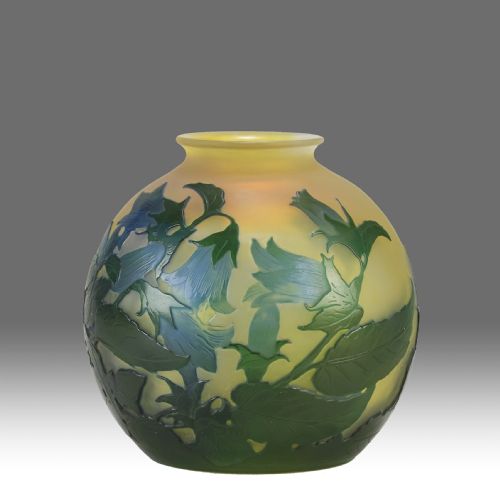
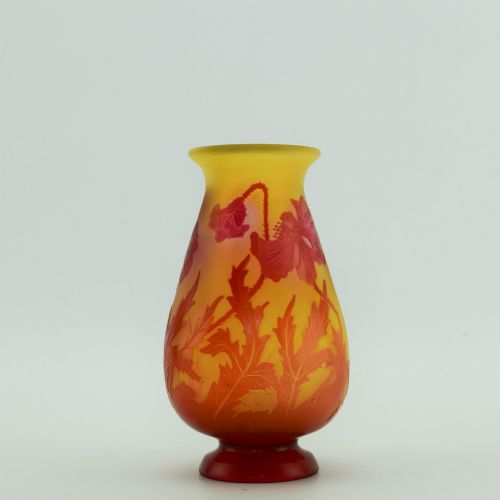
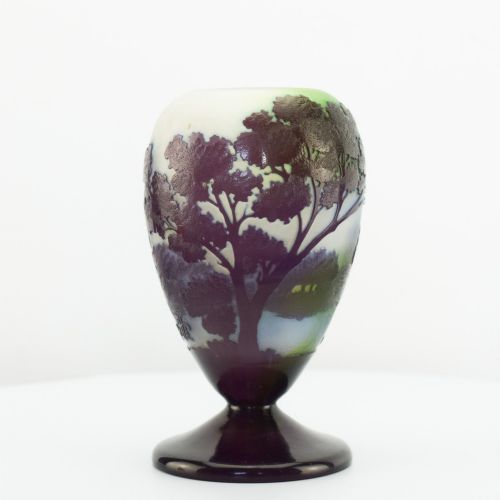
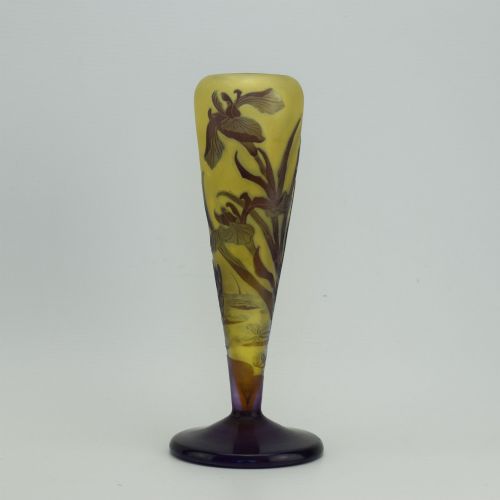
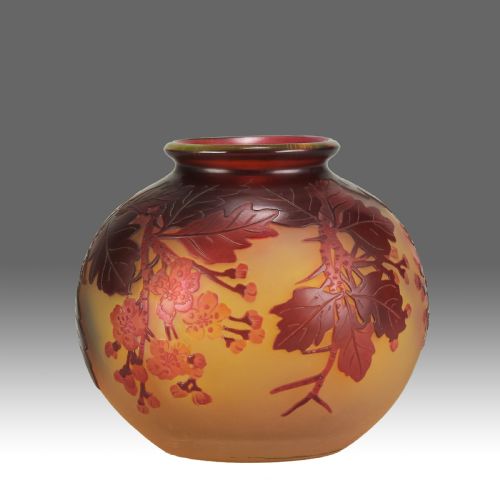
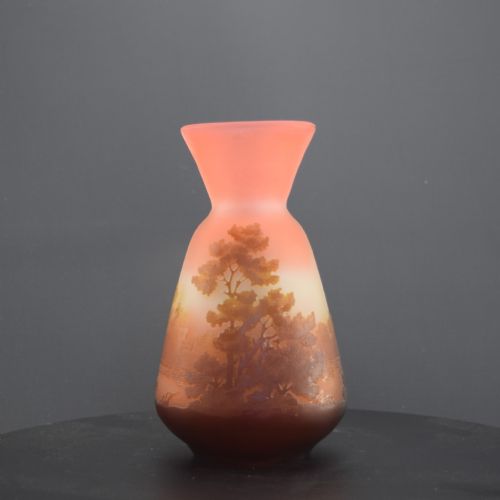
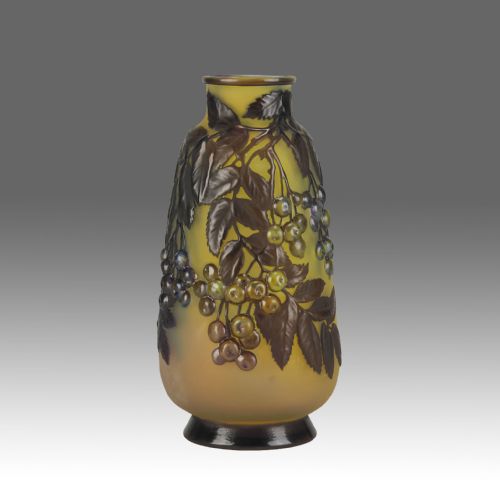
Emile Galle art glass encompasses vases created during the late nineteenth and early twentieth centuries, specifically spanning the periods from nineteen hundred through to nineteen thirty. When exploring emile galle art glass, you will predominantly encounter cameo glass and souffle forms shaped as vases featuring botanical designs like campanula, poppies, cornflowers, and apple blossoms. These vessels embody the distinct aesthetic of the Art Nouveau movement, often displaying natural motifs such as landscapes, aquatic scenes, ferns, and oak leaves.
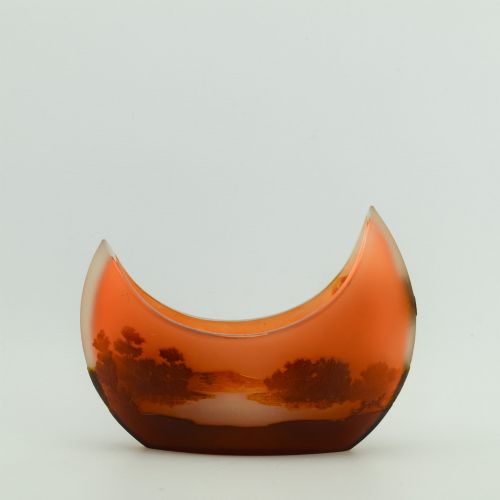
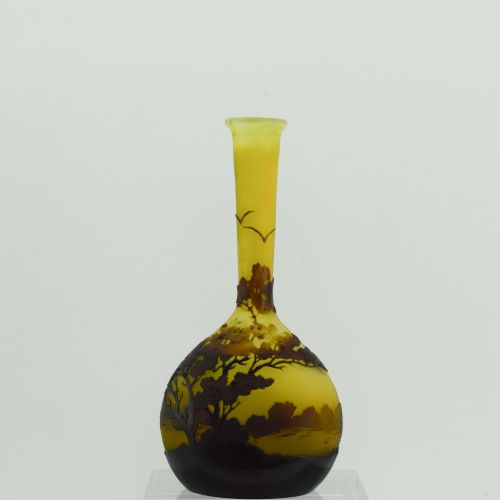
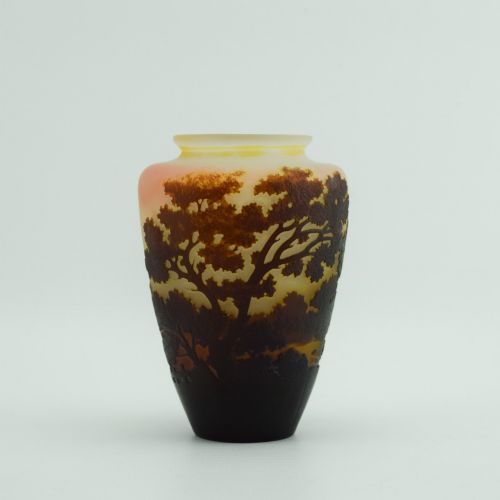
The objects available range from crescent-shaped and banjo-shaped vessels to tall floral vases and footed pieces. Makers utilised specific techniques to render subjects like the Vosges landscape, iris, hydrangea, and clematis in varied hues including orange, brown, and peach.
How they were made
Artisans produced these works primarily through layered blown glass techniques, subsequently employing acid-etching to reveal contrasting colours in the cameo glass designs. Frosted glass and etched glass finishes frequently provided backgrounds that highlighted the raised floral and arboreal motifs.
The souffle or blow-out method created three-dimensional relief forms, capturing intricate details of plant life such as honeysuckle, begonias, and sycamore foliage.
Some vases capture the quiet of a Vosges landscape in glass.
What varies in quality
Quality in these glass works rests upon the depth of the acid-etching and the complexity of the colour layering within the cameo vessels. Finer examples display subtle tonal transitions in shades like peach and brown, whereas simpler pieces show less stratification.
The intricacy of the natural subject matter, ranging from dense aquatic scenes to single botanical studies, dictates the artistic ambition achieved by the workshop.
Emile Galle
The Emile Galle Art Glass Glossary
- Cameo glass
- A form of glass created by fusing layers of different colours and then etching away parts to create a raised design in relief.
- Acid-etched glass
- Glass treated with acid to eat away exposed surfaces, creating textured patterns and designs without hand-carving.
- Souffle
- A technique involving glass blown into a mould to create a volumetric shape, also referred to as a blow-out vase.
- Art Nouveau
- The dominant stylistic period of the early twentieth century characterised by organic lines, floral motifs, and natural forms.
- Frosted glass
- Glass treated to give a translucent, matte surface that diffuses light and softens underlying colours.
Emile Galle Art Glass: Frequently Asked Questions
What is emile galle art glass?
Emile galle art glass comprises decorative glass vessels produced in France during the early twentieth century, incorporating layered cameo techniques and Art Nouveau aesthetics.
These pieces typically take the form of vases decorated with botanical and landscape motifs.
How do I identify a galle vase?
Look for cameo glass construction featuring multi-layered colours that depict natural subjects like flowers, trees, and water scenes in an Art Nouveau style.
The use of acid-etching and souffle techniques distinguishes these French works from standard glassware of the period.
What motifs appear on these pieces?
Common subjects include floral species such as campanula, poppies, cornflowers, hydrangeas, and clematis, alongside ferns and sycamore leaves.
Landscapes, particularly Vosges scenes, and aquatic themes with iris and water lilies also feature prominently.
Which periods produced this glass?
The available pieces originate from the early twentieth century, spanning from nineteen hundred through to nineteen thirty.
Production methods evolved across these decades while maintaining the foundational Art Nouveau design principles.
What glass techniques are used?
Vessels are formed using blown glass methods, often developed into souffle or blow-out shapes that project outward from the body.
Acid-etching and frosted glass treatments are then applied to carve away layers and establish the signature cameo relief.