



Embroidery Fire Screen
These embroidery fire screen pieces bring needlework art directly into the hearth space, offering both functional warmth defence and fine historic textile display.
Embroidery Fire Screen
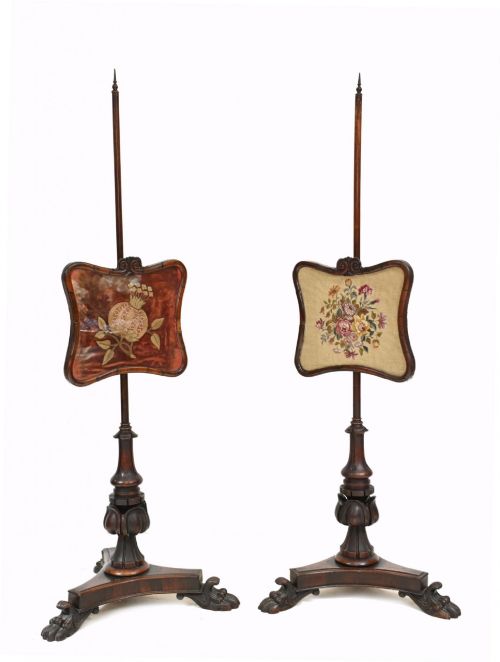
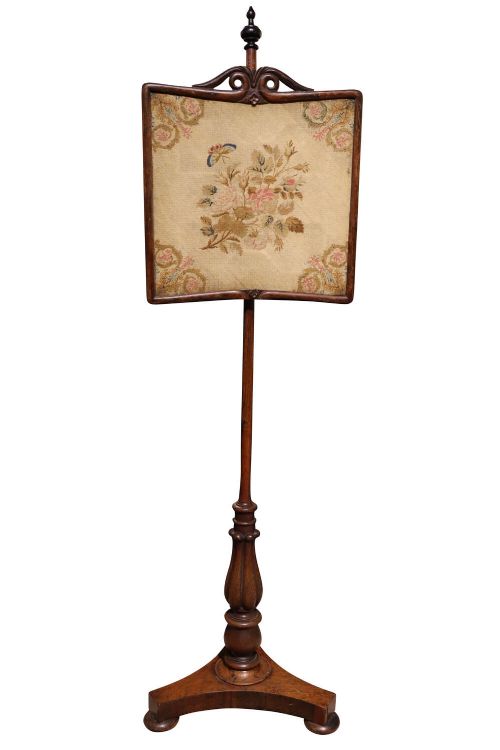
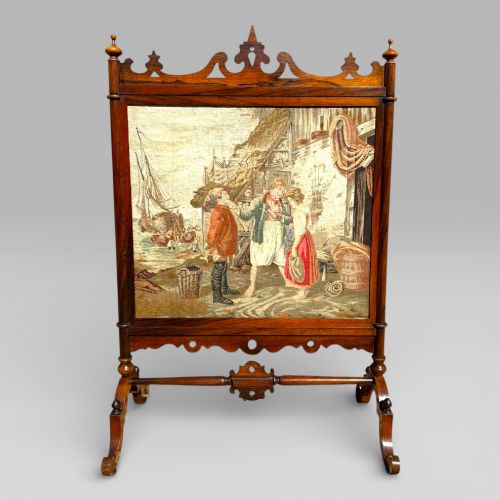
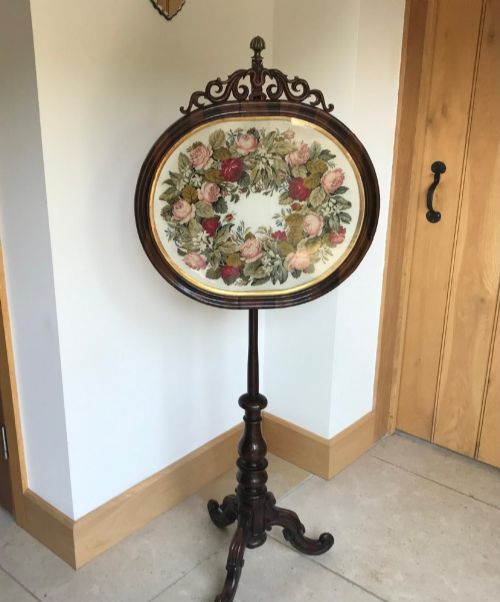
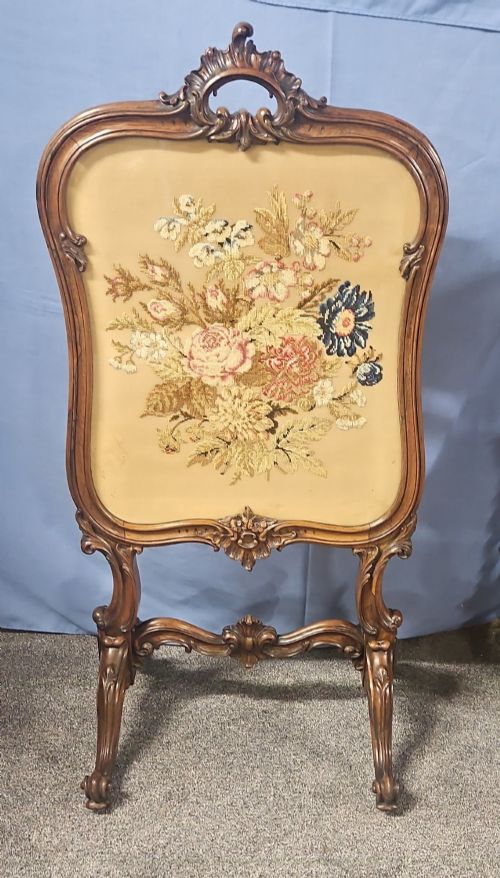
An embroidery fire screen sits before the hearth to block excessive heat while showcasing decorative needlework, silkwork, or tapestry mounted in a wooden frame. You meet Victorian and 19th Century examples most frequently on this page, alongside Regency and occasional 1930 metamorphic variants.
The forms span adjustable pole screens on slender stands, framed floor panels, and occasional tables that transform into screens. Materials range from mahogany, rosewood, walnut, and satinwood to brass and glass, framing textiles worked in wool, silk, and metal thread.
Origins stretch from English and Irish workshops to Anglo-Indian and Qing Dynasty interpretations. The embroidery itself varies from armorial panels and needlework samplers to pictorial silkwork and intricate Taj Mahal scenes.
How they were made
Cabinetmakers constructed the supportive frames using hardwoods such as mahogany, rosewood, walnut, and satinwood, occasionally applying gilding or intricate carving in Regency, Victorian Rococo, and Baroque revival styles.
The textile panels rely on traditional needlework techniques, encompassing needlepoint, tapestry weaving, and framed silkwork executed in wool, silk, and gold or silver thread.
Pole screens utilise adjustable brass or wooden mechanisms to slide the embroidered panel vertically, while fixed screens use mortise and tenon joints to secure the textile within the wooden surround.
Embroidery Fire Screen Retail Price Guide 2026
Typical asking prices for embroidery fire screen among the pieces listed under this phrase on Sellingantiques today, from the lower quarter to the upper quarter. They describe what is for sale here now, not the wider market.
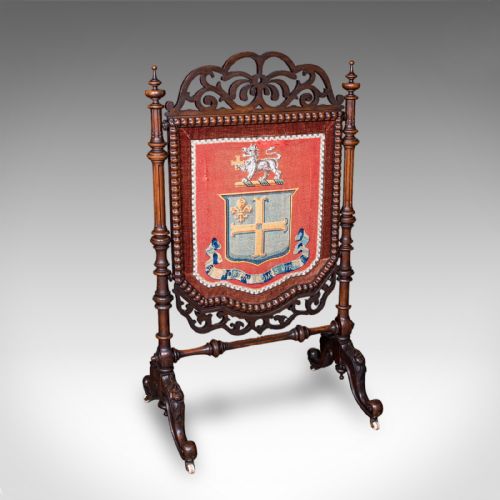
Some Victorian needlework panels double as silent judges of family genealogy through embroidered armorial crests.
What varies in quality
The distinction between standard domestic pieces and superior examples lies in the ambition of the joinery and the density of the needlework. Finely turned poles, figured rosewood or satinwood veneers, and hand-carved details signal higher workshop production.
Textile execution dictates overall standing, with complex pictorial silkwork, armorial needlepoint, and metal thread embroidery representing greater skill than basic samplers or machine-assisted work.
The Embroidery Fire Screen Glossary
- Pole screen
- A vertical stand holding an adjustable sliding panel designed to shield the face from radiant fireplace heat. These typically feature a tripod base and a central turned shaft.
- Needlepoint
- Embroidery stitched onto an open-weave canvas ground, completely covering the foundation fabric. It provides a durable surface suitable for constant handling.
- Silkwork
- Embroidery executed primarily in silk threads, prized for its lustrous sheen and capacity for subtle tonal shading in pictorial designs.
- Palisander
- A dense, dark exotic timber akin to rosewood, utilised in Regency cabinetmaking for its rich grain patterns.
- Armorial
- A design incorporating a family coat of arms or heraldic insignia, frequently worked into needlepoint panels to display lineage.
Embroidery Fire Screen: Frequently Asked Questions
What is an embroidery fire screen?
An embroidery fire screen is a decorative standing panel designed to shield a person's face from the intense radiant heat of an open coal or wood fire. They combine functional woodwork with elaborate needlework or tapestry displays.
Over time, as central heating replaced open hearths for warmth, these pieces transitioned from practical room accessories to purely decorative furniture forms.
How do pole screens work?
Pole screens feature a vertical wooden shaft mounted on a weighted base, usually with three or four feet for stability. The embroidered panel is attached to a sliding collar that moves up and down the pole.
This mechanism allows the user to adjust the height of the shield to block heat precisely where the sitter was seated relative to the fireplace.
How do I date a fire screen?
Dating relies on identifying the timber species, joinery methods, and the style of the frame. Regency pieces often use mahogany or palisander with clean classical lines, while Victorian examples favour walnut or rosewood with heavier carved revival motifs.
The embroidery style and framing technique also offer clues, as silkwork and sampler designs shifted in popularity across the eighteenth and nineteenth centuries.
Can I use one near a radiator?
Placing a screen near a modern heat source is generally discouraged because dry heat causes old timber to warp and fragile historic silk or wool textiles to become brittle. Keeping them away from direct heat sources preserves the integrity of both the frame and the needlework.