



Embroidered Ottoman
An embroidered ottoman brings tactile warmth and pattern into a room through historic textiles and traditional woodwork.
Embroidered Ottoman
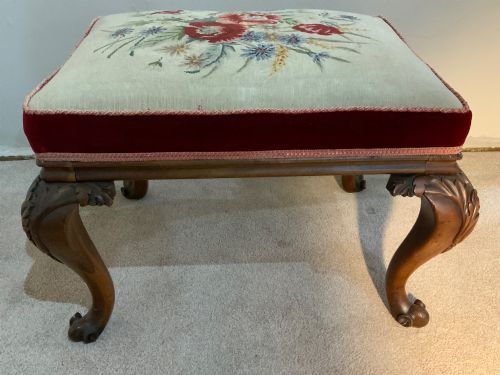
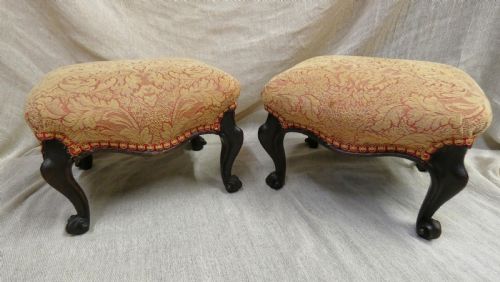
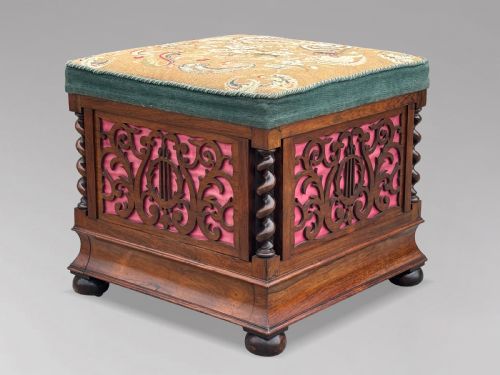
An embroidered ottoman combines historic textile fragments with supportive seating forms like footstools, piano stools, and dressing stools. The search phrase covers both purpose-built upholstered seats and antique textile panels that have found new life as soft furnishings.
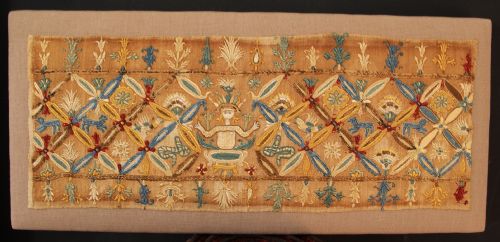
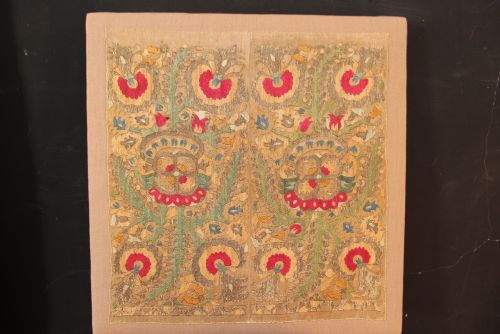
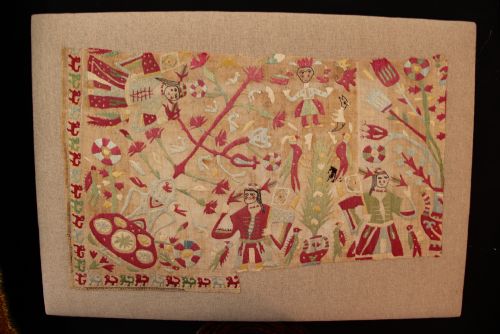
Buyers meet Victorian examples most frequently, alongside earlier pieces originating from the Ottoman Empire and Greek islands. These items range from small needlework footstools to larger upholstered seats and framed textile fragments.
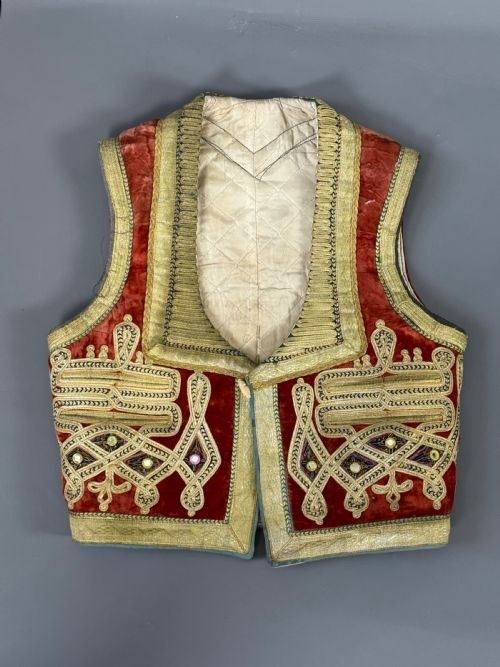
The objects bridge practical furniture and decorative textile art, incorporating items such as waistcoats, jackets, and panels into domestic spaces. Each piece reflects specific regional needlework traditions spanning multiple centuries.
Materials and construction methods
Maker construction relies on solid timber frames shaped from mahogany, rosewood, walnut, oak, and other woods to support heavy textile upholstery. Frames often follow Victorian, Queen Anne, Louis XV, or Chippendale styles.
Surfaces feature textiles worked in silk, wool, velvet, and linen, enriched with metallic thread and needlepoint. Panels incorporate traditional embroidery techniques originating from regional workshops and domestic craft.
Historic waistcoats and jackets occasionally find new life as padded seat covers, proving that historic fashion makes surprisingly comfortable furniture.
Assessing quality in antique textiles and frames
Quality rests in the density and condition of the embroidery, where tight stitching in silk or metallic thread on velvet and linen holds greater definition. Finer pieces retain vibrant colour and intact fibre structures across complex geometric or floral motifs.
The underlying woodwork determines structural integrity, separating standard joinery from finely carved mahogany, rosewood, and walnut frames. Original upholstery configurations and well-preserved frame joints elevate the standing of a piece.
The Embroidered Ottoman Glossary
- Ottoman
- A low upholstered seat or footstool without arms or a back, frequently associated with Near Eastern design and 19th-century domestic interiors. These forms often incorporate historic textile panels or period needlework.
- Needlepoint
- A type of canvas work embroidery executed with a yarn or thread threaded through a stiff open-weave mesh. This technique creates durable, textured surfaces suitable for heavy-use furniture upholstery.
- Metallic thread
- A specialist thread formed from thin strips of metal or gilt wire wrapped around a core of silk or fibre. It provides reflective highlights in traditional embroidery.
- Tapestry
- A form of textile art woven on a loom or worked by hand with needle and thread to form pictorial designs. In furniture contexts, it denotes heavy decorative fabric used for seat covers.
- Fragment
- A surviving portion of a larger historic textile or garment, often mounted or repurposed into furnishings. These pieces preserve regional embroidery traditions from earlier centuries.
Embroidered Ottoman: Frequently Asked Questions
How do I clean an antique embroidered ottoman?
Surface dust should be removed gently using a soft brush or low-suction vacuum with a mesh guard.
Water and liquid cleaners must be avoided to prevent moisture damage to old silk, wool, and metallic threads.
Are these pieces suitable for daily use?
Sturdier frames support regular sitting, but delicate antique textiles require gentle treatment.
Placement away from direct sunlight preserves fragile silk and velvet upholstery from fading.
What periods do these items come from?
The pieces span the 18th and 19th centuries, with strong representation from the Victorian era.
Earlier items trace back to 1700 and feature regional Greek island and Ottoman Empire needlework.
What is the difference between an ottoman and a footstool?
Ottomans typically offer larger proportions and enclosed storage or seating spaces, while footstools remain compact.
Both categories frequently share identical needlework upholstery and period woodwork styles.