

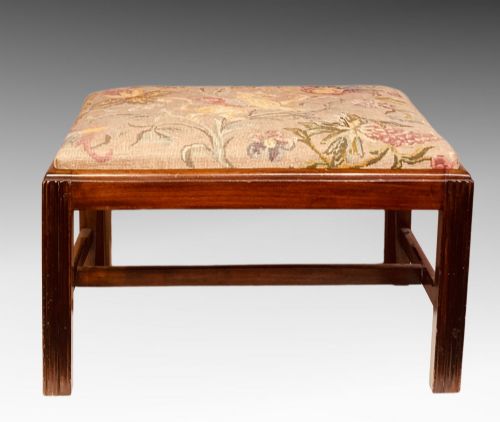


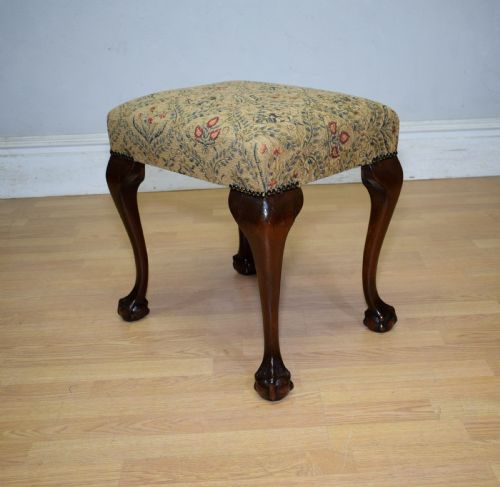


Georgian Tapestry Footrest
A georgian tapestry footrest is a low upholstered seat designed for comfort, bringing tactile historic texture and rich textile covers to a fireside or study.
Georgian Tapestry Footrest
When you search for a georgian tapestry footrest, you encounter low stools designed for resting the feet, typically upholstered in historic needlepoint, wool, or textile covers. These pieces bridge the gap between functional household objects and decorative textile art.
The versions you are most likely to meet on this page span from the eighteenth century through later revival periods, adopting styles such as Queen Anne, Chippendale, and George II. They appear in forms ranging from compact square stools to long footstools.
Makers utilised woods like mahogany, walnut, and oak to construct the frames, often pairing them with striking covers worked in wool and cotton. Each stool reflects the domestic habits of its period, prioritising tactile comfort alongside formal design.
How they were made
Makers constructed the timber frames using robust timbers such as mahogany, walnut, and oak, shaping the supports into styles reflecting the prevailing tastes of their eras. Joinery techniques ensured the low frames could withstand the steady pressure of resting feet.
The upper portions featured woven textiles, tapestry, and needlepoint worked in wool and cotton, often secured over internal padding. Some examples incorporated decorative brass details or carved elements like cabriole legs to elevate the visual weight of the frame.
Georgian Tapestry Footrest Retail Price Guide 2026
Typical asking prices for georgian tapestry footrest among the pieces listed under this phrase on Sellingantiques today, from the lower quarter to the upper quarter. They describe what is for sale here now, not the wider market.
What varies in quality
The standard of a georgian tapestry footrest rests heavily on the crispness of the timber carving and the complexity of the upholstery cover. Refined examples display deeply carved cabriole legs and densely worked needlepoint that retain vibrant wool and cotton yarns.
Simpler interpretations rely on plain mahogany or oak frames with understated textile covers, offering a quieter presence in a room. The integrity of the frame construction and the artistic merit of the tapestry separate the finer pieces from standard workshop output.
The Georgian Tapestry Footrest Glossary
- Cabriole leg
- A furniture leg that curves outward and then tapers inward, mimicking an animal limb. This form appears frequently on walnut and mahogany stools from the eighteenth century and subsequent revival periods.
- Needlepoint
- A type of canvas work embroidery executed with a yarn threaded through a stiff open-weave mesh. It provides the durable, textured surface seen on many historic footstool covers.
- Kilim
- A flatwoven textile originating from the Near East and Central Asia. These durable fabrics occasionally appear repurposed as upholstery covers on nineteenth-century footstools.
Georgian Tapestry Footrest: Frequently Asked Questions
What is a georgian tapestry footrest?
A georgian tapestry footrest is a low stool featuring a textile, needlepoint, or tapestry cover supported by a wooden frame made of mahogany, walnut, or oak.
These pieces were originally designed to keep feet elevated away from cold draughty floors near the hearth.
How were these stools used?
Households placed these low seats beside armchairs and settees to provide leg support and additional seating during long winter evenings.
Their compact proportions allowed them to be easily tucked away or moved around the principal rooms as needed.
How do I live with one?
You can position a footstool by a fireside armchair, use it as a low occasional seat, or place it beneath a window to hold small decorative objects.
Protect the historic textiles from direct sunlight to preserve the natural colours of the wool and cotton yarns.
How can I tell the styles apart?
Styles are distinguished by the shaping of the wooden frames and the nature of the upholstery covers. Queen Anne pieces often feature walnut frames and cabriole legs, while later nineteenth-century examples frequently adopt earlier Chippendale or George II motifs.
The materials and construction methods provide clear clues to whether a piece dates from the eighteenth century or a later revival period.