


Embossed Silver Container
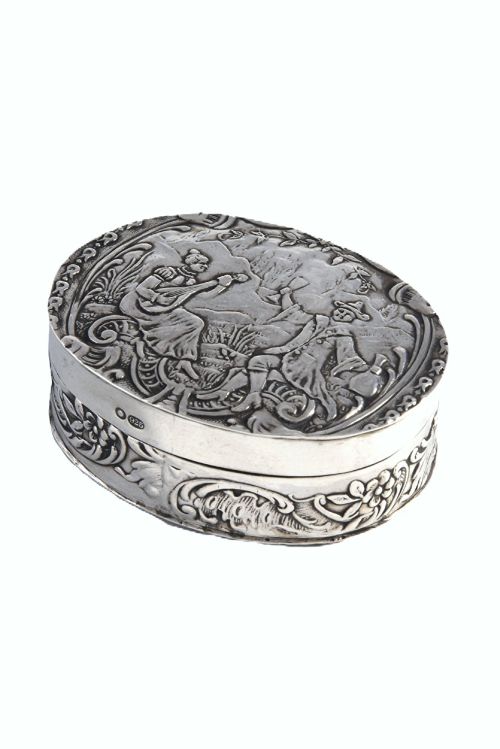
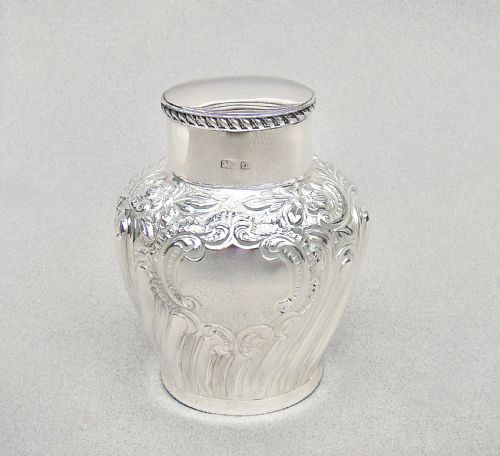
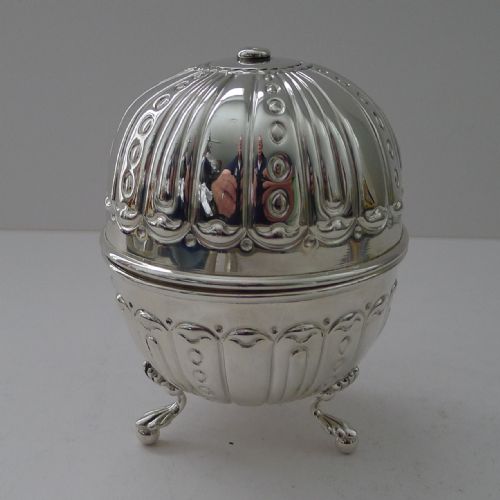
These pieces of embossed silver container bring tactile weight and decorative relief to dressing tables and tea desks.
Embossed Silver Container
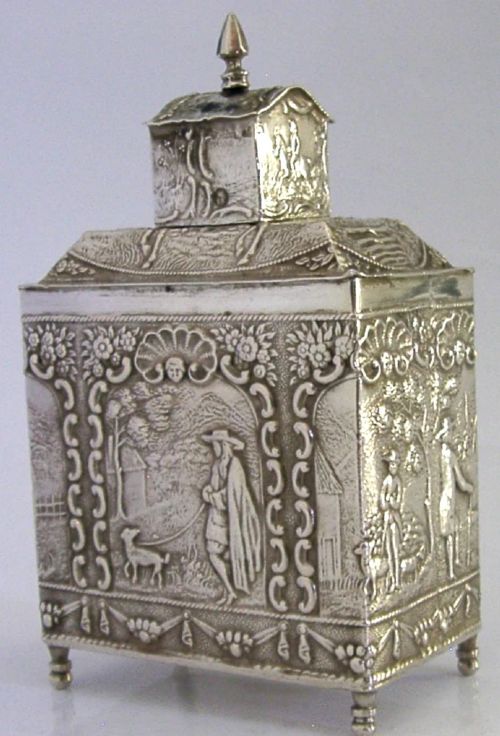
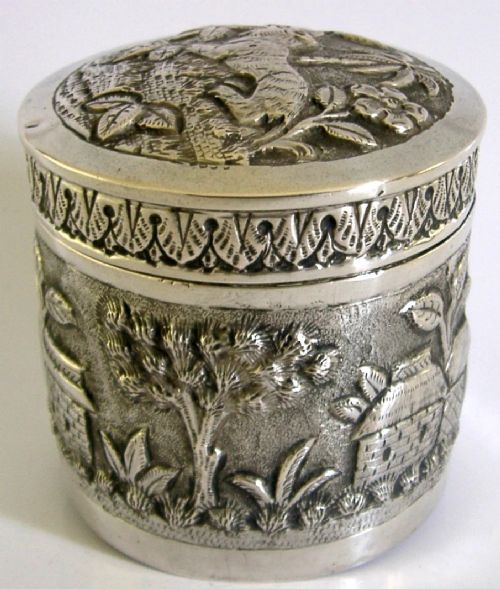
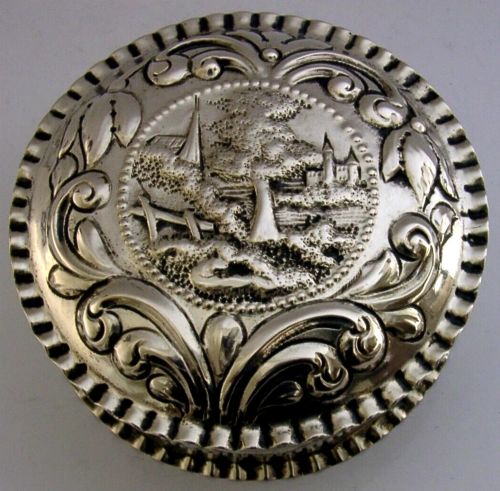
An embossed silver container serves domestic storage needs, taking forms such as tea caddies, trinket boxes, snuff boxes, desk accessories, and dressing table jars. You will frequently encounter Victorian and Edwardian examples alongside pieces originating from nineteenth-century India or the Netherlands.
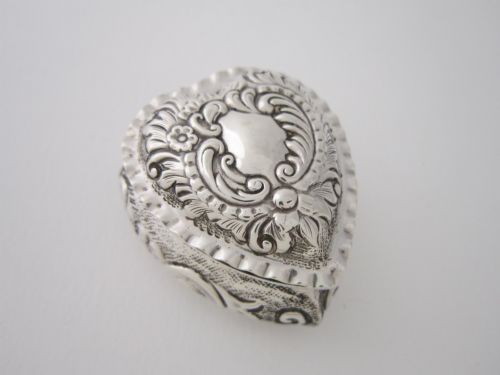
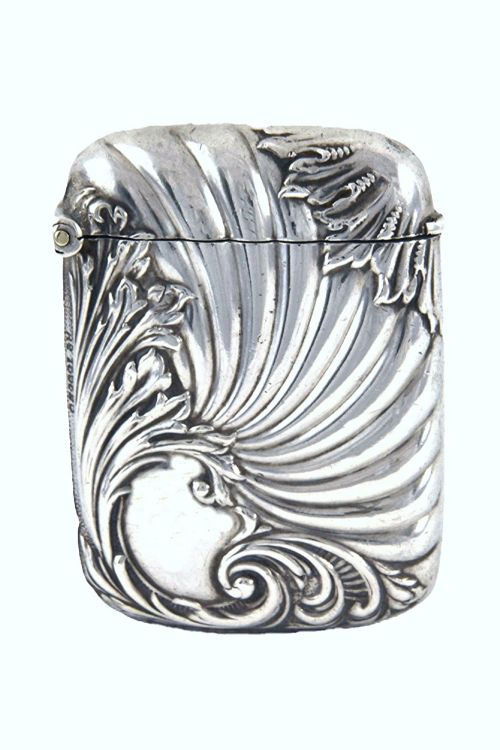
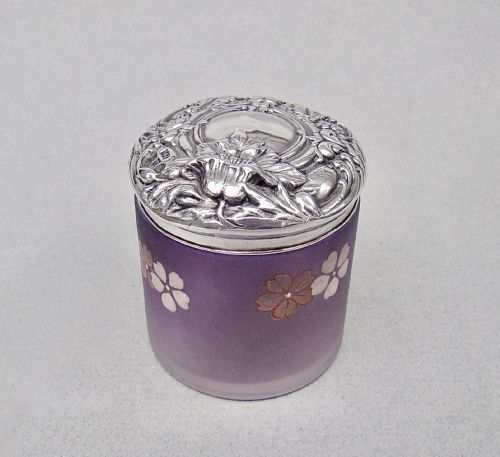
The selection ranges from small heart-shaped trinket boxes and vesta cases to substantial table boxes, tea caddies, and string dispensers. Many retain functional interiors lined with silver gilt or paired with frosted glass bodies.
Makers shaped these vessels to house tea leaves, tobacco, postage stamps, or personal jewellery, applying raised ornamentation across lids and curved walls.
How they were made
Silversmiths utilised sterling silver, solid silver, and silver plate, occasionally combining metal bodies with frosted glass or brass fittings. Internal surfaces sometimes received a layer of silver gilt to prevent corrosion from contents.
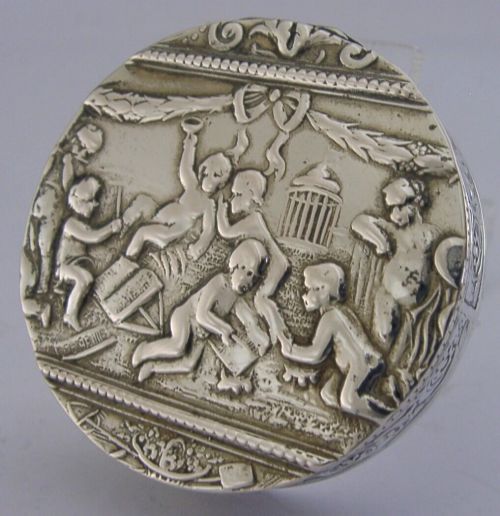
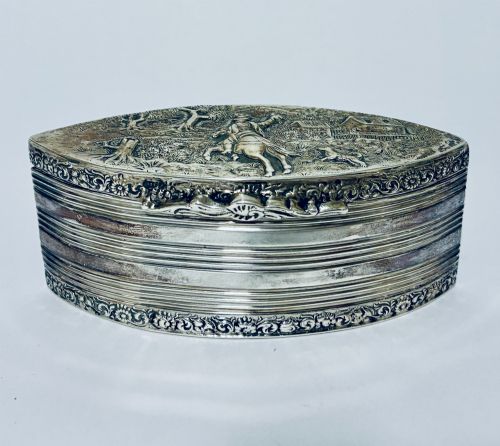
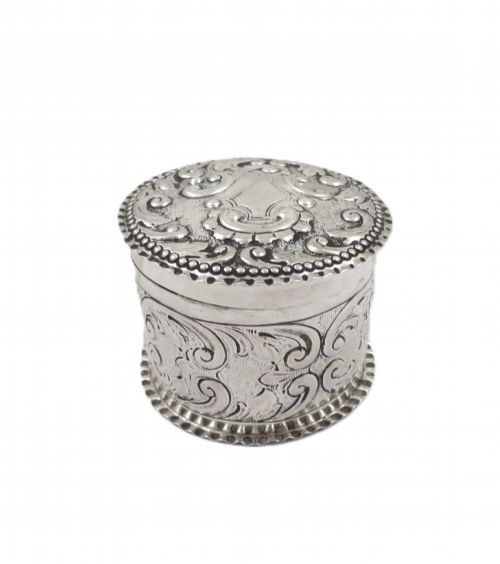
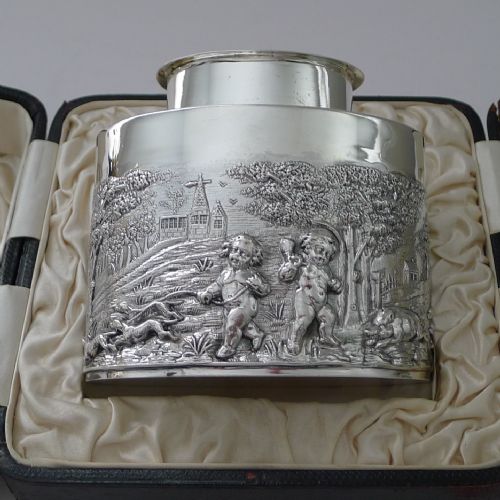
The relief decoration relied on hammering and chasing techniques, pushing the metal outward from the reverse and refining details from the front. This process created deep pictorial scenes, scrollwork, and foliate patterns characteristic of Rococo revival and Anglo-Indian styles.
Embossed Silver Container Retail Price Guide 2026
Typical asking prices for embossed silver container among the pieces listed under this phrase on Sellingantiques today, from the lower quarter to the upper quarter. They describe what is for sale here now, not the wider market.
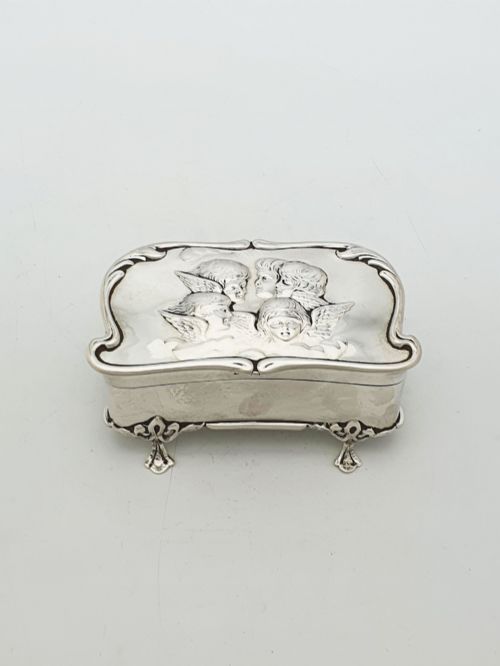
Several boxes feature tiny chased cherubs peering out from dense silver scrollwork.
What varies in quality
Quality rests upon the crispness of the chased relief and the structural integrity of the container walls. Superior pieces display deep, sharply defined motifs without thinning of the metal from over-ambitious hammering.
Hinges, lids, and pull-off covers reveal the standard of construction, operating smoothly and aligning precisely with the body. The presence of clear hallmarks and maker marks adds historical definition to the execution.
Thomas Hayes·William Hutton And Sons Ltd
The Embossed Silver Container Glossary
- Sterling silver
- A silver alloy containing 92.5 percent pure silver by mass, with the remainder composed of copper or other metals. This standard dominated British silver production for centuries.
- Silver gilt
- Silver objects that have been coated with a thin layer of gold on their interior or exterior surfaces. This finish protected the silver from tarnish and added a rich inner glow.
- Chasing
- A metalworking technique where the smith pushes and shapes metal from the front using punches and hammers to create raised surface patterns. It gives embossed containers their distinct sculptural depth.
- Tea caddy
- A small box, jar, or container designed to store loose tea leaves securely before brewing. In earlier periods, these vessels were often kept under lock and key.
- Vesta case
- A small pocket container used to hold matches and keep them dry. They frequently featured spring-loaded lids and striker grooves on the base.
Embossed Silver Container: Frequently Asked Questions
What were tea caddies used for?
Tea caddies served to store precious tea leaves safely away from moisture and odours in the home. Because tea was an expensive commodity, these containers were frequently fitted with lockable lids.
Over time, they evolved from utilitarian storage jars into highly decorative centrepieces for the drawing room table.
How do I clean embossed silver?
Cleaning requires a soft microfibre cloth and a mild, non-abrasive silver polish formulated to lift tarnish without removing the metal. Avoid harsh dipping solutions that strip away dark oxidation within recessed chased details.
Gentle brushing with a soft-bristled toothbrush helps clear polish residue from intricate embossed crevices.
How do I date a silver box?
Dating relies primarily on the legible hallmarks stamped into the metal, which include maker marks, standard marks, and date letters corresponding to specific assay offices. Stylistic clues such as Art Nouveau curves or Victorian revival motifs also narrow down the period.
Comparing construction methods and hinge types provides further confirmation of the manufacturing era.
What is an Anglo-Indian silver box?
Anglo-Indian silver boxes are items made by local artisans in nineteenth-century India incorporating traditional craftsmanship with European container forms. They often display densely packed botanical embossing or narrative scenes.
These pieces reflect the cultural exchange and trade networks operating during the colonial period.