

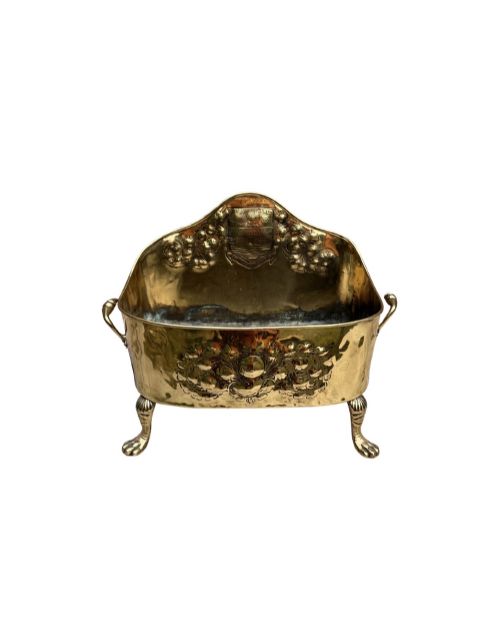
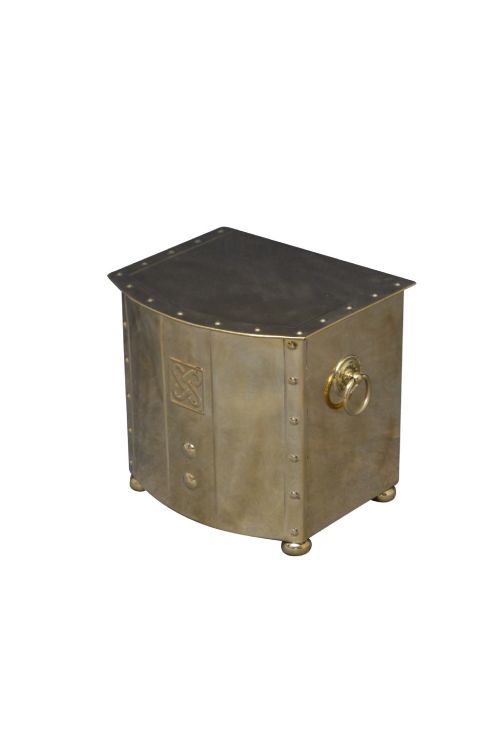


Embossed Metal Scuttle
These embossed metal scuttle pieces are practical fireside fuel containers that bring period charm and utility to any hearth.
Embossed Metal Scuttle
An embossed metal scuttle serves as a decorative and functional fireside accessory designed to hold coal, logs, or peat near the hearth. Buyers seeking an embossed metal scuttle will encounter various forms ranging from traditional coal buckets and helmet scuttles to cylindrical log bins and jardinières.
The pieces available span several distinct historical periods, most notably the Victorian era, alongside examples from the Regency period and the early twentieth century. Common variations include circular bins, handled buckets, and lidded boxes used historically to store fuel cleanly beside the fireplace.
Makers and designers of these items utilised distinct stylistic movements such as Arts and Crafts, Art Nouveau, and Indo-Persian motifs to ornament the metal surfaces. Many items double as planters or general storage containers when no longer employed for solid fuel.
Materials and construction
Artisans constructed these items primarily from sheet brass and copper, sometimes combining both metals on a single vessel or adding wooden elements for handles and feet. Galvanised metal and silver plate also appear within the listed items.
The characteristic decoration relies on hand-hammered details, repoussé work, and embossed panels depicting scenes such as tavern gatherings or floral patterns. Riveted seams, soldered joints, and applied metal bands secure the structural body of each bin or bucket.
Embossed Metal Scuttle Retail Price Guide 2026
Typical asking prices for embossed metal scuttle among the pieces listed under this phrase on Sellingantiques today, from the lower quarter to the upper quarter. They describe what is for sale here now, not the wider market.
Listings feature items constructed from brass, copper, wood, galvanised metal, and silver plate.
Distinctions in quality
Quality reveals itself in the crispness of the embossed motifs and the weight of the metal utilised in the body and handles. Thicker gauge brass or copper maintains its structural integrity better over generations of lifting and carrying heavy fuel.
Artisans who executed detailed hand-chased tavern scenes or complex Art Nouveau plant forms produced work that stands apart from plain or mechanically stamped utility vessels. The integration of contrasting materials, such as a copper band on a brass body, signals careful design.
Petrus Ramus·Henry Loveridge
The Embossed Metal Scuttle Glossary
- Repoussé
- A metalworking technique where the artisan hammers the metal from the reverse side to form a raised design on the front. This method creates the tactile relief patterns seen on many fireside bins.
- Jardiniere
- An ornamental pot or container designed to hold plants or flowers, often utilised interchangeably with bucket forms for fireside storage. These vessels share similar metal construction and decorative handles.
- Dinanderie
- The medieval and later Belgian art of working in brass and copper, often applied to decorative domestic vessels. It denotes items produced in the tradition of the Meuse valley metalworkers.
- Arts and Crafts
- A design movement valuing hand craftsmanship and traditional materials over mass production. Objects from this style often display visible hammer marks and nature-inspired motifs.
Embossed Metal Scuttle: Frequently Asked Questions
What are these metal scuttles used for?
These metal vessels served primarily to store and transport coal, logs, or peat for domestic hearths.
Today, they function as decorative fireside accessories or alternative storage containers and planters.
How do I clean an antique brass scuttle?
Dust the surface regularly with a soft cloth to prevent the accumulation of dirt within the embossed recesses.
Avoid harsh chemical dips that strip away aged patination, opting instead for gentle cleaning methods appropriate for historic metalwork.
Can I burn real logs in these buckets?
These pieces were built to hold solid fuel such as coal and wood near the fireplace rather than act as active burning chambers.
They serve as dry storage containers and should remain unexposed to direct open flames.
How can I tell Victorian pieces apart?
Victorian examples often feature heavier brass construction paired with elaborate floral embossing or characteristic Art Nouveau styling.
Earlier Regency items tend toward simpler geometric lines, while later twentieth-century pieces incorporate different manufacturing techniques.