



Embossed Metal Jardiniere
An embossed metal jardiniere brings sculptural plant housing into a room through hammered relief work and heavy-gauge brass, copper, or bronze.
Embossed Metal Jardiniere
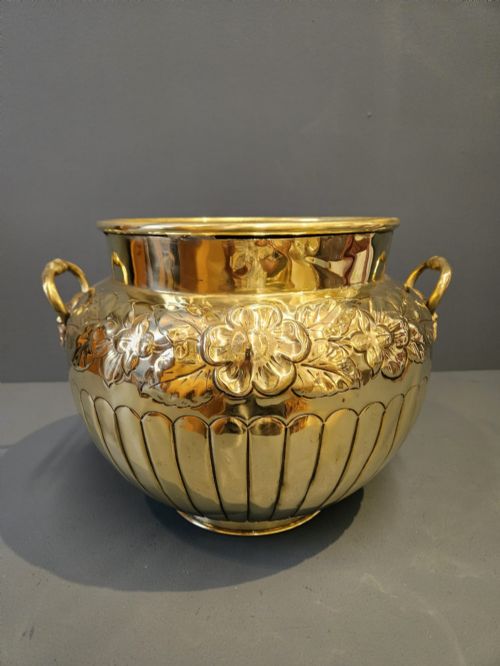
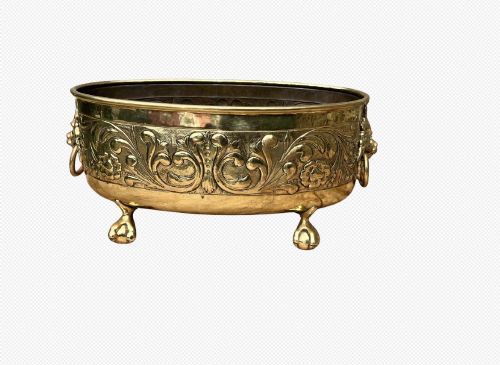
When you search for an embossed metal jardiniere, you are looking at vessel forms designed to hold potted plants, ferns, or cut flowers indoors. The pieces on this page span from the eighteenth century through the Edwardian era, taking the form of circular planters, footed bowls, log buckets, and troughs.
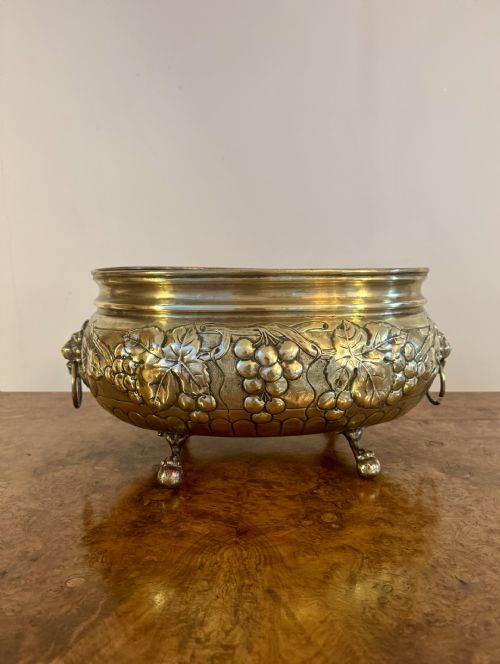
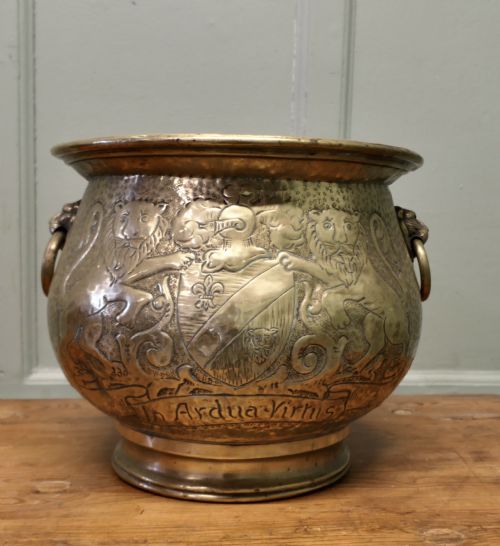
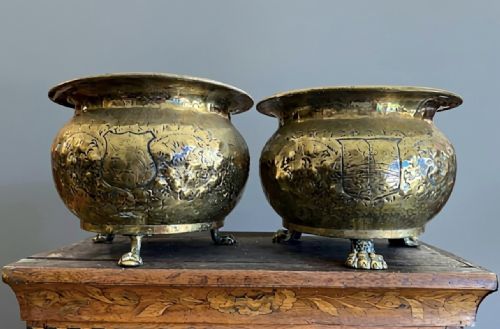
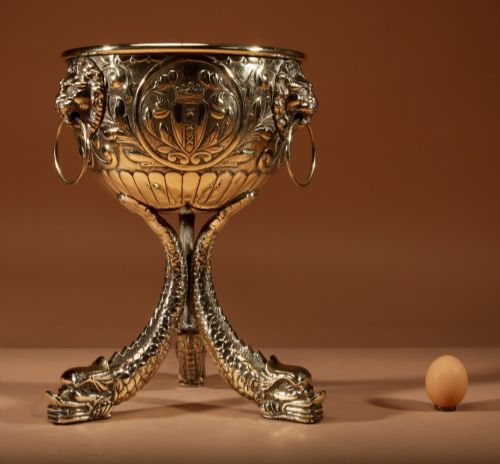
You are most likely to meet Victorian and Edwardian examples executed in brass or copper, often carrying punched or raised decoration around the body. Many incorporate twin carrying handles, claw feet, or heraldic shields and crests pressed directly into the metal wall.
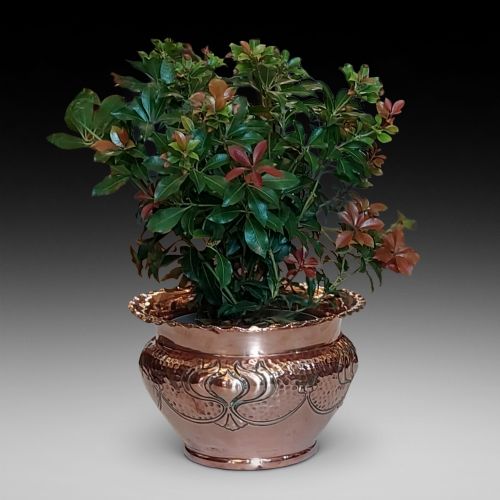
The selection ranges from compact table vessels to large floor-standing jardinieres, sometimes paired with their original metal stands or zinc liners. Alongside standard British Victorian designs, the material records continental workshops producing Dutch traditional pieces and Art Nouveau organic motifs.
How they were made
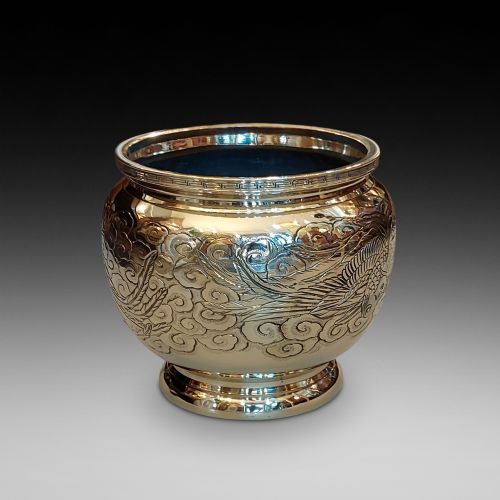
Makers formed these vessels primarily from sheet brass, copper, and bronze, shaping the metal by hand-beating, spinning, or casting. Dinanderie techniques appear frequently, where workers hammered and chased alloy sheets to build up dense surface patterns and figural motifs.
Embossing and repoussé methods pushed the design outwards from the reverse side of the metal plate, leaving crisp relief details on the exterior. Additional components such as brass lion paw feet, cast handles, and riveted seams were soldered or joined mechanically to the main body.
Embossed Metal Jardiniere Retail Price Guide 2026
Typical asking prices for embossed metal jardiniere among the pieces listed under this phrase on Sellingantiques today, from the lower quarter to the upper quarter. They describe what is for sale here now, not the wider market.
Listings feature items fabricated from brass, copper, iron, silver plate, bronze, zinc, and glass across multiple European styles.
What varies in quality
The distinction between ordinary and superior pieces rests on the depth and crispness of the metalwork, alongside the weight of the gauge used. Heavier brass and copper sheets hold their structural integrity better and allow for sharper, deeper embossing that does not distort under pressure.
Design complexity and original fittings elevate certain examples, such as those retaining contemporary zinc liners, matched stands, or cast heraldic crests. Superior items demonstrate clean internal construction, secure handle mountings, and harmonious proportions rather than routine machine stamping.
J Sankey and Sons
The Embossed Metal Jardiniere Glossary
- Dinanderie
- An early term for brass and bronze articles produced in towns along the Meuse valley, later applied to hand-beaten decorative metalware. It covers domestic vessels shaped by hammering and chasing.
- Repoussé
- A metalworking technique where the artisan hammers the design from the reverse side to create a raised pattern in relief on the front. It creates a tactile surface texture on plant vessels.
- Cachepot
- A decorative container used to hide an ordinary plant pot, functioning without drainage holes in the base. These vessels often require a protective liner inside.
- Wine Cistern
- A large ornamental basin originally used for chilling wine bottles, occasionally repurposed as a floor planter. These heavy metal pieces feature robust handles for lifting.
Embossed Metal Jardiniere: Frequently Asked Questions
What is an embossed metal jardiniere?
An embossed metal jardiniere is a decorative plant container shaped from copper, brass, or bronze with raised surface ornamentation. These vessels were placed on tables or floors to hold indoor greenery and floral displays.
Craftsmen created the relief patterns by hammering the metal from behind or casting distinct motifs into the body. They frequently feature carrying handles and sturdy feet to support damp soil.
How were these planters used historically?
Victorian and Edwardian households utilised these vessels inside principal rooms to display potted palms, ferns, and flowering plants. They protected fine furniture surfaces from water damage while adding metallic warmth to interior decoration.
Larger versions double as log holders, peat bins, or wine cisterns due to their robust metal construction. Many included removable internal liners to catch drainage water from the pots.
How do I date an antique jardiniere?
Dating relies on observing manufacturing techniques, stylistic cues like Art Nouveau curves or Gothic revival shields, and material thickness. Eighteenth and nineteenth-century examples often display hand-beaten surfaces and joined seams rather than modern machine fabrication.
Makers' marks stamped to the base or distinct regional styles, such as Dutch traditional embossing, help narrow down the period of origin. The presence of original zinc liners or stands also points to specific late Victorian and Edwardian production dates.