




Embossed Brass Hearth Container
An embossed brass hearth container keeps fuel tidy by the fireplace while catching the eye with hammered metalwork.
Embossed Brass Hearth Container
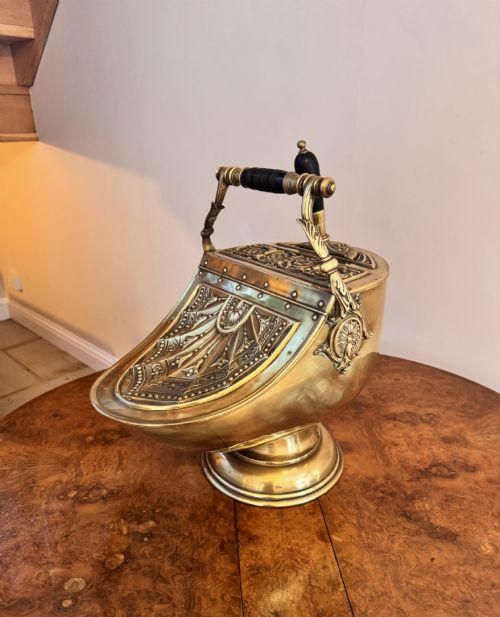
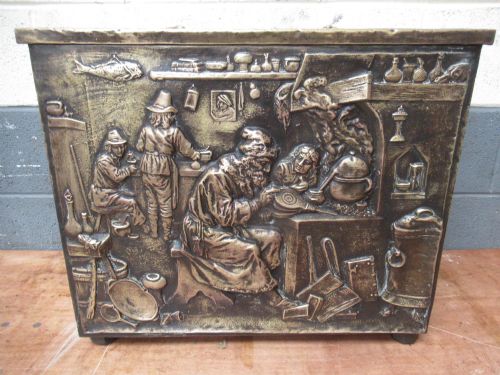
An embossed brass hearth container serves as a fireside vessel for coal, logs and kindling, appearing in forms such as coal buckets, scuttles, bins and boxes. These items belong to categories including fireside accessories and log boxes.
The pieces on this page span several eras and origins, including Victorian, Edwardian, Regency, 19th Century, 1930 and 1900. Styles range from Arts and Crafts and French Provincial to Dutch Antique, Indo-Persian and Regency.
Buyers most frequently encounter traditional bucket and scuttle shapes made from brass or copper, sometimes featuring handles, lids or hinged components. Common regional variations include French fireside log boxes and English coal buckets.
How they were made
Makers shaped sheet brass and copper through panel beating and metal spinning, joining seams with rivets or solder. Surface ornamentation was achieved by hand embossing and chasing, pushing designs out from the reverse or depressing the background to create relief motifs.
Wooden elements, such as ebonised wood or internal linings, provide structure and handles on certain coal bins and boxes. Metal components like bronze or brass fixtures were cast or forged separately and attached to the main body.
Embossed Brass Hearth Container Retail Price Guide 2026
Typical asking prices for embossed brass hearth container among the pieces listed under this phrase on Sellingantiques today, from the lower quarter to the upper quarter. They describe what is for sale here now, not the wider market.
The inventory spans the Regency period, Victorian era, Edwardian years and the 1930s.
What varies in quality
The depth and crispness of the embossed detail separate ordinary utilitarian vessels from finer decorative pieces. Sharp definition in chased motifs and tavern scenes indicates superior hand skill.
Structural integrity depends on the gauge of the metal and the strength of the joints. Thicker brass sheet and robust riveting endure the weight of coal and daily handling without buckling.
Petrus Ramus·Benham and Froud·Henry Loveridge
The Embossed Brass Hearth Container Glossary
- Embossing
- The technique of raising a design in relief from the surface of sheet metal using hammers and punches. This creates tactile patterns and pictorial scenes across the body of the container.
- Scuttle
- A metal bucket or coal container with a sloping mouth and a swing handle, designed for carrying fuel to the grate. Helmet scuttles feature a specific flared shape reminiscent of a classical helmet.
- Chasing
- Working metal from the front by sinking the surface with punches to refine and detail an embossed design. It sharpens the edges of the motifs created during the initial hammering.
- Ebonised
- Wood treated with a dark stain or finish to imitate ebony. This dark timber often forms handles or trim on hearth containers.
- Regency
- A style period dating from the early nineteenth century defined by classical restraint and neoclassical ornament. Pieces from this era often display clean architectural proportions.
Embossed Brass Hearth Container: Frequently Asked Questions
What were embossed brass hearth containers used for?
These vessels held coal, logs or peat beside the fireplace for easy access during cold weather. They kept solid fuel neatly contained while adding a decorative metallic accent to the hearth.
Larger bins and receivers stored bulk fuel, while scuttles and buckets served to carry smaller loads directly to the burning fire.
How do I clean an antique brass hearth container?
Dust the surface regularly with a soft dry cloth to prevent soot accumulation. Avoid harsh chemical polishes that strip away historical patina and age.
Gentle wiping preserves the mellow tone acquired over decades of fireside use. Excessive cleaning can flatten the delicate relief of embossed patterns.
How can I tell a Victorian piece from an Edwardian one?
Victorian pieces often display heavier proportions and dense ornamentation such as floral reliefs or tavern scenes. They reflect the ornate tastes of the nineteenth century.
Edwardian items frequently lean towards lighter constructions and cleaner lines influenced by emerging twentieth-century design movements. Makers marks and stylistic cues help confirm the specific manufacturing era.
Can I use these containers to store logs today?
These vessels function well for holding logs, kindling or magazines in modern living spaces. Metal construction handles the rough texture of firewood without splintering.
Some collectors prefer to line older copper or brass bins to protect the interior base from moisture and debris.