
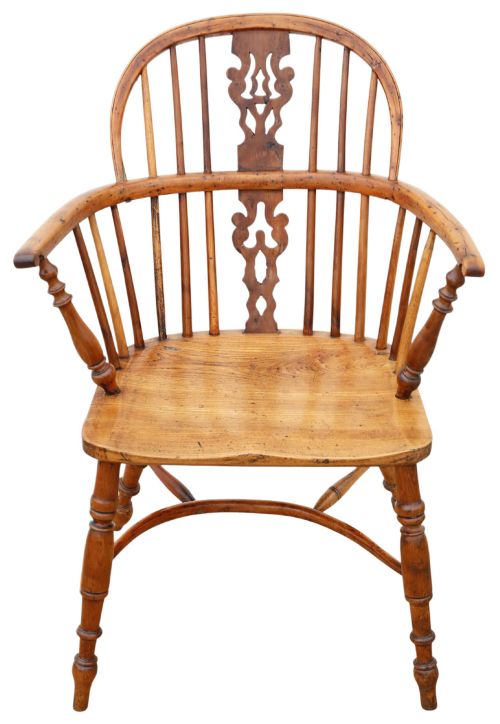
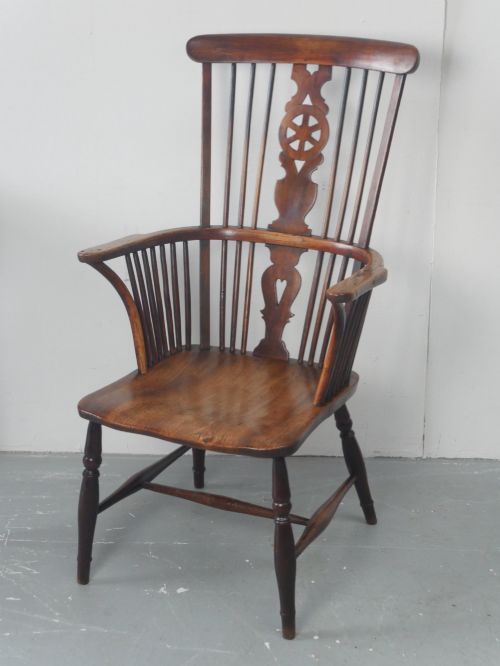
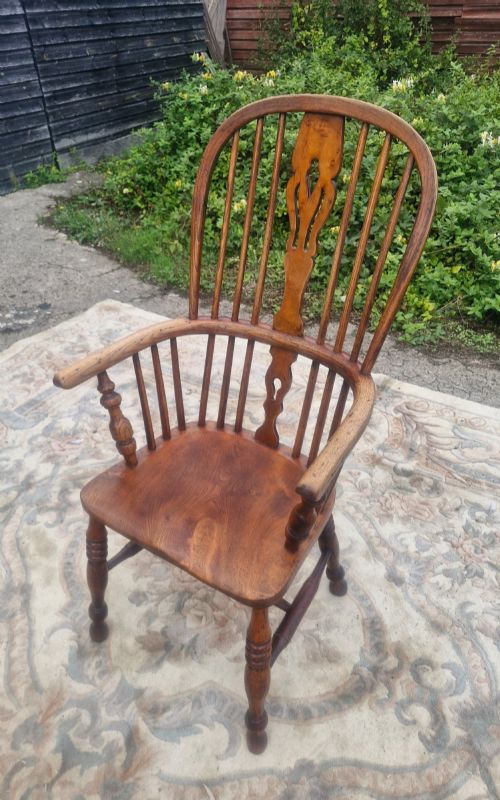
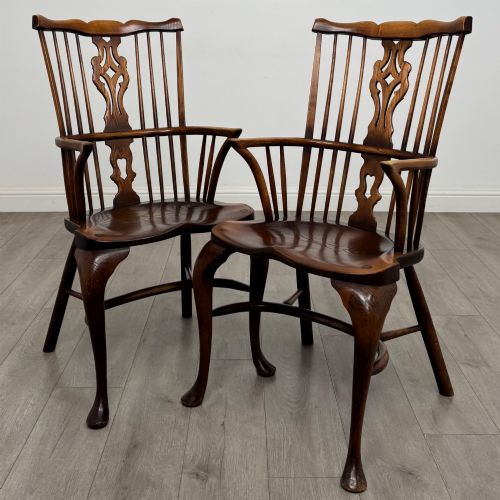
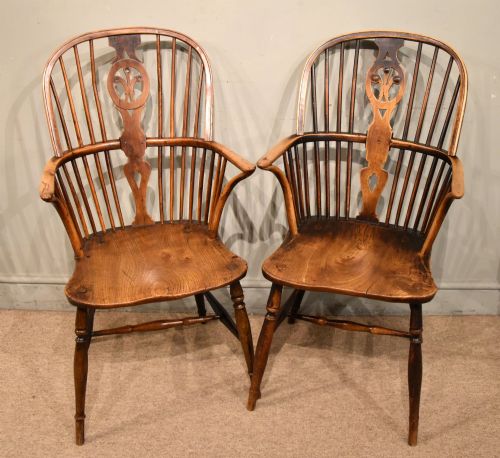
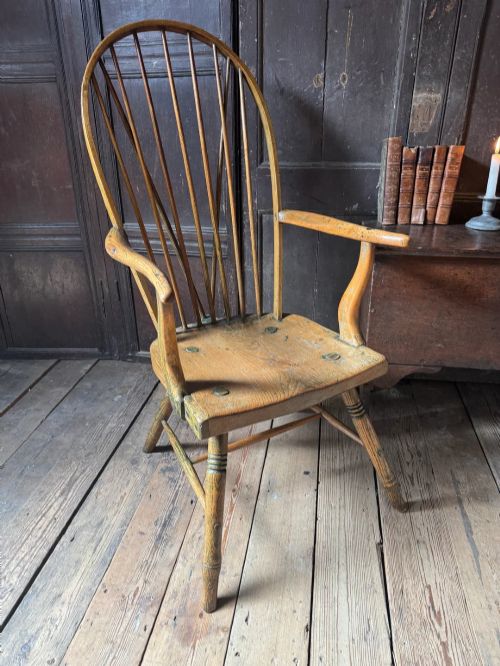
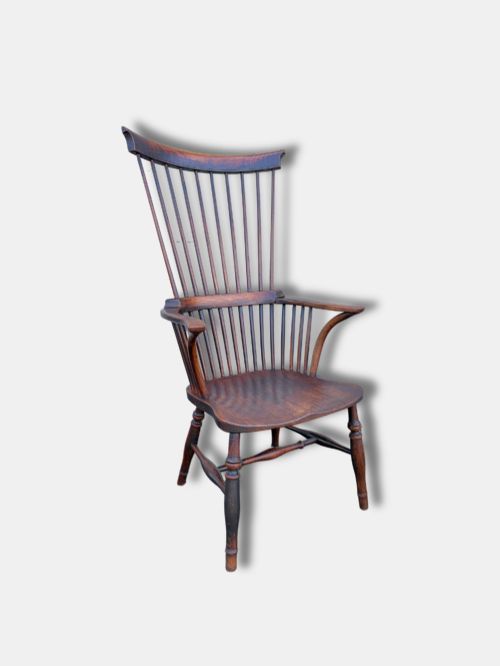
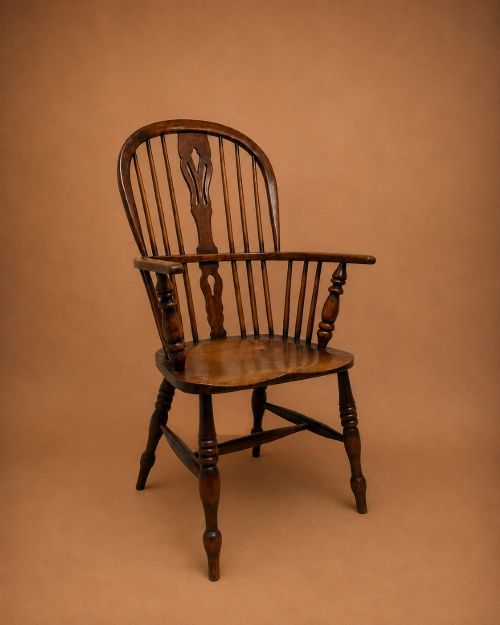
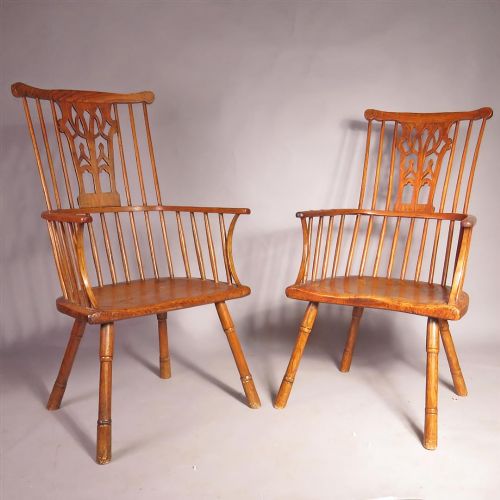
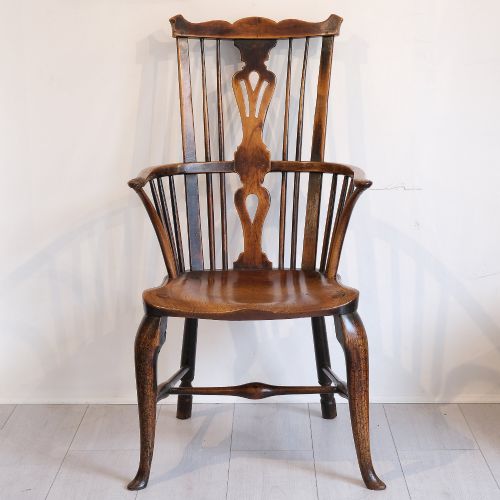
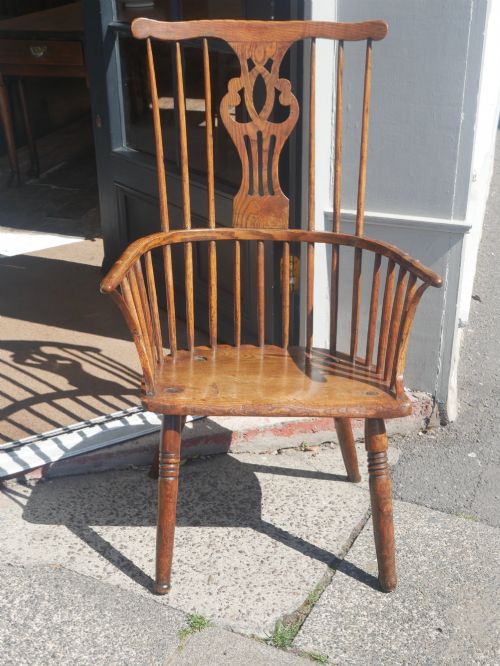
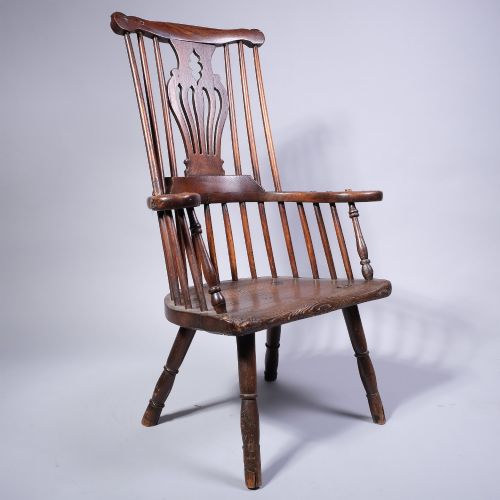
Elm Windsor High Chair
When you search for an elm windsor high chair, you seek the rustic authority of traditional seating shaped from resilient native timbers.
Elm Windsor High Chair
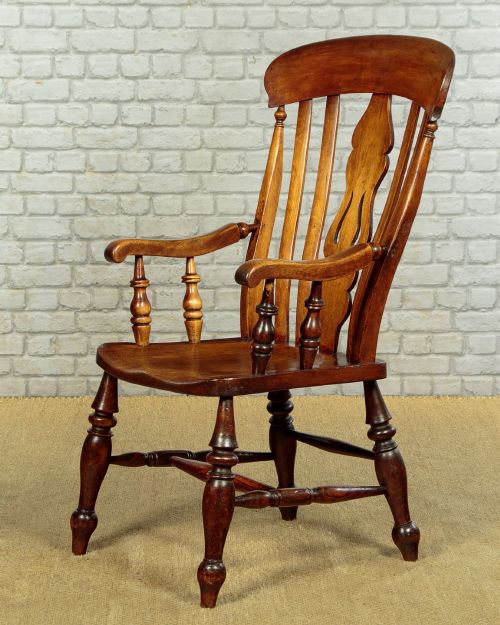
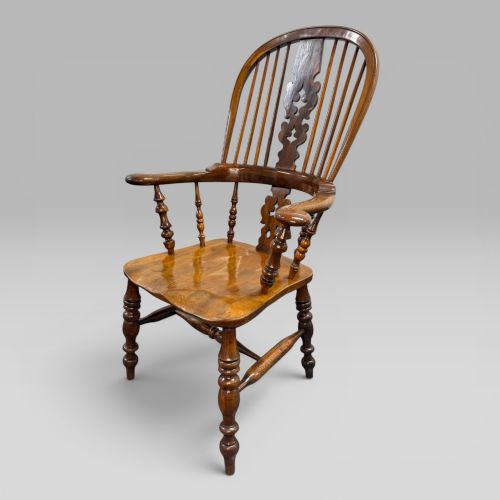
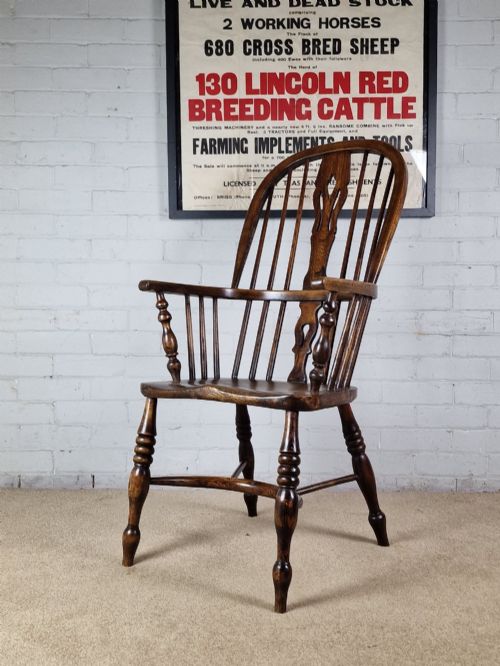
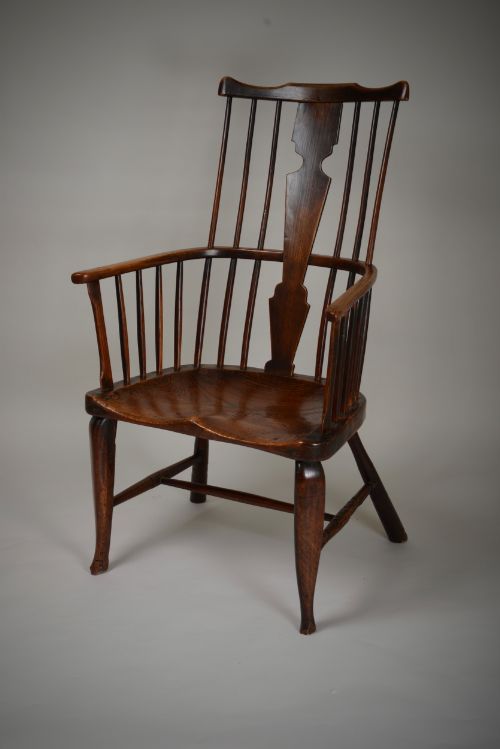
An elm windsor high chair is a traditional form of seating designed with an elevated seat or backrest, rooted in country vernacular furniture traditions. These pieces appear across Georgian, Victorian, and later nineteenth-century periods, spanning English regional workshops.
The materials combine elm seats with complementary timbers like ash, beech, and yew for spindles, legs, and bow frames. Buyers find robust farmhouse forms alongside high-backed children's high chairs sharing the distinctive stick-built construction method.
Materials and construction methods
Makers utilised solid elm for the thick, saddle-shaped seats, selected for its interlocking grain that resisted splitting under stress. Elm was paired with steam-bent ash or yew for the slender hoop backs and comb backs, providing flexible strength.
Turned beech, ash, or fruitwood formed the vertical spindles and sturdy undercarriages, often secured with wedged tenon joints. Additional bracing like crinoline stretchers reinforced the leg assemblies against daily wear in kitchens and farmhouses.
Some historic chairs retain workshop tally marks scored into the underside of the elm seat by the original turner.
What separates examples
The articulation of the elm seat plank dictates much of the character, ranging from deeply sculpted, contoured saddles to flat, utilitarian boards. Finer examples display balanced proportions in the hoop or comb back, with cleanly turned spindles and expressive grain patterns in the timber.
Regional construction traits and timber selection also mark the distinction between standard provincial seating and workshop pieces bearing specific regional turning styles or maker stamps.
The Elm Windsor High Chair Glossary
- Comb back
- A Windsor chair style where the vertical spindles extend upward to support a horizontal top rail resembling a comb. This design emerged during the eighteenth century.
- Hoop back
- A continuous bentwood bow that forms both the arms and the upper backrest of the chair. It is typically steam-bent from a single piece of ash or yew.
- Crinoline stretcher
- A curved metal or wooden under-bracing connecting the legs of a Windsor chair in a horseshoe shape. It adds structural rigidity to the base.
- Vernacular
- Furniture made by regional craftsmen following local traditions rather than strict academic design rules. These pieces prioritise functional utility using native woods.
- Saddle seat
- A thick wooden seat base sculpted with hollows for comfort. Elm was the preferred timber for this shaping due to its tough, fibrous nature.
Elm Windsor High Chair: Frequently Asked Questions
What is an elm windsor high chair?
An elm windsor high chair is a traditional stick-built seat featuring an elevated posture or an elevated child's seat, constructed from native British timbers. These pieces utilise a solid wooden saddle seat into which the legs and back spindles are directly tenoned.
They developed through regional vernacular traditions across the eighteenth and nineteenth centuries, combining structural strength with organic forms. Collectors prize them for their honest construction and the rich patina developed on the elm and ash components over generations.
How do I identify a regional style?
Regional styles reveal themselves through turning details on the legs, the shaping of the armrests, and the specific choice of secondary woods. West Country and Thames Valley pieces often exhibit distinct characteristics in their hoop bends and spindle arrangements.
Comparing the stretcher configuration and the contouring of the elm seat helps place a chair within broader geographical traditions. Makers in different counties utilised local turning lathes that left subtle signatures in the profiles of the spindles.
How should I care for elm furniture?
Elm furniture requires stable indoor humidity levels to prevent the timber from drying out or splitting along the grain. Feeding the wood with appropriate wax polishes maintains the surface sheen and protects the historic patina.
Avoid placing these chairs near direct heat sources or in areas subject to rapid temperature fluctuations. Gentle dusting with a soft cloth preserves the original surface finish without abrasive cleaning.
What woods were used alongside elm?
Makers combined elm with ash for steam-bent components like hoops and bows because ash offers exceptional elasticity. Beech and fruitwood frequently appear in the turned legs and spindles due to their density and ability to hold fine lathe details.
Yew was also utilised for high-status examples, prized for its decorative grain and warm colour. This multi-timber approach allowed craftsmen to match each part of the chair to the mechanical demands placed upon it.