
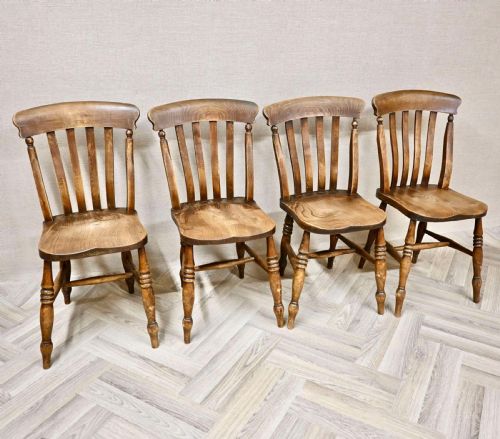

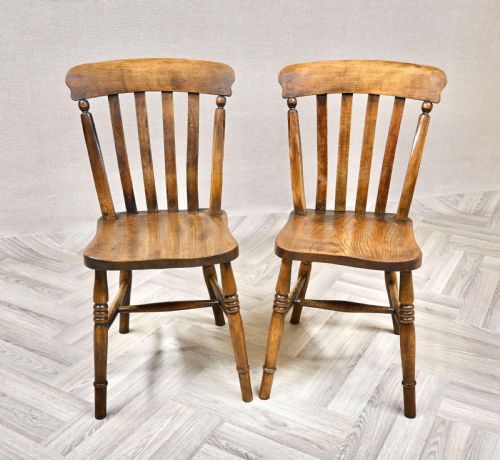
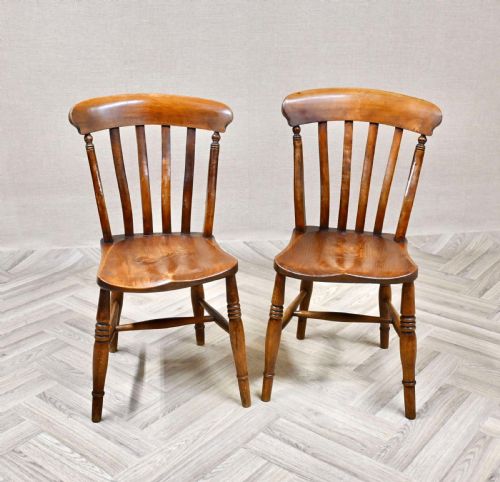
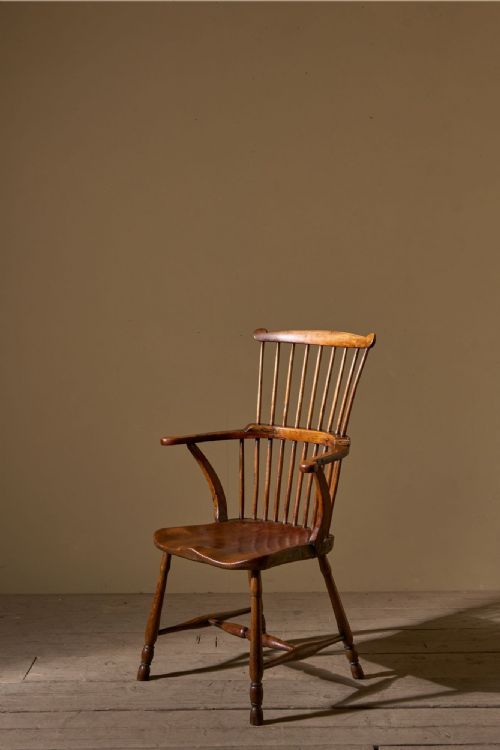
Elm Stick Back
An elm stick back chair brings regional English craftsmanship and tactile timber grain directly into daily domestic use.
Elm Stick Back
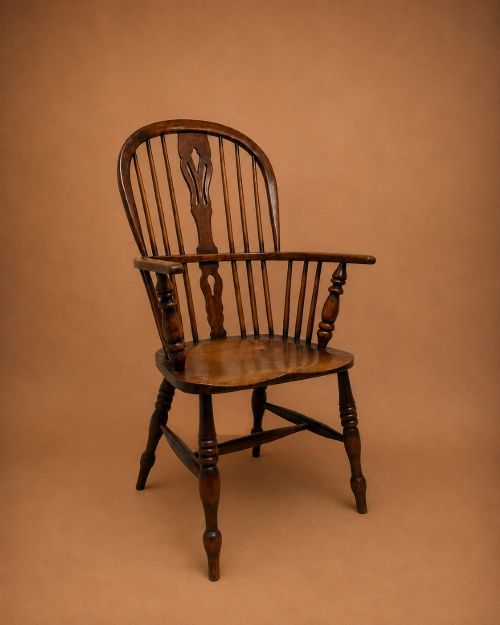
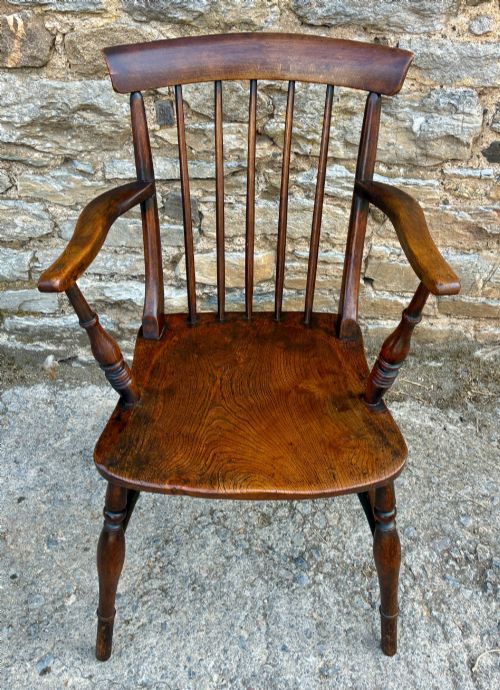
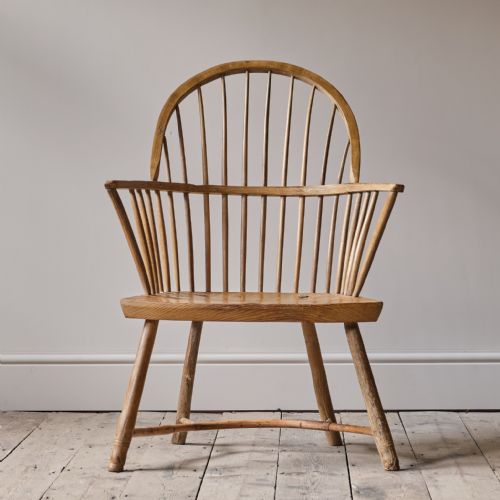
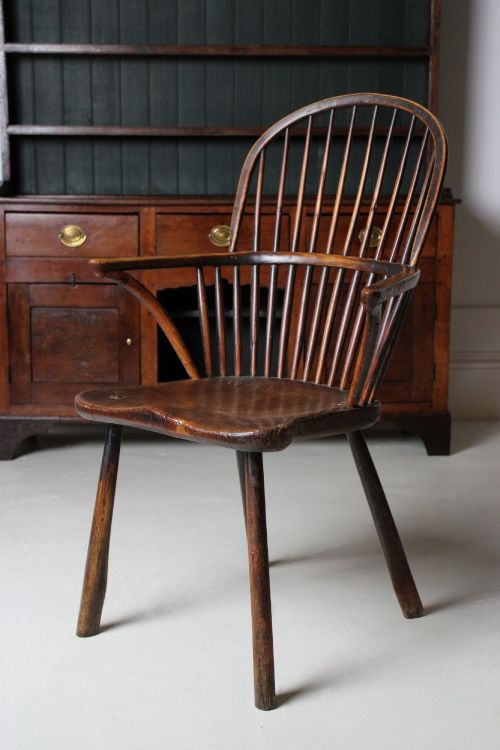
An elm stick back encompasses vernacular seating forms where turned spindles connect the seat to the crest rail or bow, creating a light yet resilient framework. Regional variations span Thames Valley, West Country, and Scottish workshops, each adapting local timber traditions to dining and armchair requirements.
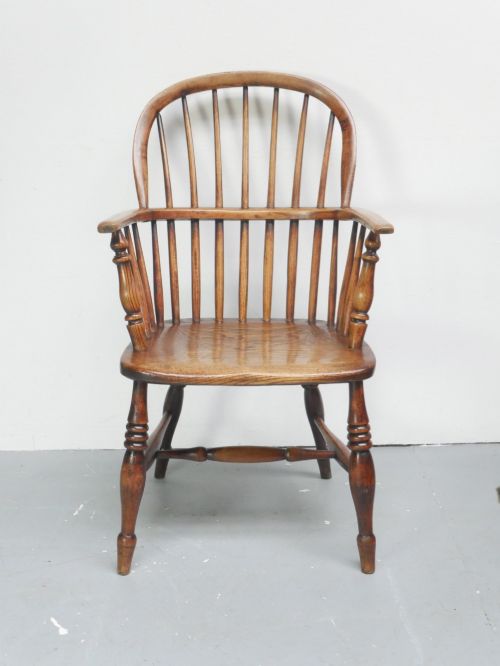
The primary material combination pairs a thick sculpted elm seat with ash, beech, or yew spindles and framing members. Elm provided a stable, interlocking grain that resisted splitting when excavated for saddle seats, while straight-grained woods formed sturdy bent bows and legs.
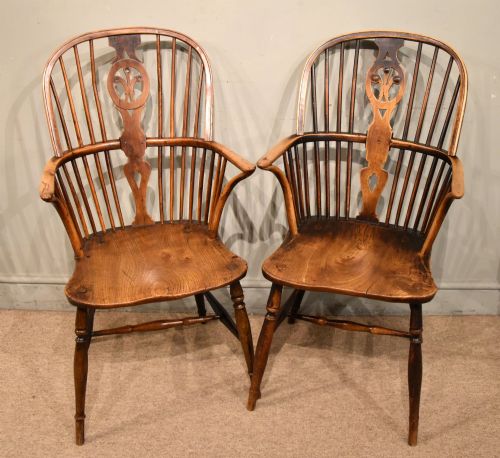
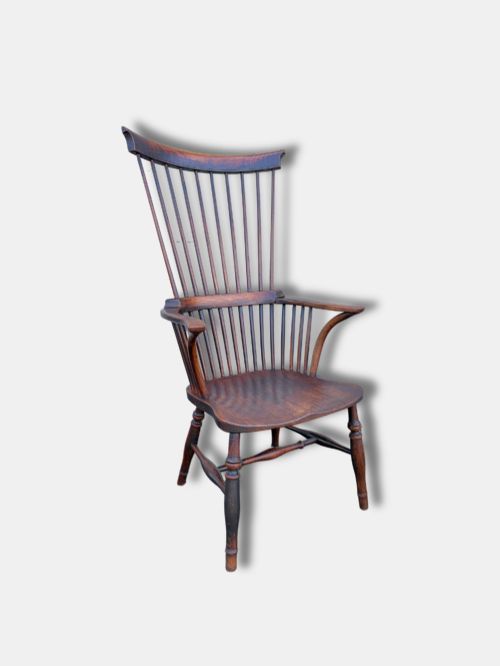
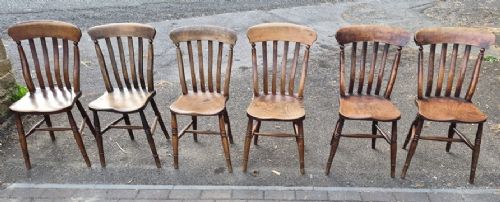
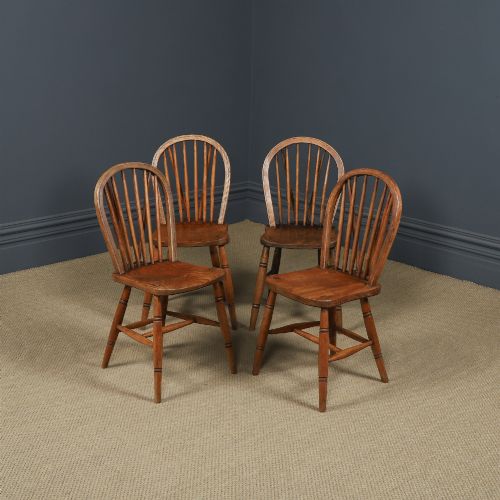
Surviving examples range from eighteenth-century comb back armchairs to Victorian kitchen sets and children's chairs. Buyers frequently encounter sets of dining chairs alongside individual armchairs intended for farmhouse hearths or domestic parlours.
Materials and Construction Techniques
Chairwrights exploited the distinct properties of mixed woods, coupling unyielding elm plank seats with steam-bent ash or yew for continuous hoop backs. This multi-timber construction maximised structural efficiency without adding unnecessary weight to the frame.
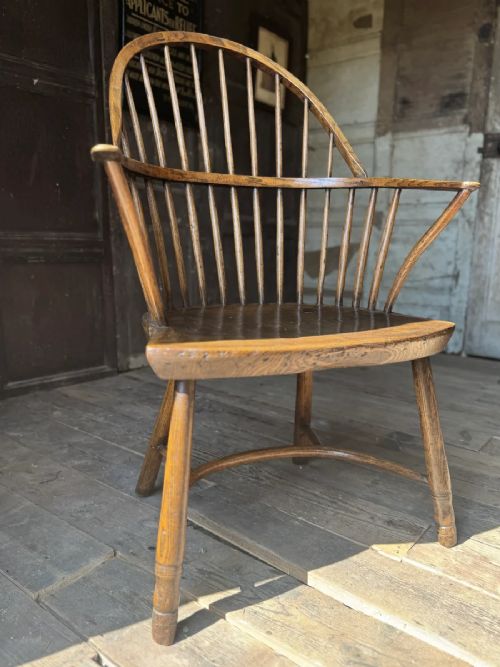
The saddled seat was deeply hollowed using an adze and scorper to create an ergonomic dish, into which legs and spindles were wedged via through-tenons. Undersides often reveal visible wedge joints and pole-lathe turned undercarriages secured by H-stretchers or crinoline stretchers.
Secondary woods such as fruitwood, laburnum, and beech appeared as decorative accents in spindle arrangements or regional framing variants. Surfaces finished naturally through decades of friction and wax polish, preserving tool marks and growth variations in the grain.
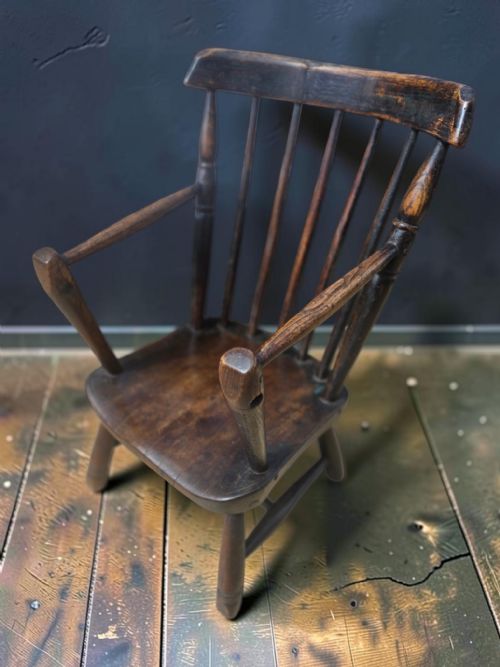
Miniature child's versions replicate full-scale kitchen Windsors down to the last turned spindle.
Judging Quality and Proportion
Quality rests upon the sculptural depth of the elm seat and the harmony of the turning on the uprights and legs. Superior pieces retain crisp lathe work and balanced proportions without heavy replacement parts or structural sagging.
The integrity of the wedged joints and the grain selection in the bentwood bows dictate durability and aesthetic appeal. Denser fiddle-back or burr elm markings command greater attention from collectors seeking pronounced figuring in the timber.
Consistency across matching sets indicates coordinated workshop production, whereas harlequin sets display natural variances in vernacular manufacture. The presence of original surface patination elevates the visual cohesion of an elm stick back.
The Elm Stick Back Glossary
- Comb back
- A Windsor chair variation featuring a low back surmounted by a small headboard supported by upright spindles resembling a traditional hair comb.
- Crinoline stretcher
- A curved undercarriage stretcher spanning the front legs of a Windsor chair, providing lateral stability and resembling the shape of a Victorian hooped petticoat.
- Hoop back
- A continuous steam-bent rail forming the arms and back of a chair in one sweeping curved component.
- Saddle seat
- A thick wooden chair base sculpted into a concave, contoured shape resembling a riding saddle for ergonomic comfort.
- Vernacular
- Objects created by regional craftsmen using local materials and traditional methods without academic architectural oversight.
Elm Stick Back: Frequently Asked Questions
How do I date an elm stick back chair?
Dating relies on observing construction markers such as the thickness of the seat board, the profile of leg turnings, and the method of joining the arms to the back. Earlier eighteenth-century models often feature comb backs and ash frameworks, whereas Victorian iterations frequently utilise beech undercarriages and wheel-back motifs.
Examining the tool marks on the underside of the elm seat also helps distinguish handmade vernacular pieces from later industrial production. Wear patterns and timber shrinkage provide further physical clues to age.
Can I use these chairs for daily dining?
These chairs were built for heavy domestic use in farmhouse kitchens and dining rooms, making them well-suited for everyday seating. The tough, interlocking grain of elm prevents the seat planks from splitting easily under normal weight.
Checking that the wedged leg joints remain tight ensures safety during regular use around a modern table. Periodic waxing maintains the timber surface against everyday friction and minor spills.
What is the difference between stick back and hoop back?
A stick back describes any chair where individual turned spindles are tenoned directly into the seat and top rail. A hoop back specifically refers to a continuous steam-bent rail that forms both the arms and the arched backrest.
Many chairs combine both techniques by using a hoop to shape the arms while filling the interior space with vertical stick spindles. Regional cabinetmakers adapted these structural elements depending on local workshop traditions.
Why are different woods used in one chair?
Craftsmen selected each wood for its specific physical properties to ensure the chair remained both sturdy and comfortable. Elm was chosen for seats because its twisted grain resists cracking when hollowed out, while ash or yew provided the flexibility needed to bend bows without snapping.
Secondary timbers like beech and fruitwood were utilised for turned legs and spindles where fine detail work was required. This multi-timber approach represents practical vernacular engineering.