
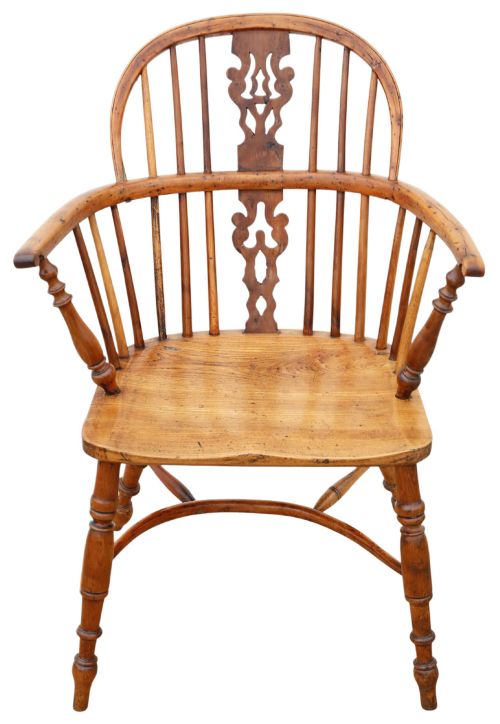
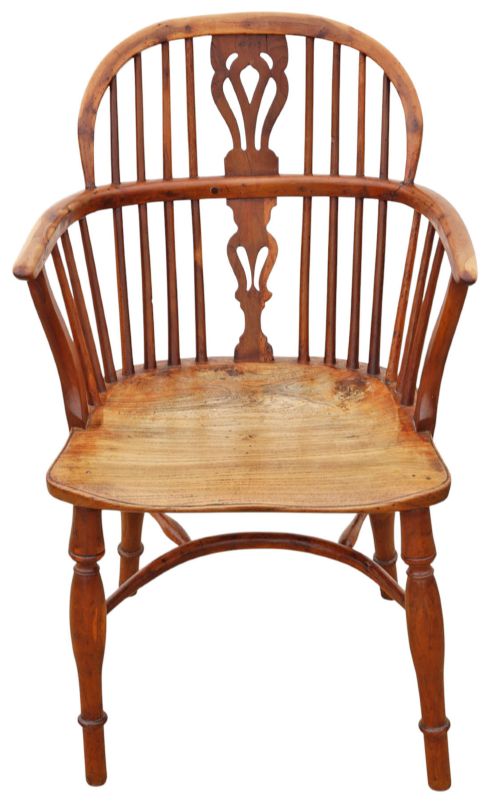
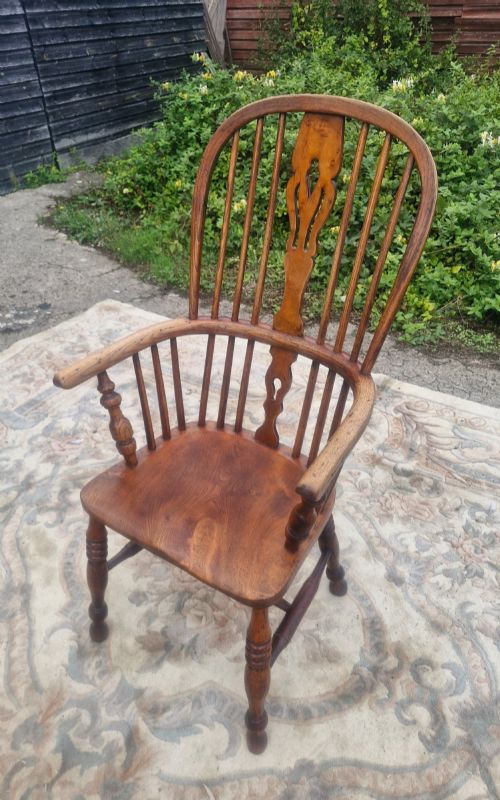
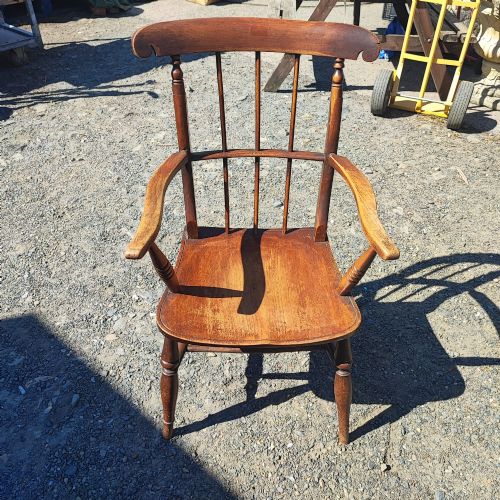

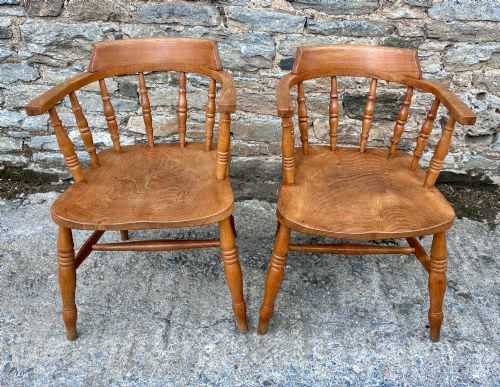
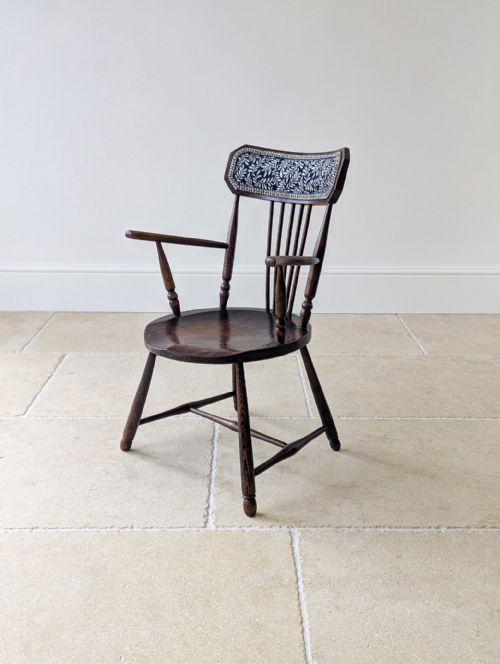
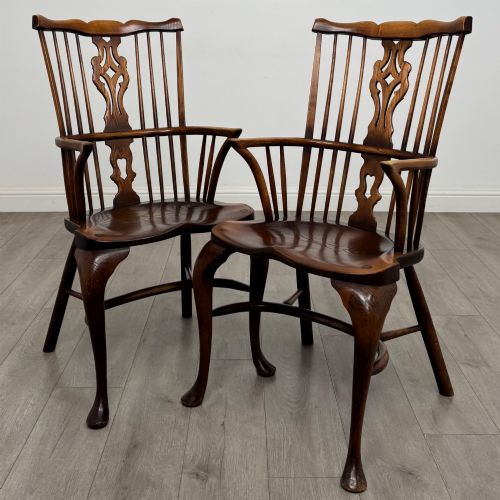
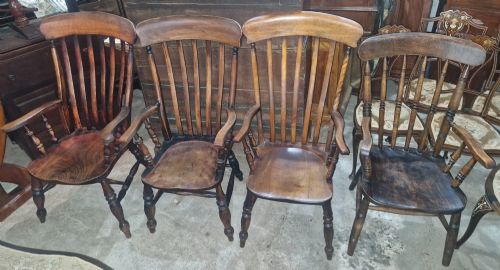
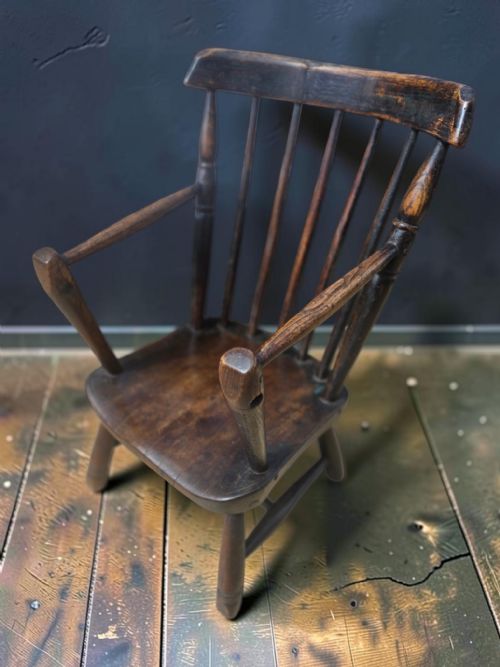
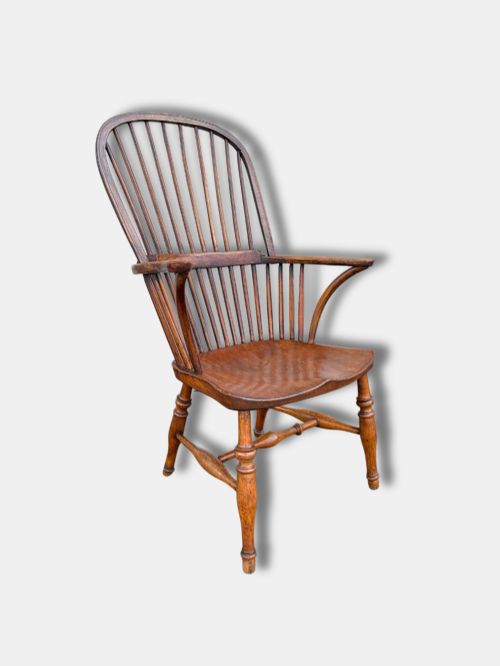
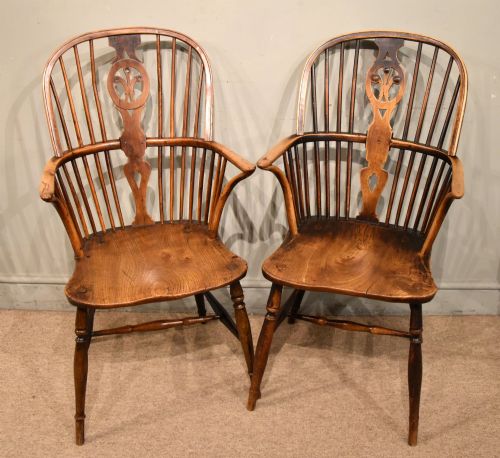
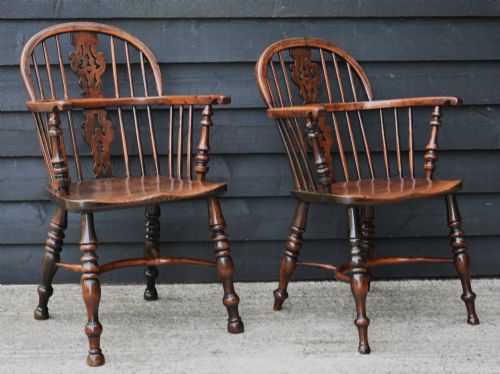
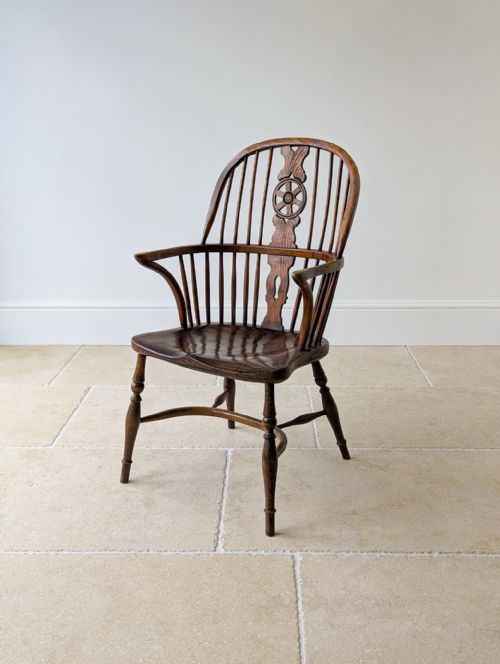
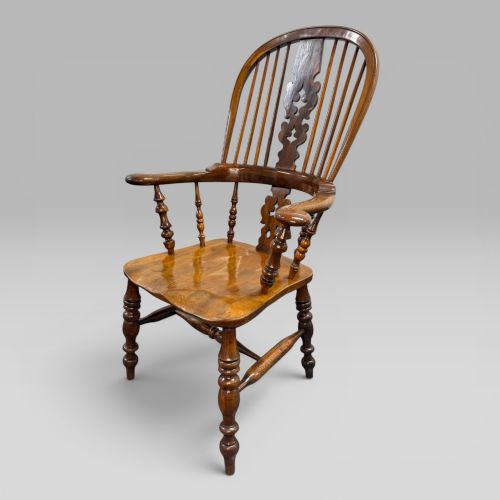
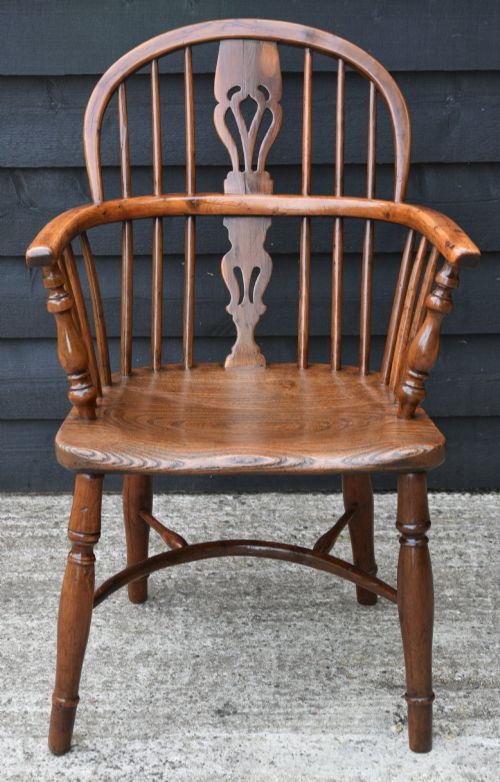
Elm Seat Windsor Armchair
An elm seat windsor armchair brings tactile grain and honest country utility into a room.

Elm Seat Windsor Armchair
An elm seat windsor armchair combines a solid wooden saddle with turned legs and a supportive back framework. When you search for this phrase, you find regional seating designed for durability and comfort in everyday domestic life.
The versions most common here span the eighteenth, nineteenth, and early twentieth centuries, drawing on Georgian, Victorian, and Arts and Crafts traditions. These range from low farmhouse kitchen chairs to grand high-back library carvers.
Makers shaped solid timber using local vernacular methods across English counties, producing stick backs, wheel backs, and comb backs. Each piece reflects the utility of country workshops combined with local turning traditions.
Materials and construction
Makers relied on elm for the thick, sculpted seat because its interlocking grain resists splitting when bored for legs and spindles. This dense timber was paired with ash or beech for the bentwood hoops, arms, and slender spindles.
The components were joined using traditional wedged mortise and tenon construction, allowing the wood to move naturally with seasonal humidity changes. Turned legs were splayed outward to provide stability on uneven flagstone floors.
The listings show regional styles spanning Georgian, Victorian, and Arts and Crafts periods, utilising elm seats combined with ash, beech, and yew.
Judging quality
Quality rests in the depth of the adze work on the seat and the balance of the proportions between the undercarriage and the back. A well-sculpted saddle offers ergonomic comfort, while crisply turned stretchers indicate skilled workshop practice.
The integrity of the original joints and the retention of surface patina distinguish an untouched vernacular survivor from heavily restored examples. Better pieces maintain their structural rigidity without excessive replacement timber in the framework.
The Elm Seat Windsor Armchair Glossary
- Windsor chair
- A chair built with a solid wooden seat into which the legs and back sticks are wedged directly, rather than using a continuous frame.
- Carver
- An armchair designed to sit at the head of a dining table or serve as an occasional elbow chair in a parlour.
- Comb back
- A Windsor chair back featuring a raised horizontal headrest supported by vertical spindles that pass through a crest rail, resembling the teeth of a comb.
- Wheel back
- A Windsor chair back incorporating a pierced central splat carved in the shape of a spoked wheel.
- Stretcher
- A horizontal rail connecting the legs of a chair to provide structural rigidity and prevent splaying.
Elm Seat Windsor Armchair: Frequently Asked Questions
How do I care for an elm seat windsor armchair?
Feed the dry timber periodically with a traditional beeswax polish to maintain the natural lustre of the grain.
Keep the chair away from direct heat sources and drastic humidity shifts to prevent the solid wood from shrinking or splitting.
Can I use these armchairs at a dining table?
Many of these chairs function well as carvers positioned at the ends of a dining table, provided the arm height clears the table apron.
Measure the clearance underneath your table before purchasing to ensure the arms slide in comfortably.
Are these chairs comfortable for daily seating?
The saddle-shaped elm seats are carved to fit the human form, offering surprising ergonomic support during extended sitting.
Adding a loose sheepskin or linen squab cushion provides extra softness for daily use.