

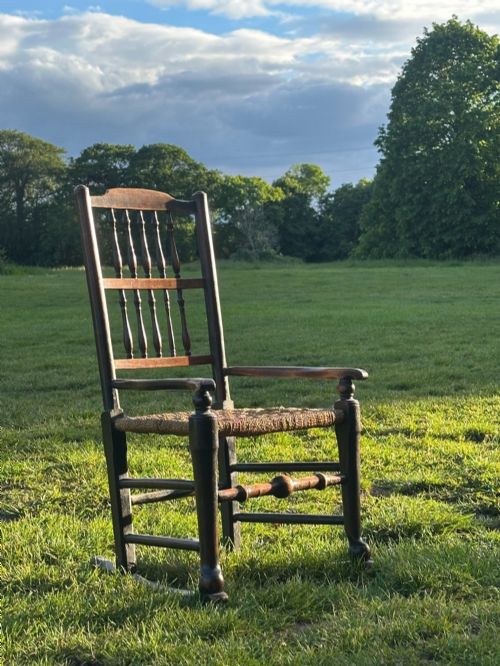


Elm Rush Seat Chairs
Elm rush seat chairs combine country utility with honest regional craftsmanship, bringing tactile texture and sturdy vernacular character into a room.
Elm Rush Seat Chairs
Elm rush seat chairs are traditional country seating forms originating from regional workshops across Britain, shaped by local vernacular traditions. When you search for elm rush seat chairs, you encounter furniture designed for practical everyday domestic use rather than formal parlour display.
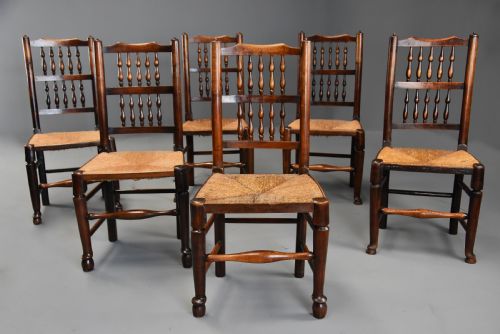
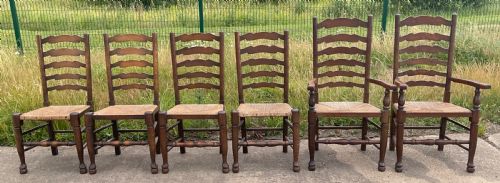
The pieces appearing on this page span several centuries, with examples originating from the Georgian period through to the Victorian era and into the twentieth century. They manifest as single chairs, pairs, and matched sets suitable for dining tables or firesides.
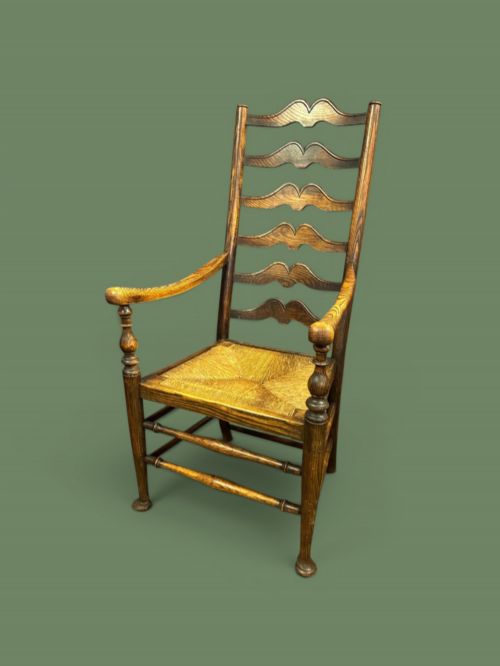
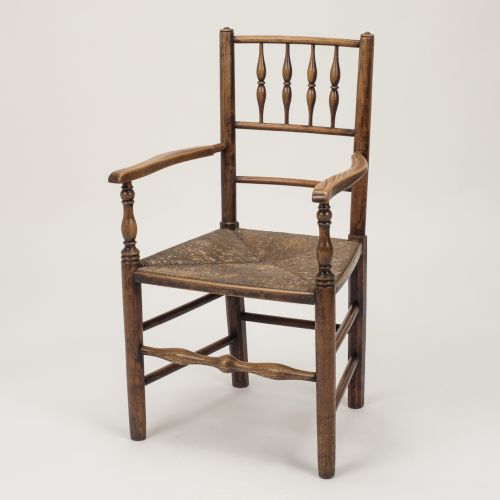
Forms vary from straightforward ladderback dining chairs to substantial armchairs, spindle backs, and occasional rocking chairs. Regional varieties such as Lancashire types appear frequently alongside pieces bearing English country vernacular styles.
How they were made
Makers utilised elm for solid wooden seats and structural elements because of its tough, interlocked grain that resists splitting under pressure. Frameworks often combine elm with complementary timbers such as ash, beech, fruitwood, and oak for spindles, legs, and stretchers.
Seats are woven by hand using natural river rush, wound tightly around timber rails to create a firm, resilient platform. Backrests employ turned spindles or horizontal ladder rails fixed securely into shaped stiles.
Elm Rush Seat Chairs Retail Price Guide 2026
Typical asking prices for elm rush seat chairs among the pieces listed under this phrase on Sellingantiques today, from the lower quarter to the upper quarter. They describe what is for sale here now, not the wider market.
Listings feature elm combined with ash, beech, fruitwood, and oak, reflecting traditional regional timber selection in British country furniture.
What varies in quality
The standard of a chair depends largely on the integrity of its construction and the tightness of the original rush weaving. Pieces retaining their primary woven seats without modern synthetic replacements display greater authenticity.
Proportion and turning detail distinguish finer regional examples from simpler utilitarian output, alongside the depth of surface patina developed through generations of use. Sets that retain matching turnings and uniform wear across all pieces command greater interest than assembled groups.
The Elm Rush Seat Chairs Glossary
- Rush seat
- A seating platform woven from dried marsh reeds twisted into cord. This traditional method yields a springy texture that adapts to the sitter.
- Ladderback
- A chair back featuring horizontal arched wooden slats between two upright posts. This regional style dominates many country dining chairs.
- Spindle back
- A chair design incorporating numerous thin turned vertical wooden rods supporting the upper rail. Makers favoured this construction for lightness and strength.
- Carver
- An armchair designed to match a set of dining chairs, usually placed at the head of a table. These pieces often feature scrolling armrests integrated into the front posts.
- Patina
- The surface sheen and colour acquired by wood through age, handling, and cleaning. It serves as a visual indicator of long history.
Elm Rush Seat Chairs: Frequently Asked Questions
Are elm rush seat chairs suitable for daily dining?
These chairs were built for daily domestic life in farmhouse kitchens and dining rooms, meaning they handle regular sitting well.
Their solid construction suits modern dining spaces, provided the rush weaving remains firm and dry.
How do I care for a rush seat?
Natural rush requires protection from excessive moisture and damp environments, which can weaken the dried plant fibres over time.
Keep the seats dusted gently and avoid standing or kneeling on the woven surface.
What is a Lancashire chair?
Lancashire chairs refer to regional country seating types produced in the north of England, often characterised by sturdy turnings and rush seats.
These pieces typically display regional vernacular traits that set them apart from formal metropolitan furniture.
How can I tell an 18th century chair from a Victorian one?
Earlier eighteenth-century chairs often exhibit hand-turned spindles and subtle variations in wood selection, reflecting individual workshop production.
Victorian and later pieces frequently show more standardised turning methods and machine-assisted preparation while maintaining traditional forms.
Why are matched sets difficult to find?
Country chairs suffered heavy use over generations around farmhouse tables, leading to individual breakages and replacements.
Surviving sets usually represent groups assembled by dealers or families over time rather than rigid factory output.