
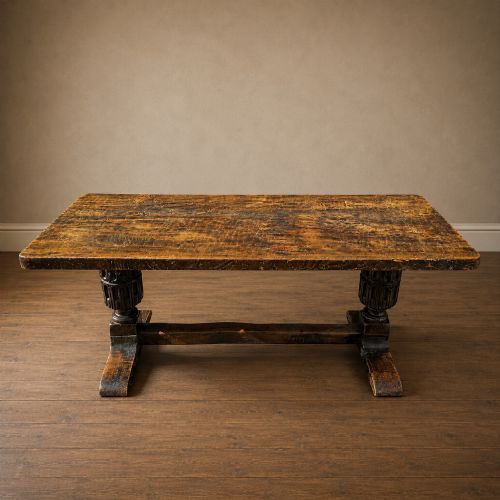
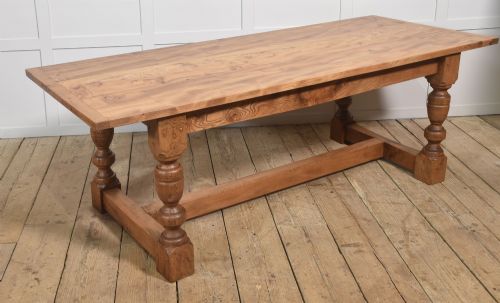


Elm Refectory Table
An elm refectory table brings rustic warmth to a room, offering a sturdy surface shaped by decades of communal dining.
Understanding Elm Refectory Tables
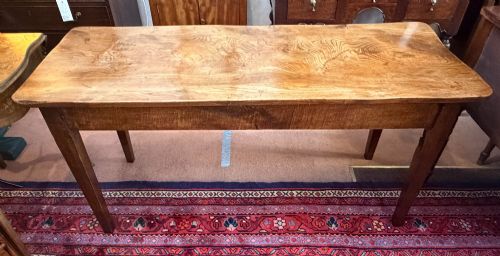
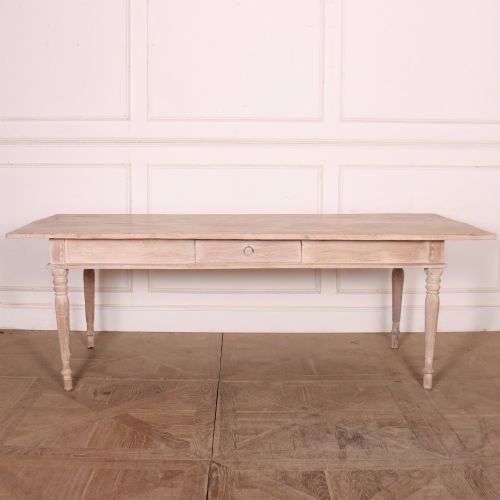
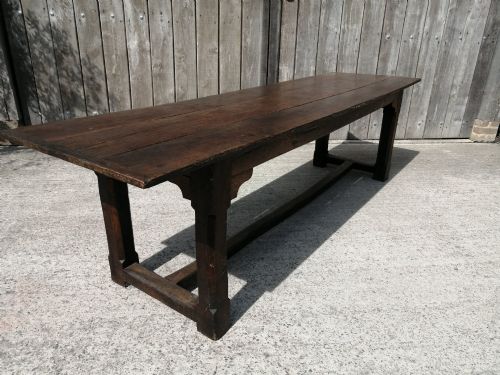
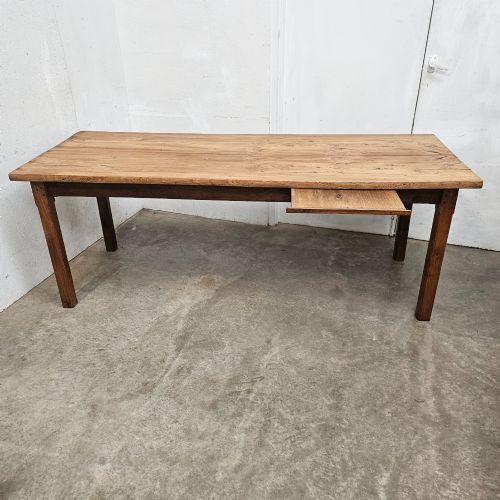
An elm refectory table is a long, narrow dining surface traditionally built for shared meals in large halls, monasteries and farmhouses. When you search for an elm refectory table, you encounter substantial pieces designed to seat many people, ranging from six to ten diners.
The versions you meet most often on this page span the 18th century, 19th century and the year 1900, drawing on English Country, French Provincial, Arts and Crafts, Rustic Farmhouse and Georgian styles. These tables frequently appear alongside oak, cherry, pear wood, birch or ash elements, combining robust timbers in their construction.
Makers and workshops across England, Wales and France produced these dining tables and tavern tables to withstand daily use. The survival of multi-plank tops and turned legs demonstrates their enduring utility in domestic and communal settings.
Assessing Quality and Character
Quality in these tables rests primarily on the integrity and visual weight of the timber used for the top. A desirable surface displays a rich patina and deep colour developed through generations of use, rather than a uniform, sterile finish.
The structural harmony between the elm top and the supporting framework dictates the refinement of the piece. Tables that retain their original timber configuration without excessive alteration offer a truer connection to their period of origin.
Retail Price Guide 2026
Typical UK retail prices for elm refectory table, calculated from the Sellingantiques database of over a million retail prices indexed since 2003. This retail price guide relies exclusively on Sellingantiques data; no external sources or auction records are used, so the figures do not describe the wider market.
Listings feature elm paired with oak, cherry, pear wood, birch and ash across Georgian and 19th-century periods.
Heals Of London
The Elm Refectory Table Glossary
- Refectory table
- A long dining table originating from monastic dining halls. These pieces evolved into standard farmhouse furniture designed to seat large families and guests.
- Plank top
- A table surface constructed from multiple long boards laid side by side. Elm plank tops often show significant grain movement and rich surface character over time.
- Tavern table
- A smaller, sturdy table built for public houses and domestic kitchens. They share heavy timber construction with larger refectory forms.
- Patina
- The deep, lustrous surface sheen developed on wood through age, handling and polishing. It serves as a visual record of the piece's history.
- Turned leg
- A wooden support shaped on a lathe to create decorative cylindrical or bulbous profiles. These legs provide structural strength beneath the table frame.
Frequently Asked Questions
What is an elm refectory table used for?
These tables served primarily as communal dining surfaces in monastic halls, farmhouses and large country homes. They accommodated large families and guests for daily meals and gatherings.
Today, buyers utilise them as substantial dining room tables or kitchen centerpieces. Their long, narrow proportions suit modern open-plan living spaces while maintaining traditional character.
How do I care for an antique elm top?
Elm timber requires gentle cleaning with a soft, dry cloth to preserve its natural oils and historic surface. Avoid harsh chemical polishes and excessive moisture that might penetrate the grain.
Protect the timber from direct heat sources and sudden temperature changes to prevent the planks from warping. Applying occasional natural wax helps maintain the depth of the patina.
How can I tell an 18th-century table from a 19th-century one?
Eighteenth-century examples often display hand-sawn timber marks and pegged joinery characteristic of earlier hand tool methods. Their frames tend to show deeper patination and specific regional construction traits.
Nineteenth-century pieces frequently incorporate more uniform milling techniques while retaining traditional farmhouse forms. Examining the underside and the nature of the wood movement helps clarify the timeline.
Did these tables originate in England or France?
Both origins are common, with English examples often featuring oak frames paired with elm tops. French provincial and monastic versions frequently utilise regional fruitwoods or local elm.
Stylistic details in the turned legs and undercarriage framing typically distinguish West Country or Welsh pieces from French provincial workshops.