
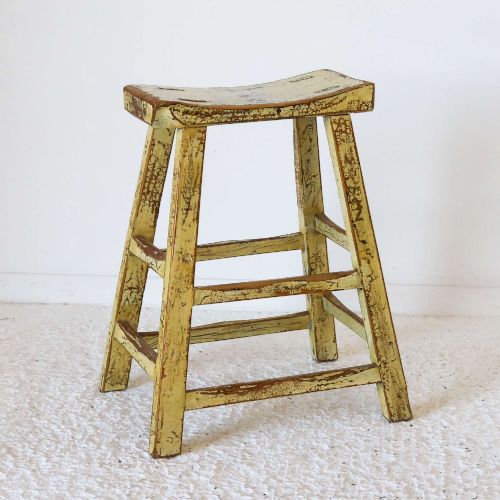
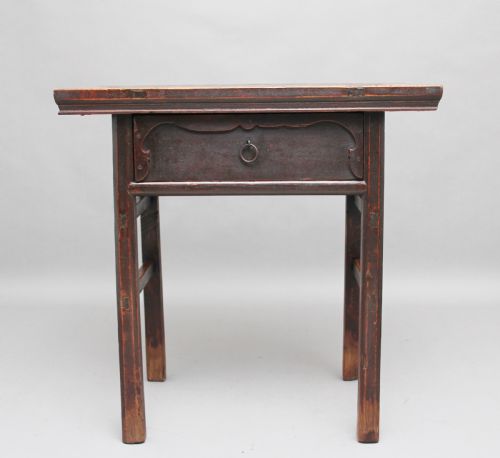


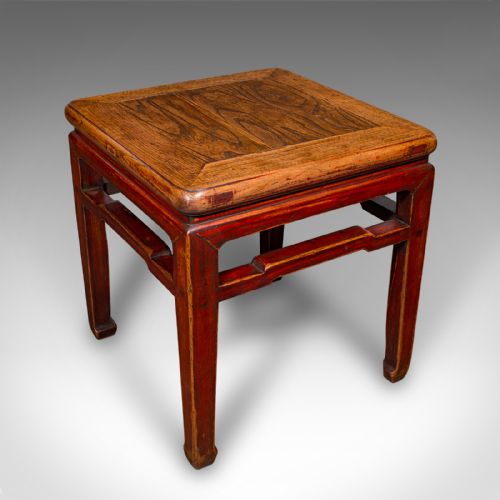

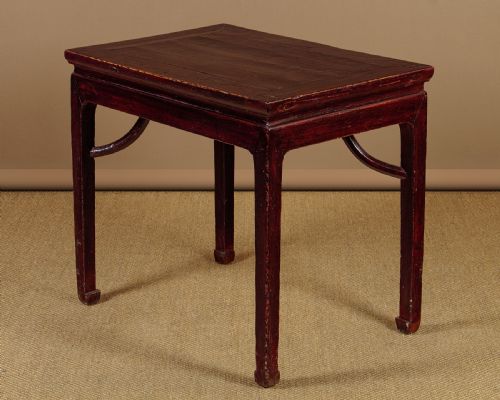


Elm Oriental Side Table
An elm oriental side table brings honest provincial timber and quiet joinery into a room, offering both practical surface space and centuries of regional design history.
Elm Oriental Side Table
When you search for an elm oriental side table, you encounter robust provincial furniture originating primarily from China and Japan. These pieces range from low tea tables and small work tables to narrow console and altar forms built for daily utility.
The version you are most likely to meet on this page is a nineteenth-century Chinese elm side table, often displaying simple straight legs, mortise and tenon construction, and an uncluttered rectangular top. Such tables served domestic functions in provincial households before finding favour as decorative accents in modern interiors.
How they were made
Makers utilised native elm timber, valued for its visible grain pattern and structural toughness, sometimes pairing it with ebonised finishes or red lacquer. Iron and brass fittings occasionally reinforced corners and drawers, providing both structural stability and subtle contrast against the warm wood.
Joinery relied on traditional interlocking joints rather than metal nails, allowing the timber to expand and contract with seasonal humidity changes. Surfaces were finished with clear or coloured lacquers that protected the wood while retaining the organic texture of the elm.
Some tables double as work spaces, proving that historical meal prep and paperwork occasionally shared the exact same piece of timber.
What varies in quality
Quality rests in the integrity of the timber selection and the crispness of the original joinery. Tables retaining their early or original surface finishes hold greater character than those stripped down to bare wood.
Proportion and restraint separate superior examples from heavier, coarser iterations. A well-balanced frame with refined stretcher placement demonstrates the maker's eye for harmonious domestic scale.
The Elm Oriental Side Table Glossary
- Mortise and tenon
- A joint wherein a protruding tenon fits snugly into a matching mortise hole, securing the frame without metal fasteners.
- Qing Dynasty
- The final imperial dynasty of China, spanning from the mid-seventeenth to the early twentieth century, known for diverse regional cabinetmaking.
- Demi-lune
- A half-moon or semicircular table shape designed to stand flush against a wall.
- Ebonised
- Wood treated with a dark stain or pigment to simulate the appearance of ebony.
- Altar table
- A long, narrow console table traditionally placed against a wall to display ritual objects or ancestral tablets.
Elm Oriental Side Table: Frequently Asked Questions
Where were these tables made?
These tables originate primarily from workshops across China and Japan, reflecting regional domestic traditions and provincial woodworking styles.
They were produced to serve practical functions in homes, temples, and halls before being brought into international circulation.
How do I care for elm furniture?
Keep the timber away from direct heat sources and sudden humidity shifts to prevent the wood from splitting or warping.
Dust gently with a dry cloth and occasionally apply a neutral wax to maintain the finish without sealing the grain.
What is locust wood elm?
Certain provincial pieces are noted as being fashioned from a locust wood variety of elm, which exhibits particular density and grain characteristics.
This regional timber selection provided exceptional durability for hardworking domestic surfaces.
Are these tables original?
The pieces span the eighteenth, nineteenth, and early twentieth centuries, retaining their structural foundations from those periods.
Many exhibit original lacquer, surface wear, and traditional joinery that confirm their age and history of use.