
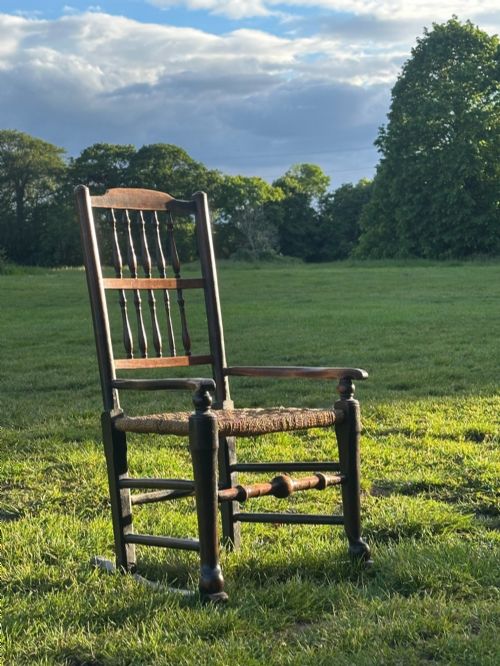
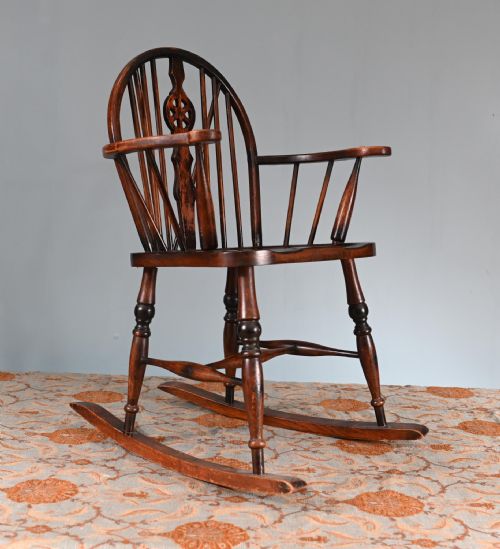

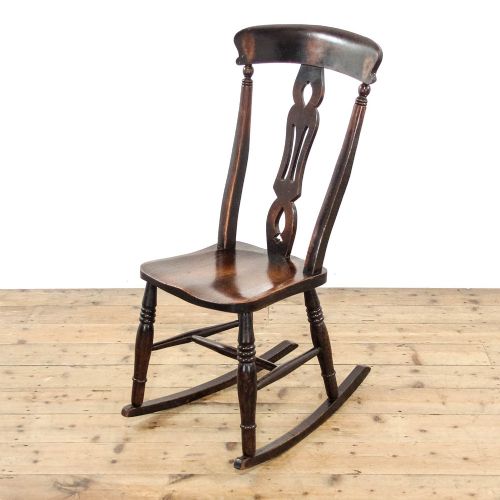


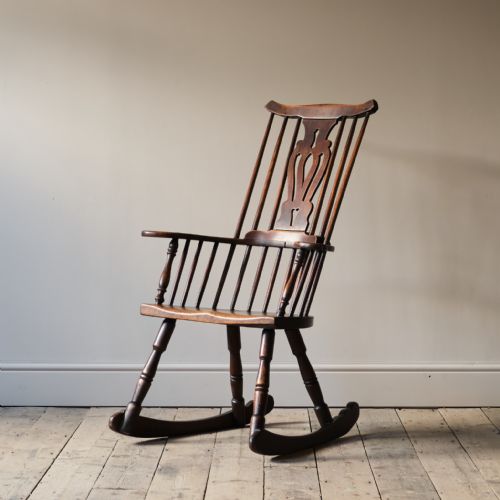


Elm Country Rocker
An elm country rocker brings tactile warmth and vernacular craft to a room, offering the gentle motion of traditional English seating.
Elm Country Rocker
An elm country rocker is a traditional domestic seating form designed for fireside or nursery use, combining a solid wooden seat with a curved rocking base. When you search for elm country rocker, you encounter pieces shaped by regional English vernacular traditions spanning the eighteenth and nineteenth centuries.
The examples seen here most frequently take the form of Windsor rocking chairs, alongside smaller child's variants. These chairs typically pair elm seats with ash, beech, or yew supporting elements, reflecting the mixed timber construction standard in English country workshops.
Periods represented across these listings stretch from the mid-eighteenth century through the Victorian era and into the early twentieth century. You find both full-sized armchairs and diminutive child's versions, all sharing the sturdy rustic character of English country furniture.
How they were made
Maker-joiners constructed these chairs by wedging spindles and legs directly into thick, saddled solid elm seats. This technique ensured durability while allowing the dense grain of the timber to take centre stage.
Framing elements relied on steam-bent ash or beech for hoops and arms, while turnings on spindles and legs utilised local hardwoods. The combination of flexible timbers for steam-bent components and rigid woods for structural posts governed vernacular chair construction.
Listings span periods from the mid-eighteenth century to the 1930s, featuring elm, ash, beech, and yew across regional English styles.
What varies in quality
Quality in these chairs rests upon the sculptural shaping of the elm seat and the grace of the spindle or wheelback arrangement. A deeply dished seat and well-balanced proportions distinguish more considered workshop production from utilitarian output.
The integrity of the timber combination and the retention of original surface patination dictate the visual standing of each piece. Surviving examples that maintain their original structural relationship between bentwood components and solid seats hold greater integrity.
The Elm Country Rocker Glossary
- Windsor
- A chair style characterised by a solid wooden seat into which the back and legs are socketed independently. This method creates a sturdy frame without requiring heavy stretchers.
- Saddled seat
- A wooden seat base carved into a concave, ergonomic contour resembling a saddle. This shaping provides comfort and highlights the figuring of the elm.
- Spindle back
- A chair back constructed from vertical turned wooden rods supporting the top rail. These slender members distribute weight and lighten the visual mass of the frame.
- Wheelback
- A Windsor chair variation featuring a pierced wheel motif incorporated into the splat of the backrest. It is a decorative detail frequently found on nineteenth-century vernacular seating.
- Thames Valley
- A regional English style designation associated with chair-making traditions along the river valley. Pieces from this origin often display refined timber selection and distinctive turning.
Elm Country Rocker: Frequently Asked Questions
Where were elm country rockers used?
These rockers served primarily in domestic kitchens, farmhouses, and fireside parlours across rural England. Their sturdy construction suited daily family life.
Smaller child's versions were also common in nurseries and parlours, providing miniature seating that mirrored adult furniture.
How do I date an elm rocker?
Dating relies on observing construction methods, turning styles, and timber characteristics across the frame. Eighteenth-century pieces often feature heavier undercarriages and simpler vernacular details.
Victorian and later examples introduce steam-bent components and wheelback splats. Comparing the wear patterns on the rockers helps confirm age.
What timbers were used?
Elm served as the primary material for solid seats due to its interlocking grain resisting split formation. Supporting spindles, legs, and arms typically utilised ash or beech.
Some regional variants incorporated yew or mixed hardwoods depending on local timber availability in English workshops.
How should I care for an elm rocker?
Maintain these chairs by keeping them away from direct heat sources and sudden humidity changes. This prevents the elm seat and bentwood elements from drying out or splitting.
Apply occasional microcrystalline wax to nourish the wood surface and preserve the historic patination without sealing the timber.