
Elm Armchair Pair
An elm armchair pair brings sturdy domestic comfort and distinct regional character into a room.
Elm Armchair Pair
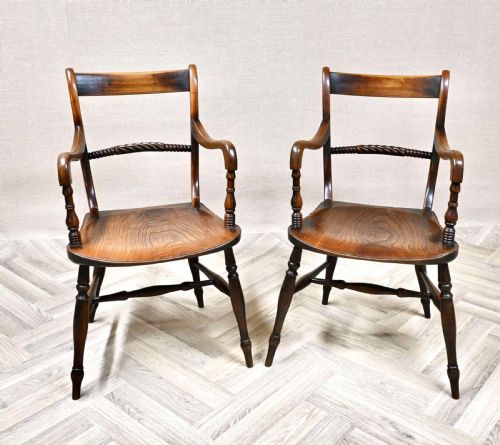
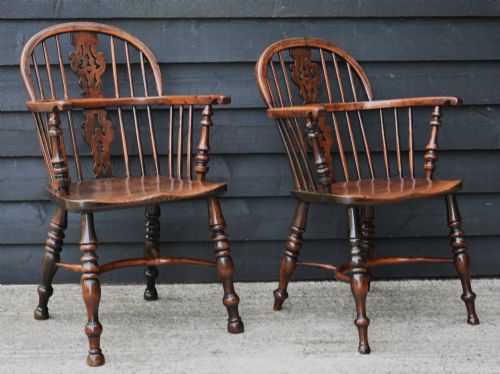
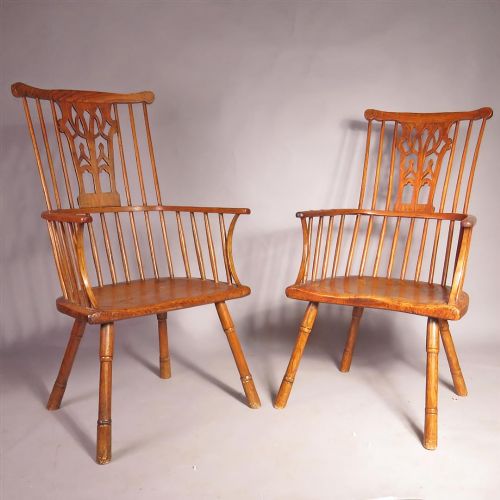
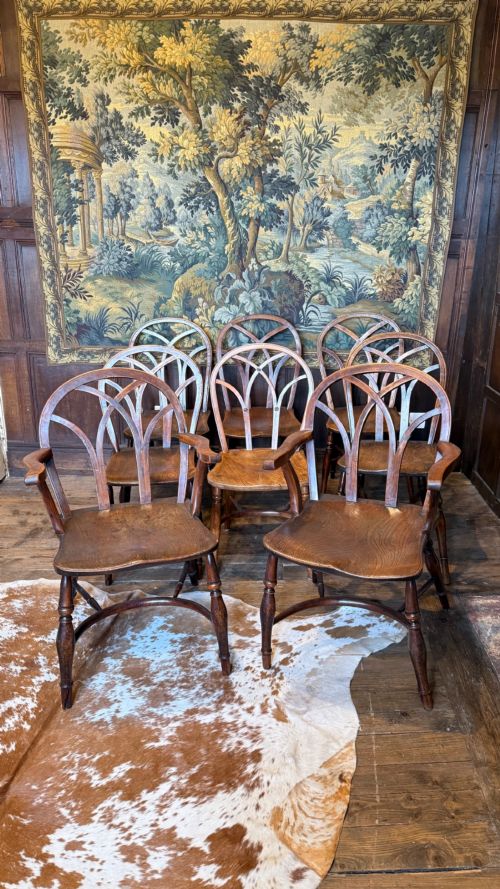
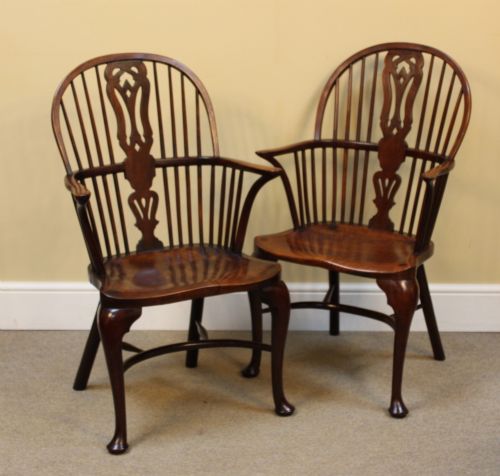
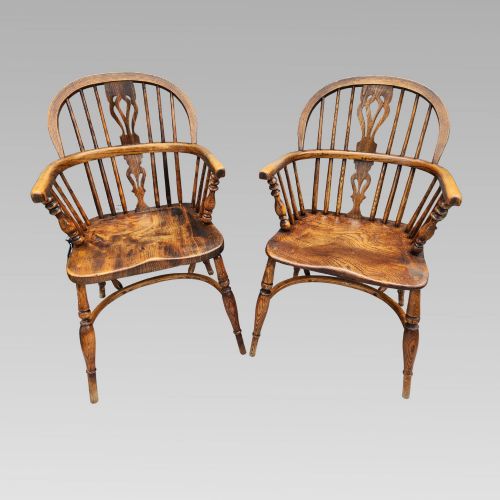
When searching for an elm armchair pair, buyers encounter robust seating solutions spanning English country workshops, Georgian farmhouses, and overseas traditions like Chinese scholarship chairs. These matched sets combine utilitarian durability with striking regional variations in back design and spindle arrangement.
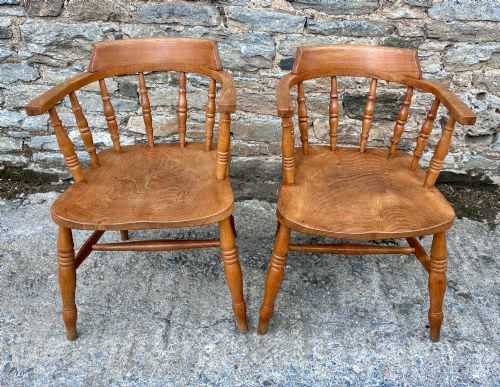
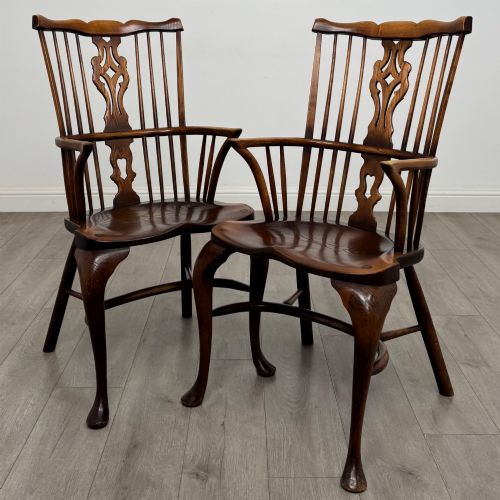
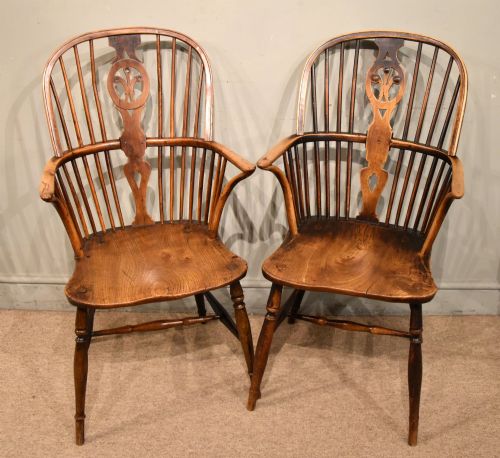
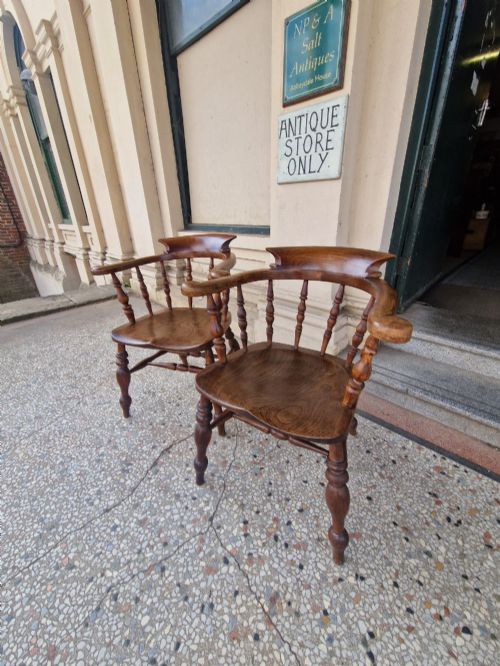
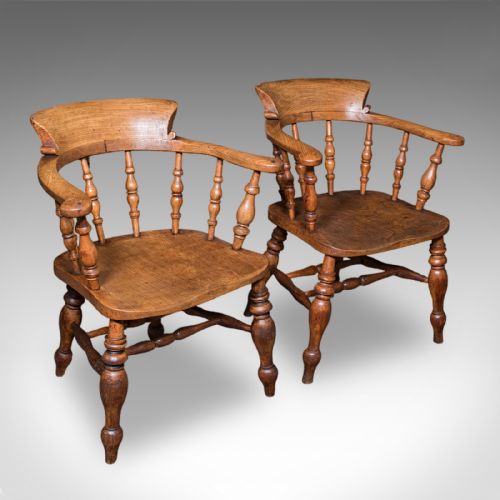
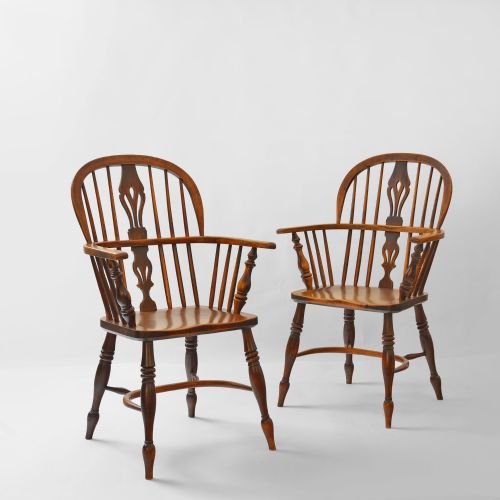
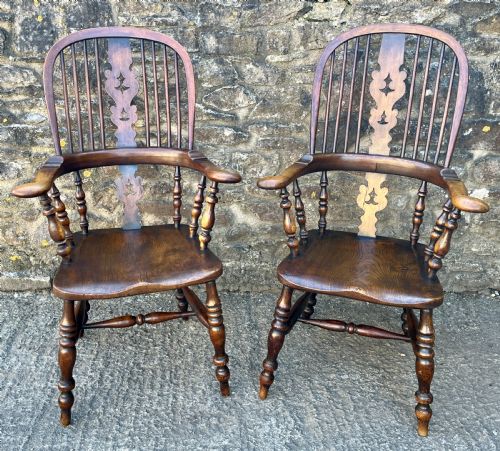
The English country versions dominate this selection, featuring traditional Windsor frameworks alongside low-back captains chairs and smoker bows. Such pieces typically pair an elm seat with ash or yew supports, reflecting local timber availability during the eighteenth and nineteenth centuries.
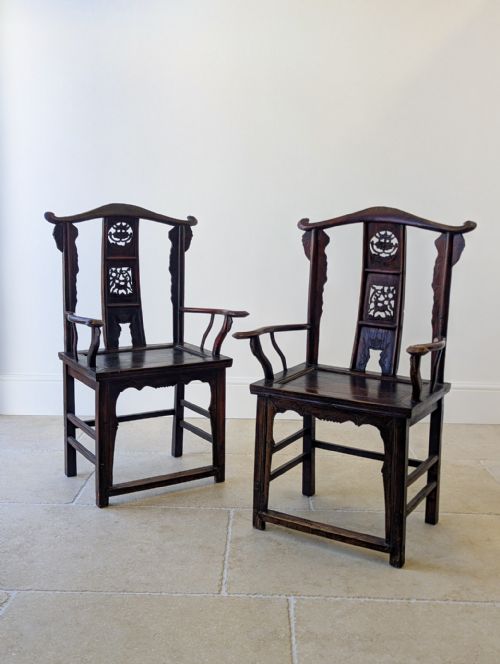
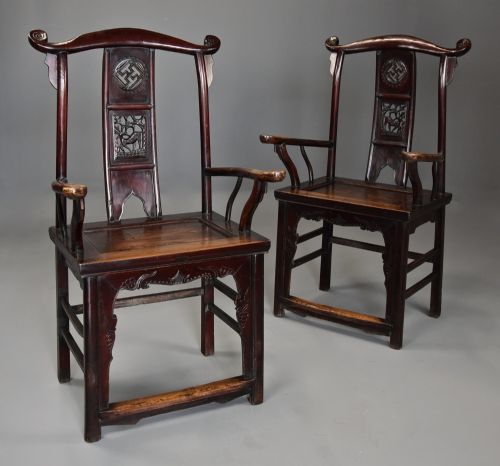
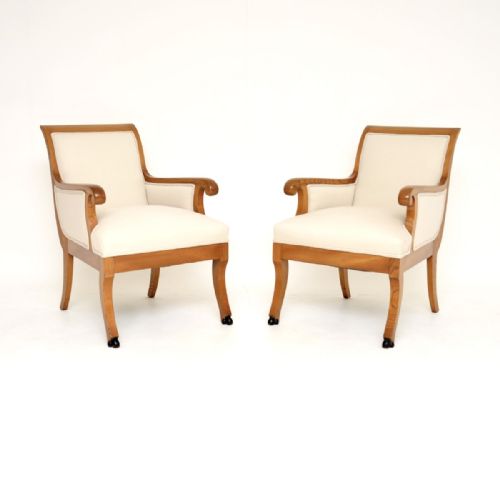
Beyond domestic forms, the listings include Swedish neoclassical and Art Deco variations alongside Qing Dynasty horseshoe and yoke-back chairs. This breadth allows collectors to choose between rustic vernacular seating and clean-lined modernist or Far Eastern aesthetics.
Materials and Construction
Makers relied on elm primarily for solid seats due to its interlocking grain, which resisted splitting under heavy use. They combined this tough timber with flexible ash or yew for bent parts such as steam-bent armbows and slender spindles.
Joinery methods involved traditional turned construction where legs and spindles wedged directly into bored seats. Vernacular makers also utilised mortise and tenon joints to secure heavier frames, creating stable structures without metal fixings.
Materials span traditional British hardwoods like elm, ash, and yew alongside birch and applied lacquer.
Evaluating Quality
Quality rests heavily on the retention of original surfaces, where deep wax patination and uniform colour indicate genuine age and careful custodianship. Pieces that retain their balanced proportions and matching timber figuring across both chairs command greater interest.
Structural integrity also separates superior examples from heavily altered ones, particularly where leg heights remain unaltered and turned elements match precisely. The crispness of detail in carved yokes or spindle turnings further distinguishes skilled rural or urban workshops.
Gillows·Trevor Page
The Elm Armchair Pair Glossary
- Windsor
- A chair built with a solid wooden seat into which the legs and back sticks are independently inserted. These forms evolved numerous regional variations across British and American workshops.
- Smoker's bow
- A low-backed Windsor variant featuring a continuous curved armrail supported by turned spindles. They were common in domestic kitchens and public houses.
- Yoke-back
- A traditional chair style defined by a stepped top rail resembling a Chinese ox yoke. It provides ergonomic comfort for the shoulders.
- Patina
- The surface sheen and texture developed through decades of handling, polishing, and natural oxidation. It serves as a key indicator of age.
- Comb-back
- A Windsor chair design where the central spindles extend upward through a top rail to resemble the teeth of a comb. This style offers extra upper back support.
Elm Armchair Pair: Frequently Asked Questions
How do I identify a matched pair?
Look closely at the turned details of the legs and the grain patterns in the solid wood seats. Small discrepancies often reveal whether the chairs originated from the same workshop bench.
Matching dimensions and identical wear patterns across both items further confirm that the pieces lived together throughout their history.
Were these chairs used for dining?
Many examples served utilitarian roles around farmhouse tables and kitchen hearths. Their sturdy construction made them suitable for daily household tasks.
Sturdier carver versions also functioned as desk chairs or fireside seating in period interiors.
How should I care for elm timber?
Apply a microcrystalline wax periodically to nourish the dry wood and protect the historic surface. Avoid placing the chairs near direct heat sources or strong sunlight.
Gentle dusting with a dry cloth prevents dirt accumulation without harming the patinated finish.