

Eighteenth Century Wooden Chest
An eighteenth century wooden chest brings centuries of practical storage and rich timber into a room.
Eighteenth Century Wooden Chest
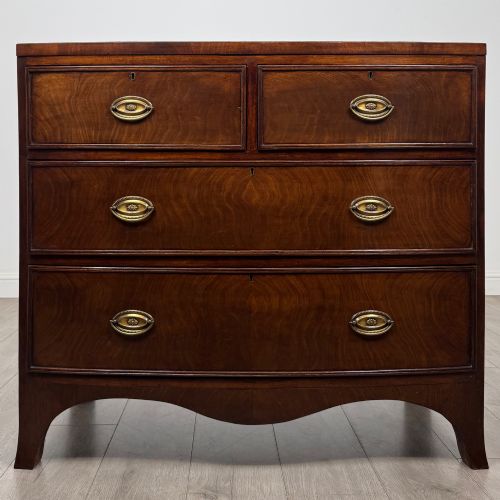
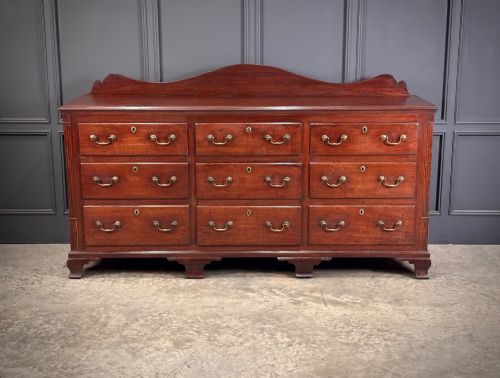
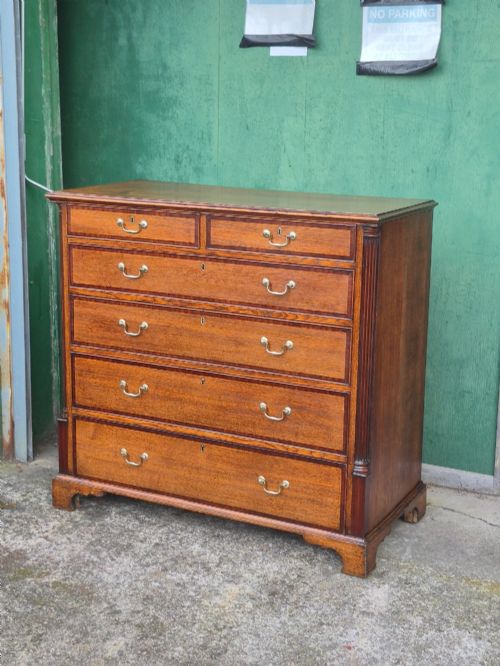
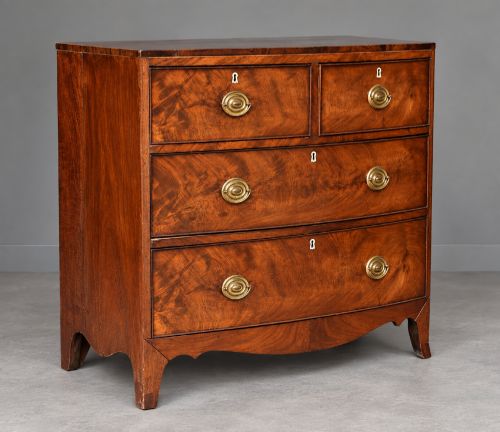
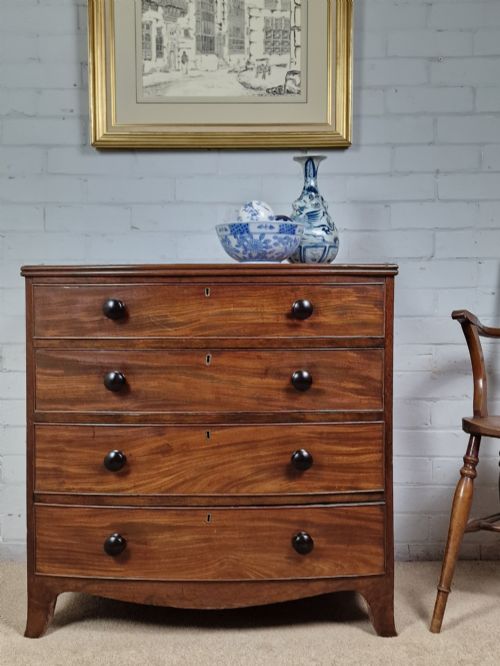
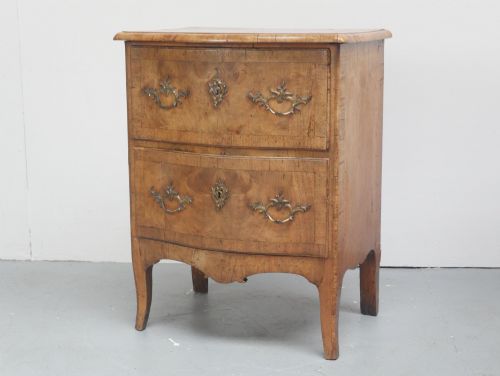
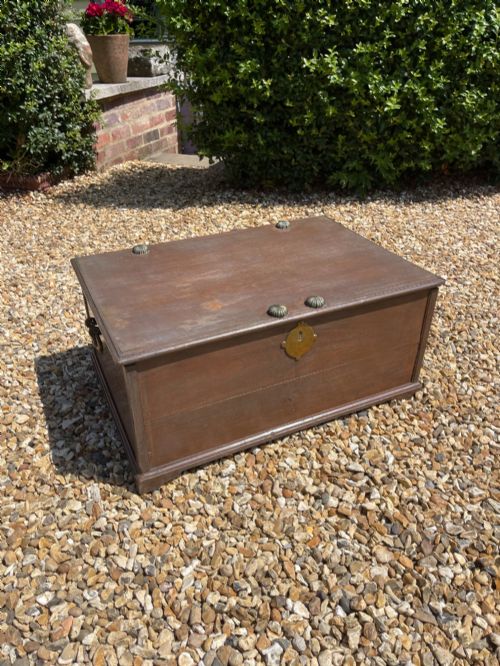
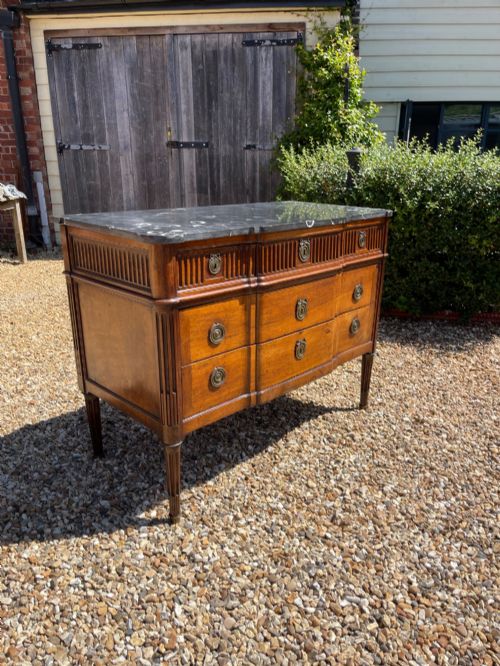
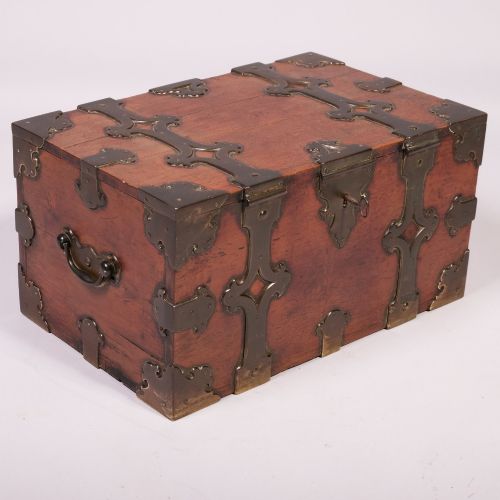
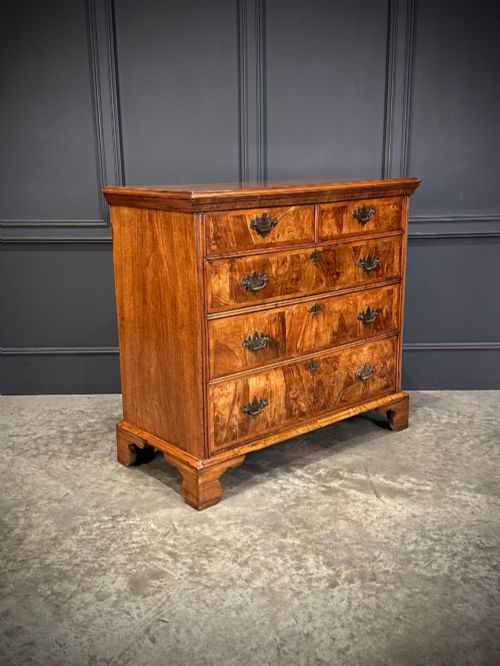
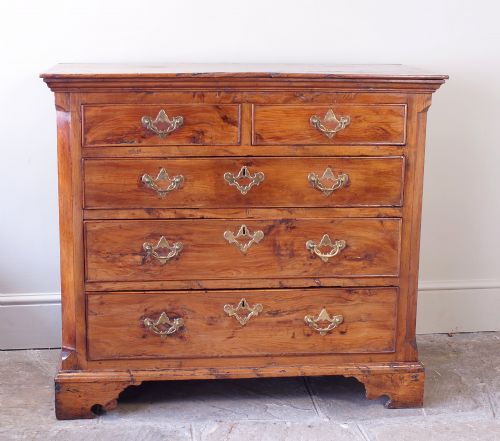
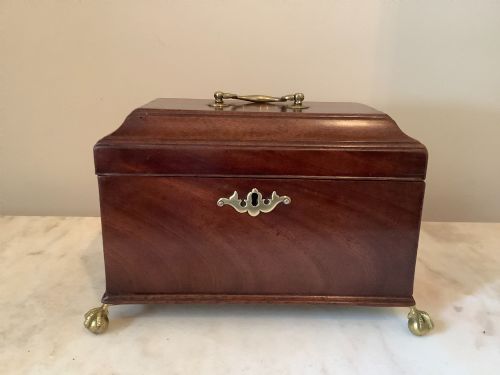
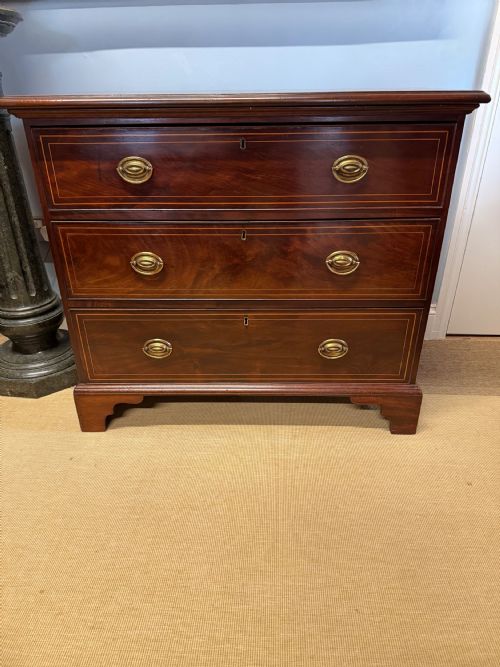
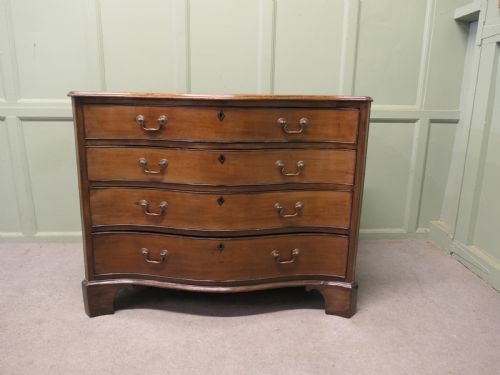
An eighteenth century wooden chest encompasses a range of domestic storage forms, from monumental chests on chest and tallboys to compact commodes and diminutive caskets. The selection on this page leans heavily toward mahogany and oak chests of drawers, alongside walnut commodes and specialist trunks.
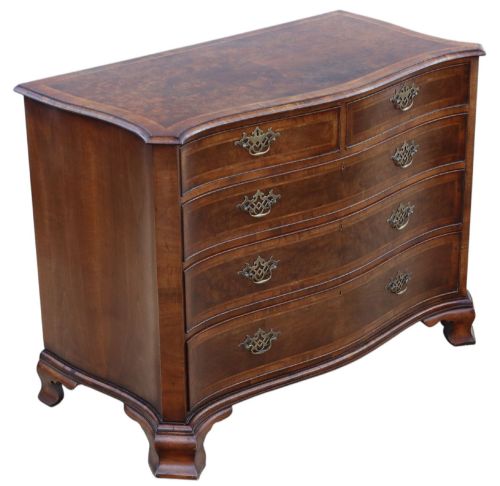
Makers and makers' workshops of the period utilised regional timbers, resulting in pieces shaped by local vernacular traditions across Britain, continental Europe, and beyond. Buyers encounter straightforward straight front chests alongside serpentine fronts, bow fronts, and pieces fitted with brushing slides or hidden drawers.
Origins stretch from English Georgian workshops to Swedish, French, Italian, and Dutch provincial makers, with occasional pieces reflecting broader trade and export routes. Forms vary from simple oak coffers to crossbanded burr walnut and lacquer coffer designs.
How they were made
Cabinetmakers constructed these pieces using solid timbers and select veneers such as mahogany, walnut, oak, cherrywood, teak, and yew wood, often enhanced by decorative wood inlay and crossbanding. Construction relied on traditional joinery methods that accommodated the natural movement of timber over centuries.
Hardware played an essential structural and decorative role, with brass handles, escutcheons, and occasional brass mountings fitted to drawers and lids. Surface finishes developed through repeated waxing and polishing, highlighting the natural grain and colour of the wood.
A secret drawer hidden inside a tea caddy demonstrates the enduring appeal of miniature compartments for private treasures.
What varies in quality
The degree of refinement in the timber selection and decorative detailing establishes the hierarchy among these pieces. Figured veneers, intricate crossbanding, and sophisticated serpentine or bow front profiles separate high-status urban commissions from simpler country pieces.
Proportion and the integrity of the original construction dictate a piece's standing. Crispness in the carving of mouldings, the retention of period brass hardware, and the uncompromised alignment of drawer tiers mark the work of accomplished eighteenth century cabinetmakers.
The Eighteenth Century Wooden Chest Glossary
- Commode
- A low chest of drawers or cabinet originating in French taste, frequently featuring serpentine or curved fronts.
- Serpentine
- A front profile characterised by a central convex curve flanked by two concave curves, creating a fluid line.
- Brushing slide
- A pull-out shelf integrated into the upper section of a chest, historically used for folding clothes or writing.
- Chest on chest
- A tall storage unit comprising one chest stacked directly upon a slightly larger lower chest, also known as a tallboy.
- Crossbanding
- A narrow band of veneer laid around the border of a drawer front or top with the grain running perpendicular to the centre.
- Coffer
- A heavy, sturdy chest traditionally used for storing valuables, linen, or documents before the widespread adoption of drawer chests.
Eighteenth Century Wooden Chest: Frequently Asked Questions
How do I identify a Georgian chest of drawers?
Georgian chests of drawers typically display classical proportions, durable timber construction in mahogany or oak, and characteristic period hardware. They range from plain straight fronts to sophisticated serpentine designs.
Looking closely at the drawer linings and backboards reveals the hand-cut joinery typical of eighteenth century and Regency craftsmanship.
Where were these wooden chests made?
These pieces originate from workshops across Britain, Ireland, and continental Europe, including France, Italy, the Netherlands, and Sweden. Regional preferences dictated the choice of local woods, such as oak in Britain and cherrywood or walnut in provincial Europe.
Export pieces also appear, reflecting broader international trade routes and cross-cultural design influences during the period.
What is the difference between a coffer and a chest of drawers?
A coffer is an older form of lidded storage box, often heavily reinforced and accessed from the top. A chest of drawers incorporates horizontal sliding drawers accessed from the front, representing a later evolution in domestic convenience.
Both served central storage functions in historical interiors, though drawer chests gradually superseded top-loading coffers for everyday clothing.
How should I care for an antique wooden chest?
Keep the wood away from direct heat sources and strong sunlight to prevent the timber from drying out and the veneer from lifting. Regular gentle dusting and occasional application of appropriate natural wax preserve the finish.
Maintaining a stable room temperature ensures the historical joinery remains secure and operational without putting stress on the structure.