

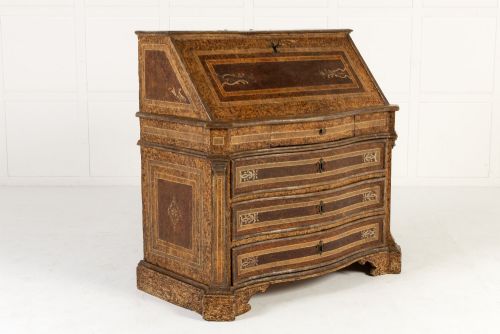
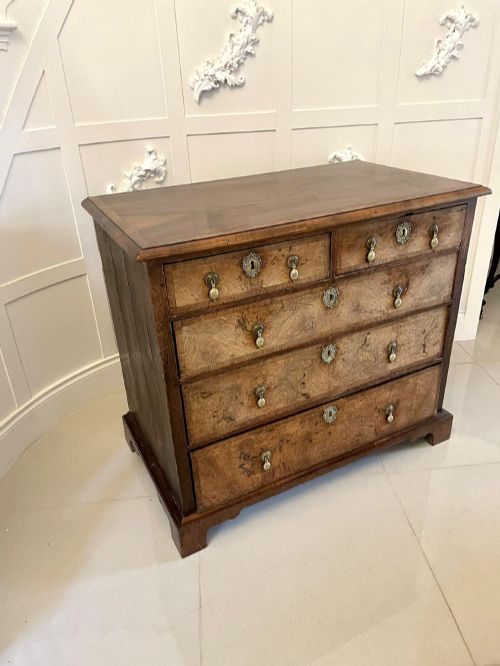
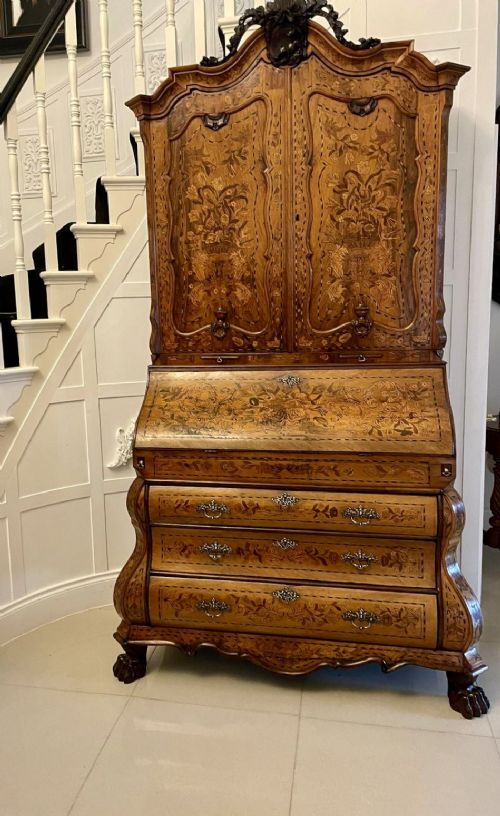
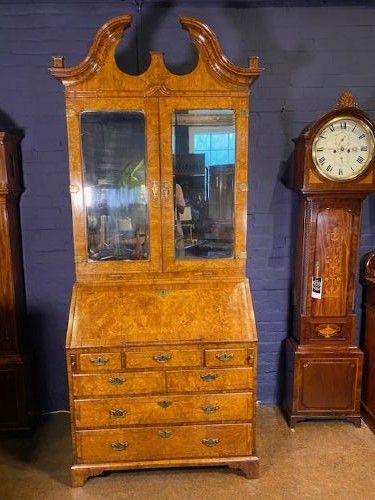
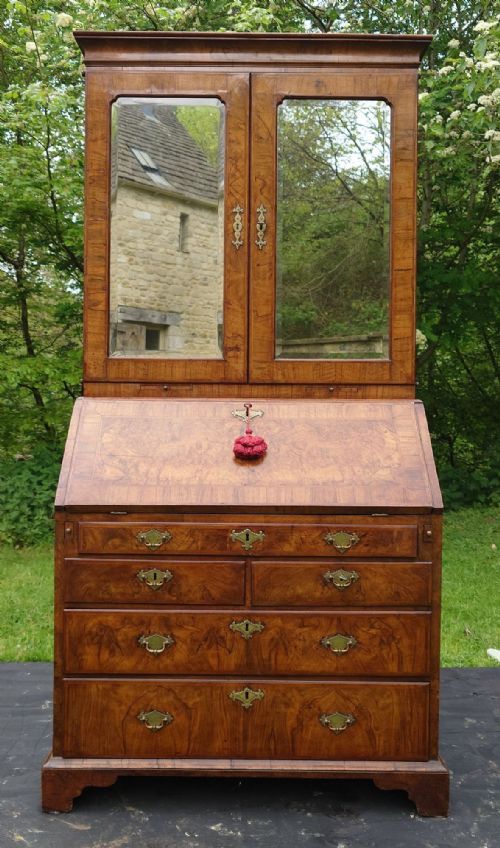
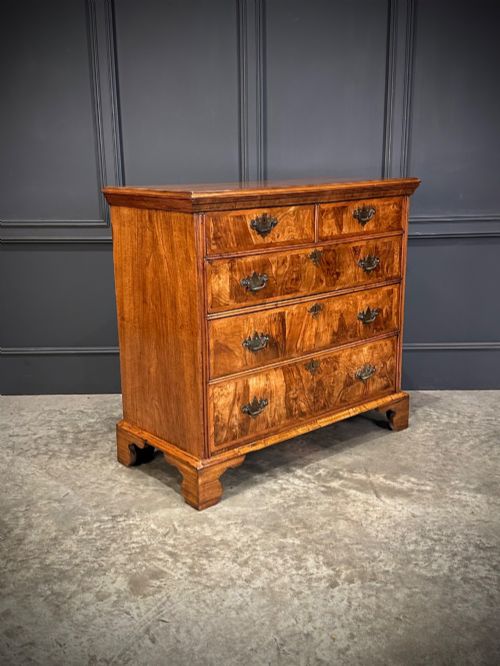


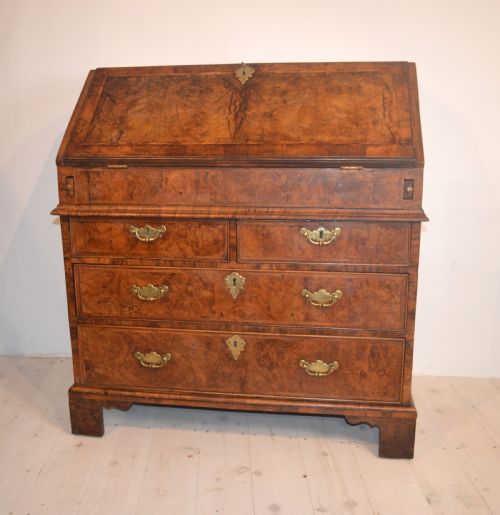


Eighteenth Century Walnut Bureau
An eighteenth century walnut bureau brings rich timber figures and fitted writing drawers into a room, offering practical workspace alongside historic character.
Eighteenth Century Walnut Bureau
An eighteenth century walnut bureau combines a sloping fall-front writing flap with internal pigeonholes and drawers, frequently appearing as larger bureau bookcases or cabinet pieces. Buyers encounter various forms spanning the 17th century through the Georgian and 19th centuries, including kneehole desks and chests of drawers alongside traditional writing furniture.
Origin and regional styles shape these pieces significantly, with Dutch and Italian rococos, Venetian designs, and English George I examples all represented. Regional makers utilised walnut, burr walnut, and fruitwood inlay to create distinctive bureau cabinets and miniature tabletops.
The domestic interior housed these desks for correspondence and record keeping, housing papers behind fitted compartments. Surviving examples demonstrate the enduring utility of 18th century case furniture in modern settings.
Materials and construction methods
Cabinetmakers constructed the carcase primarily in oak or pine, applying figured walnut and burr walnut veneers to display dramatic grain patterns across the fall-fronts and drawer fronts. Fruitwood inlay and ebonised wood details provided contrasting decorative borders on continental pieces.
Brass hardware, including escutcheons and drop handles, secured drawers and fall-fronts while original bun feet supported early pieces. Glass panels frequently glazed the upper bookcase sections of taller bureau cabinets.
Eighteenth Century Walnut Bureau Retail Price Guide 2026
Typical asking prices for eighteenth century walnut bureau among the pieces listed under this phrase on Sellingantiques today, from the lower quarter to the upper quarter. They describe what is for sale here now, not the wider market.
Miniature tabletop writing bureaus offered portable desktop organisation for travellers requiring a writing surface away from home.
Distinctions in quality
The selection of timber veneers defines the visual depth of a piece, where highly figured burr walnut creates intricate patterns across large surfaces. Floral marquetry execution and precise fruitwood inlay demand advanced technical skill from the maker.
The retention of original feet, brasses, and interior partitions maintains the structural integrity and historical standing of the desk. Cohesion between the walnut carcase and secondary timbers like oak indicates careful workshop assembly.
The Eighteenth Century Walnut Bureau Glossary
- Fall-front
- The hinged writing flap that pulls down to create a sloping desk surface. This panel conceals internal small drawers and pigeonholes.
- Burr walnut
- Timber taken from a tree growth that produces swirling, highly decorative grain patterns. Cabinetmakers sliced this wood into thin veneers for primary display surfaces.
- Escutcheon
- A protective brass plate surrounding a keyhole. It prevents the surrounding wood from wearing down through repeated use.
- Marquetry
- Decorative patterns formed by fitting contrasting veneers into a wooden background. Floral motifs frequently appear on continental examples.
- Kneehole desk
- A compact writing table featuring a central recess for the user's legs, flanked by pedestals of small drawers. These pieces sit on shaped bracket feet or legs.
Eighteenth Century Walnut Bureau: Frequently Asked Questions
What is inside an eighteenth century walnut bureau?
Lifting the fall-front reveals a writing surface together with an arrangement of small drawers, pigeonholes, and occasionally a central locked cupboard door. These internal compartments kept correspondence and personal documents organised.
Secondary woods like oak typically formed the linings of these internal drawers, which often featured hand-cut dovetail joints.
How do bureau bookcases differ from standard desks?
Bureau bookcases incorporate an upper shelved storage cabinet or glazed bookcase section mounted directly onto the writing desk base. This taller format provided dual utility for storing volumes and writing letters within a single piece of furniture.
Such cabinets often feature double dome tops or architectural pediments reflecting Baroque and Georgian design preferences.
Where were walnut bureau cabinets made?
These pieces originated across British and European workshops during the 17th and 18th centuries. English cabinetmakers produced restrained walnut designs, while Dutch and Italian makers embraced ornate roccoco forms and floral marquetry.
Colonial workshops also produced miniature tabletop writing bureaus using native timbers.
How do I care for walnut furniture?
Walnut surfaces benefit from stable indoor humidity and protection from direct sunlight to prevent the timber veneers from drying out or fading. Gentle dusting with a soft cloth preserves the polished finish without damaging the grain.
Avoiding excessive moisture ensures the historic glues and wood joints remain secure over time.