

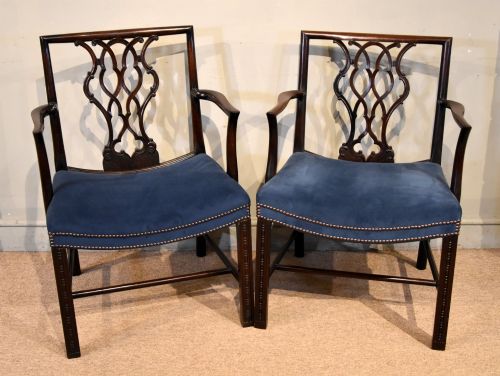
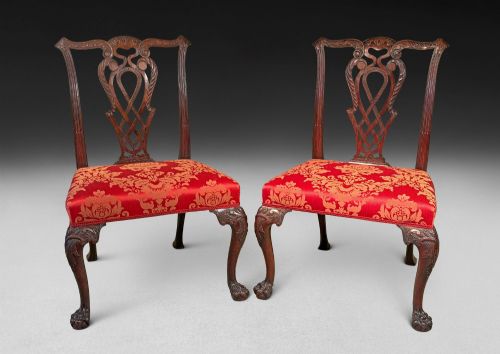
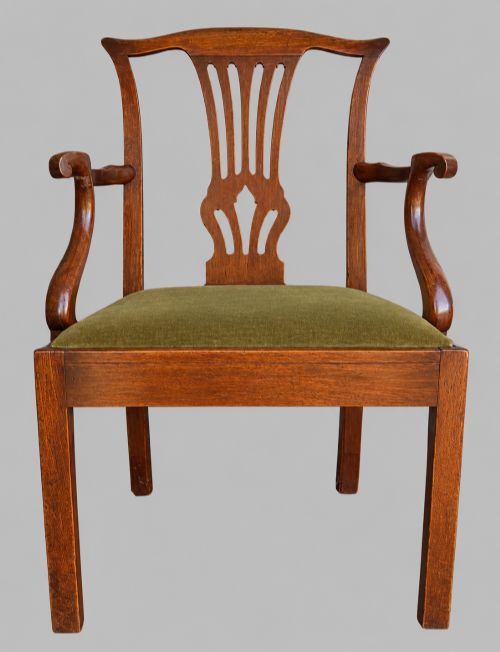


Eighteenth Century Mahogany Desk
An eighteenth century mahogany desk is a practical workspace built from resilient timber during the Georgian era, offering enduring utility for a modern study.
Eighteenth Century Mahogany Desk
When searching for an eighteenth century mahogany desk, buyers encounter various forms including kneehole desks, writing tables, and bureau bookcases originating primarily from the Georgian period.
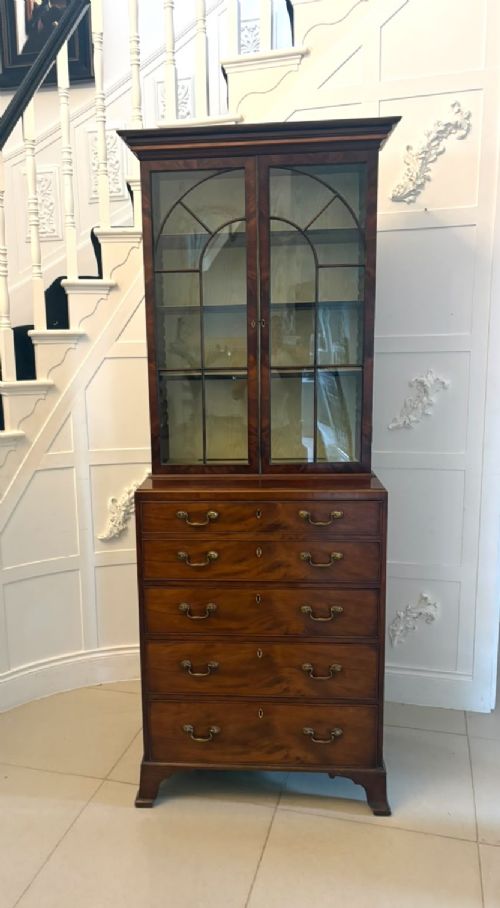
The pieces listed on this page span several functional formats, from simple lowboys and side tables to grand secretaire bookcases fitted with glazed library cabinets.
Most items reflect George II and George III aesthetics, alongside later interpretations executed in the nineteenth and twentieth centuries.
Quality factors
The calibre of a piece rests on the figure of the mahogany timber and the precision of its joinery, particularly in internal drawer construction.
Design sophistication distinguishes standard utilitarian items from sophisticated examples featuring intricate carving, satinwood stringing, or fitted cylinder tambour mechanisms.
Proportion and the preservation of original brass hardware heavily influence the overall integrity of each item.
Eighteenth Century Mahogany Desk Retail Price Guide 2026
Typical asking prices for eighteenth century mahogany desk among the pieces listed under this phrase on Sellingantiques today, from the lower quarter to the upper quarter. They describe what is for sale here now, not the wider market.
Among the heavy desks sits a delicate mid-eighteenth-century decagonal telescope, proving that mahogany was useful for viewing stars too.
Gillows·Gamichon A Paris·John Gilbert
The Eighteenth Century Mahogany Desk Glossary
- Kneehole desk
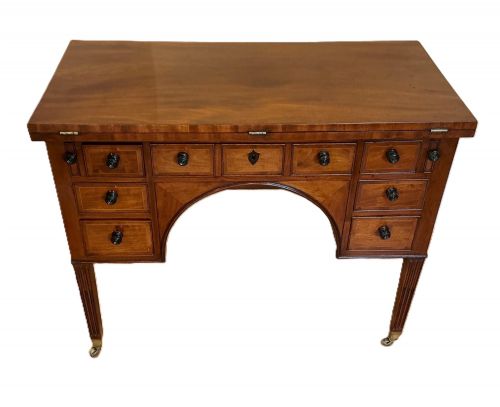
- A compact writing table featuring a central recess for the sitter's legs, flanked by pedestals of small drawers.
- Bureau bookcase
- A dual-purpose piece combining a sloping writing flap above drawers with an upper enclosed shelving cabinet.
- Tambour
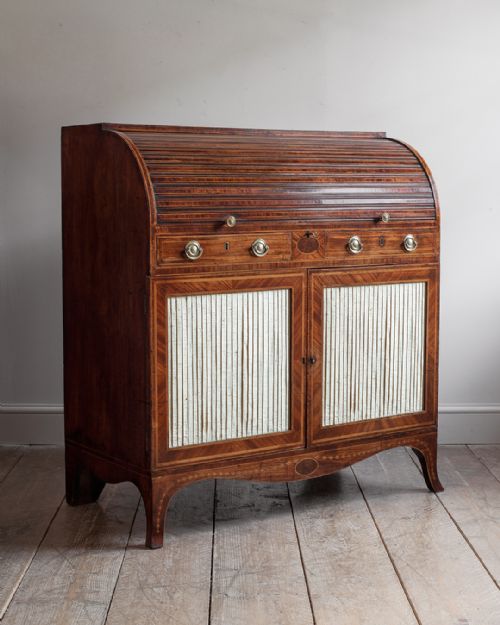
- A flexible sliding shutter formed from vertical strips of wood glued to canvas, commonly used to conceal desk pigeonholes.
- Lowboy
- A small dressing or side table equipped with one or more rows of drawers beneath a flat top.
- Secretaire
- A desk or cabinet containing a pull-down writing drawer that conceals a fitted interior of small compartments.
Eighteenth Century Mahogany Desk: Frequently Asked Questions
How do I identify a genuine period desk?
Examine the timber selection, construction methods of the internal drawers, and the uniformity of the brass hardware used throughout the piece.
Period items exhibit hand-cut dovetailing and mature wood oxidation that modern reproductions fail to replicate accurately.
What is a kneehole desk?
A kneehole desk is a freestanding writing table designed with a central aperture for the user, flanked by banks of small drawers.
This format became popular during the Georgian era for domestic studies and private libraries.
How should I care for mahogany furniture?
Maintain stable room humidity levels and keep wooden surfaces away from direct heat sources to prevent timber splitting.
Apply traditional wax polish sparingly to nourish the grain and protect the original finish over time.
What is a tambour desk?
A tambour desk incorporates flexible wooden slats running in a groove to conceal the writing surface and pigeonholes.
This clever mechanism allows the user to secure the desk interior without needing a hinged fall-front flap.